
Wild animals damaging crops can wipe out months of hard work overnight. If you’re looking for practical, humane, and India-ready ways to protect crops from wild animals, this guide gives you exactly that—clear steps, field-tested examples, and low-cost options you can start today.
- Buy in easy steps
- Premium Starts at INR 499
- Protect 100+ Crops
- Quick & Easy Claims
Quick answer:Combine barriers (nets/fences), all‑natural repellents, motion lights/alarms, field hygiene, and community patrols. Rotate methods every 2–3 weeks to prevent animal habituation.
For monkeys: netting + covered storage + troop distraction (fodder at buffer edges) + sound cues work better than one method alone.
All-natural repellent: garlic–chilli–neem spray every 5–7 days; use motion “animal garden lights” at night for wild boar/deer; keep records of incidents for compensation/insurance review.
Why Farmers Need to Protect Crops from Wild Animals
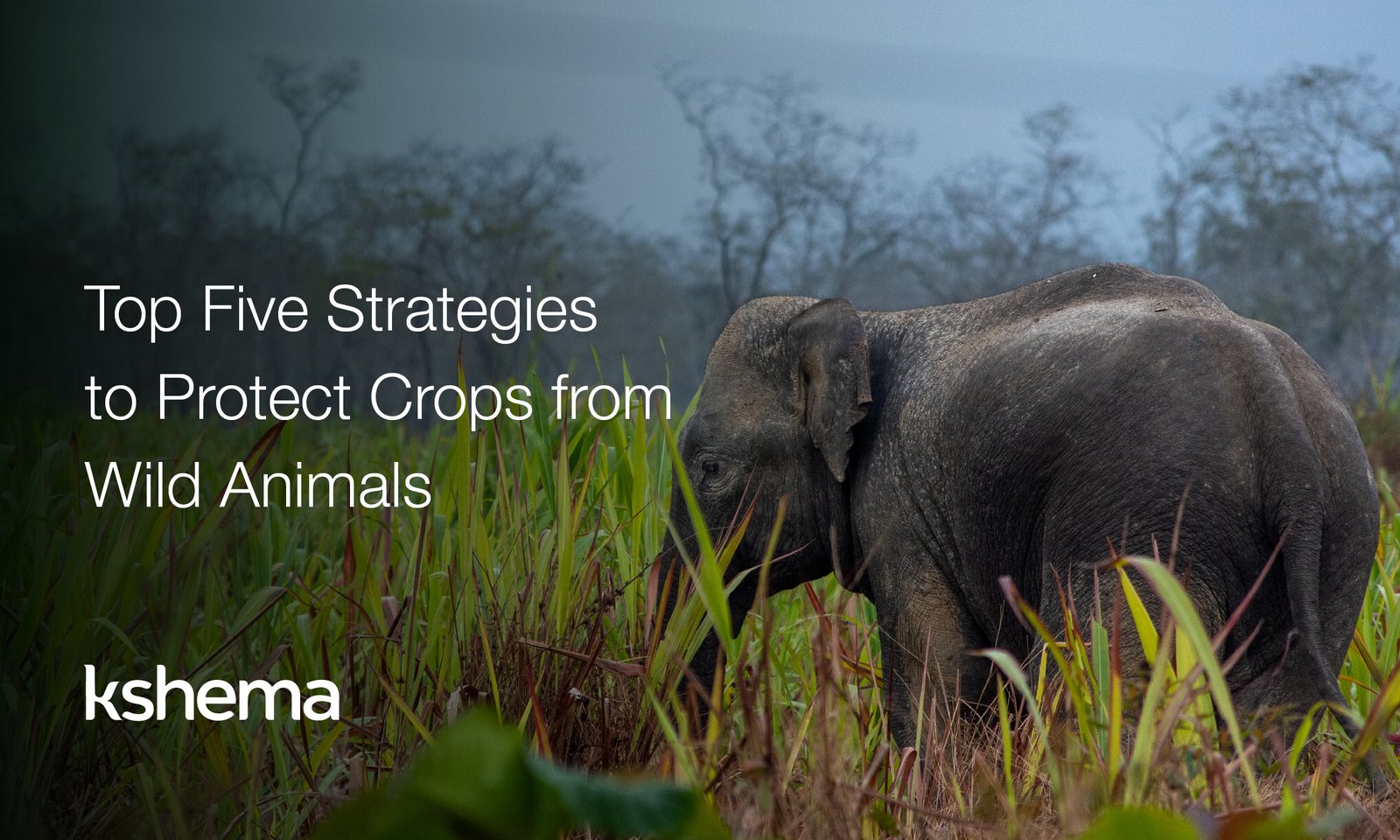
Farming communities across India face increasing crop losses caused by wild animals such as boars, monkeys, elephants and stray cattle. To protect crops from wild animals safely and sustainably, farmers now rely on a mix of physical barriers, natural repellents, buffer crops and modern deterrents. This blog highlights simple, practical and non‑harmful strategies farmers can use to reduce crop damage and protect their livelihoods.
Farmers across India are constantly seeking ways to protect crops from wild animals and reduce crop damage by wild boars, monkeys, and elephants.
At Kshema General Insurance, we understand the plight of India’s farmers and offer crop protection solutions that safeguard crops from these threats. In this blog, we will discuss the top five strategies to protect crops from wild animals while ensuring sustainability and harmony with nature.
These methods are widely used by farmers who want to know how to protect crops from monkeys and wild boars without harming the environment.
Top 5 Ways to Protect Crops from Wild Animals
Protecting crops from wild animals is essential for ensuring food security, reducing financial losses, and supporting sustainable farming. In many regions, farmers lose a significant portion of their harvest each year due to attacks from wild boars, monkeys, elephants, and other stray animals. These damages not only reduce yields but also increase production costs, pushing small and marginal farmers into financial stress.
Healthy and secure crops mean farmers can plan their agricultural activities with confidence, invest in better farming practices, and maintain a steady income. By adopting effective measures to protect crops from wild animals, farmers safeguard their livelihoods, reduce dependency on external loans, and contribute to the stability of the agricultural sector. Moreover, crop protection helps maintain harmony between farming communities and wildlife by using sustainable, non‑harmful methods that deter animals without endangering them.
Best Ways of Repelling Wild Animals Without Harming Them Include:
- Sound alarms
- Flashing lights
- Motion sprinklers
- Natural smell repellents (chilli, garlic, neem)
Why wild animals enter farms (and how this guides your strategy)
Animals enter fields for food, water, shelter, or easy movement. Monkeys target fruits and grains near trees and rooftops; wild boar and nilgai raid tubers, groundnuts, and cereals; peacocks and deer graze tender shoots. Understanding local species and seasonality helps you choose the right mix of barriers, repellents, and layouts.
- Peak risk windows: tasseling/flowering and ripening stages
- High-risk layouts: fields bordering forests, water channels, orchards, or fallow land
- Core principle: Layer 2–3 complementary measures so animals don’t adapt quickly
Quick 7‑Day Setup to Protect Your Farm
- Day 1–2: Map entry points and animal tracks; install low-cost noise makers and motion lights on those paths.
- Day 2–3: Put up crop-specific nets (bird/monkey) on ripening sections; secure grain stores and compost pits.
- Day 3–4: Spray an all‑natural repellent (garlic–chilli–neem). Reapply every 5–7 days or after rain.
- Day 4–5: Create a clean boundary: remove fallen fruits, trim weeds, and close gaps under fences.
- Day 5–6: Form a night watch rota with neighbours; set up alarm lines/bells along perimeters.
- Day 6–7: Add one strong barrier on main entry (solar-pulse fence or thorn/bio-fence) and mark it clearly.
- Weekly: Rotate sound/visual deterrents; keep a log with photos and times of visits.
Five proven strategies to protect crops from wild animals
1. Smart fencing and barriers (humane, legal-first)
Options: solar-pulse fencing (non-lethal, low-energy), chain-link on key sides, deep trench/earthen bund for boar, live bio-fencing (agave, cactus, thorny shrubs), crop nets (bird/monkey), and tree guards for young orchards.
- Solar-pulse fence: Use approved energizers with warning signboards, proper earthing, and cut-off switches. Designed to deter, not injure.
- Trench for boar/nilgai: 1–1.2 m deep, 0.8–1 m wide; stabilize edges to prevent collapse.
- Monkey/bird nets: 30–40 mm mesh for monkeys (strong HDPE), 15–20 mm for birds; secure with clips so gaps don’t form.
- Bio-fence: Plant agave/cactus in double rows on vulnerable borders; low maintenance and eco-friendly.
Tip: Start with the most-used animal path and reinforce corners and culverts first—these are common breach points.
2. Animal-specific deterrents (targeted to species)
Monkeys: Net fruit clusters, use covered drying yards, and reduce attractants (open bins, exposed grain). Rotating deterrents—reflective ribbons, predator calls (ethical, limited use), and scarecrows with moving parts—work best when alternated every 10–14 days.
Wild boar nilgai: Combine a perimeter barrier (trench or pulse fence) with smell/taste repellents on boundary rows. Rope lines dipped in chilli-tobacco-grease can deter initial entry; refresh after rains.
Deer & peacock: Use bird nets over high-value beds, reflective tape lines 1–1.5 m high, and row-covers for seedlings. Motion “animal garden lights” and alarms are effective during dusk/night grazing.
3. Sensory repellents that are all-natural (safe and field-proven)
DIY garlic–chilli–neem spray: Blend 250 g green chilli + 200 g garlic + 50 ml neem oil in 10 L water with mild soap as a sticker. Ferment 24 hours; filter and spray on border rows and vulnerable patches every 5–7 days.
- Good for: monkeys avoiding bitter/tangy leaves, deer/boar disliking pungent borders
- Reapply after rain; avoid peak sun to reduce leaf scorch
- Keep away from harvest-ready produce; rinse picked crops
Commercial animal repellent for agriculture: Look for capsaicin, neem-based, or urine-odor analog products. Check label for crop safety, pre-harvest interval, and local registration. Always patch-test on a few plants first.
4. Farm layout, timing, and trap crops
- Buffer rows: Plant less-preferred species (lemongrass, marigold, castor) on borders.
- Sacrificial/trap strips: A small strip of fast-maturing fodder at the edge can distract grazers away from main fields.
- Harvest management: Avoid leaving ripe produce overnight on plants or in open yards.
- Water points: Provide a controlled water pan away from fields to reduce animal entry seeking water during dry spells.
5. Community measures and simple tech
- Neighbour coordination: Shared watch schedules and continuous boundary lines are more effective than isolated measures.
- Alarm lines: Nylon lines with bells/tins along the perimeter create noise when disturbed.
- Motion tech: PIR-based sirens and animal garden lights deter night raiders; rotate locations weekly.
- Camera traps: Low-cost trail cams help identify species and time of visits to fine-tune defenses.
Record-keeping, claims, and support
Maintain a simple incident log: dates, time, animal type, crop stage, photos/videos, and any losses. This helps when seeking government compensation (available in some states via Forest/Wildlife departments) and when discussing coverage options with your insurer.
Insurance note: Standard crop insurance primarily covers weather and certain perils; wild animal damage may require specific state notifications or add-ons where available. Always review policy wordings and consult licensed advisors. Kshema can guide you on suitable covers and documentation best practices.
Our Crop Insurance Benefits Farmers by:
Crop insurance protects farmers from damage caused by elephants, wild boars, monkeys and other animals, helping them recover financially.
- Providing protection against crop damage caused by specific wild animals.
- Offering peace of mind, enabling farmers to focus on improving their yields.
- Complementing other protective measures to ensure comprehensive crop protection.
Our aim at Kshema is to empower Indian farmers with resources they need to thrive despite challenges like wild animal attacks and natural calamities.
Cost vs. effectiveness: choose the right mix
| Method | Best Against | Cost (₹) | Durability | Effort | Notes |
|---|---|---|---|---|---|
| Solar-pulse fence (non-lethal) | Boar, nilgai, deer | Medium–High (perimeter) | 3–5 years | Medium | Use approved energizer, signs, earthing; rotate with repellents |
| Trench/earthen bund | Boar, nilgai | Medium (one-time) | 2–3 years | High (initial) | Maintain after rains; stabilize edges |
| Monkey/bird nets | Monkeys, birds, peacocks | Low–Medium | 2–4 seasons | Low | Secure clips; close gaps |
| Animal garden lights (motion) | Boar, deer (night) | Low–Medium | 1–2 years | Low | Shift weekly to avoid habituation |
| All‑natural spray (garlic–chilli–neem) | Monkeys, deer, boar (borders) | Low | — | Medium (reapply) | Every 5–7 days; avoid harvest-ready parts |
| Reflective tape/scare lines | Birds, peacocks | Low | 1 season | Low | Effective in wind/light; rotate with sound cues |
Compliance, ethics, and safety (non‑negotiable)
- Use only non-lethal, approved methods. Lethal electric fencing is illegal.
- Install warning signboards on any electrified deterrent; maintain proper earthing.
- Avoid chemical residues on edible parts; follow label directions for any spray.
- Never harm protected wildlife; consult local Forest Department for guidance near sanctuaries/corridors.