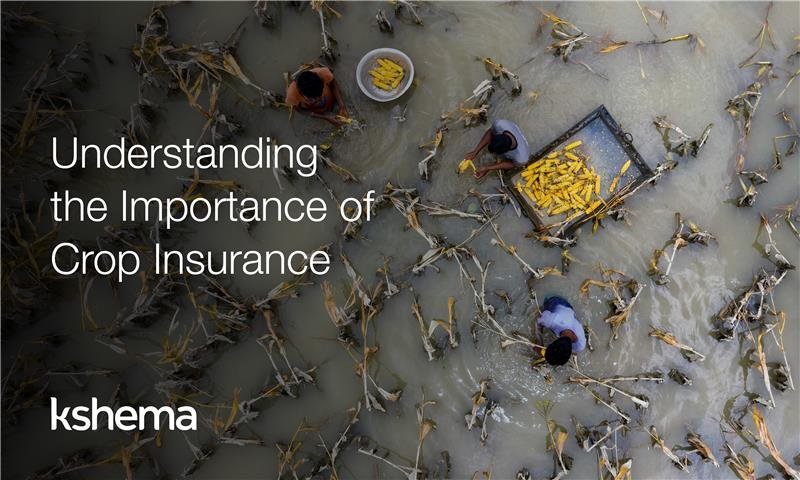

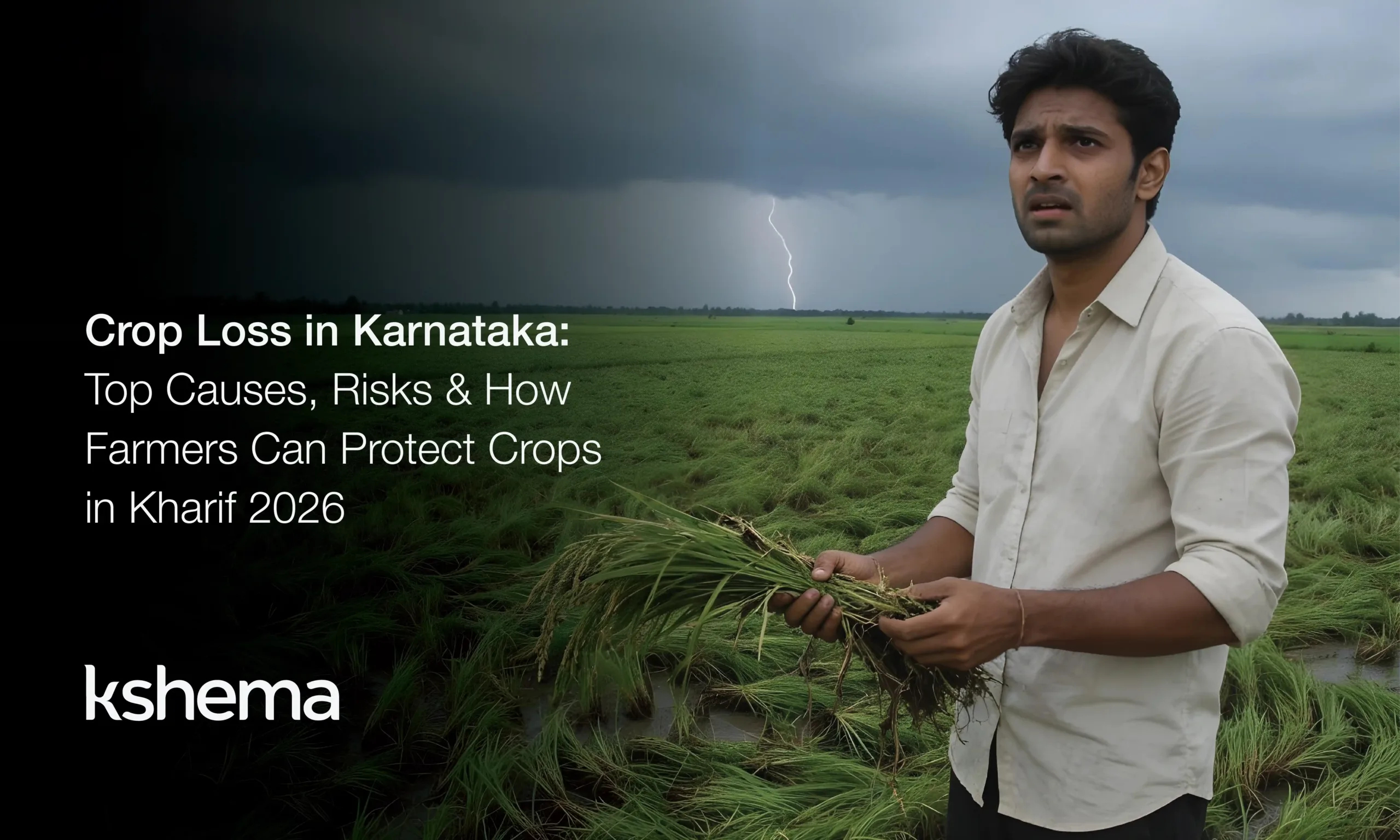
Crop Loss in Karnataka remains a critical challenge for farmers, especially during the kharif season when weather uncertainties are at their peak. Understanding the causes and taking preventive measures can significantly reduce risks and improve yields by understanding proven ways to protect crops.
- Buy in easy steps
- Premium Starts at INR 499
- Protect 100+ Crops
- Quick & Easy Claims

- Major causes behind crop damage in Karnataka
- Key Karnataka kharif crop risks farmers should watch out for
- Practical strategies to minimise losses and protect crops
- Preventive steps for a safer and more productive Kharif 2026 season
Understanding Crop Loss in Karnataka
Crop loss in Karnataka is influenced by a complex mix of climatic, environmental, and human factors. Agriculture in the state heavily depends on monsoon rains, making it vulnerable to irregular rainfall patterns. In recent years, unpredictable weather conditions have intensified the frequency of crop failures, directly affecting farmer incomes and food security and increasing the need for crop insurance protects farmers income.
Additionally, soil health degradation, growing pest resistance, and increased input costs further contribute to crop loss in Karnataka. Small and marginal farmers are particularly impacted, as they often lack adequate financial protection or access to advanced technologies.
Top Causes of Crop Loss in Karnataka
1. Erratic Monsoon and Climate Variability
One of the biggest drivers of crop loss in Karnataka is the inconsistency of monsoon rains. Delayed onset, prolonged dry spells, or excessive rainfall can severely damage crops such as paddy, maize, and pulses making based on forecasts from the https://mausam.imd.gov.in/.
It important to follow handling monsoon challenges during Kharif season. Flooding in low-lying areas and drought in rain-shadow regions create dual challenges.
2. Poor Soil Quality and Nutrient Deficiency
Continuous monocropping, excessive fertiliser use, and erosion have degraded soil quality and highlights the importance of soil health and how to maintain it. This leads to lower crop resilience and contributes significantly to crop loss in Karnataka.
3. Inadequate Irrigation Facilities
4. Market and Post-Harvest Losses
Key Karnataka Kharif Crop Risks for 2026
Farmers must prepare specifically for Karnataka kharif crop risks expected in 2026. Climate experts suggest continued variability in rainfall patterns, which may impact sowing cycles and emphasise the need for weather forecast in farming.
Water scarcity in semi-arid regions could also intensify Karnataka kharif crop risks, particularly for water-intensive crops like sugarcane and paddy. Additionally, rising input costs may limit farmers’ ability to adopt preventive measures.
Understanding these risks in advance is essential to avoid significant crop loss in Karnataka and ensure stable farm productivity.
Effective Ways to Prevent Crop Loss in Karnataka
1. Adopt Climate-Resilient Crop Varieties
2. Integrated Pest Management (IPM)
3. Improve Irrigation Practices
4. Soil Health Management
5. Crop Insurance and Financial Planning
Role of Technology in Reducing Losses
Modern technologies are playing an increasing role in minimising crop loss in Karnataka. Mobile-based weather alerts, satellite monitoring, and precision farming tools help farmers make informed decisions.
Drones and AI-powered tools are also emerging as effective solutions for detecting pest infestations early. These innovations can directly address Karnataka kharif crop risks by enabling timely intervention.
Furthermore, digital platforms connecting farmers to markets can reduce post-harvest inefficiencies and improve price realisation, thereby lowering overall losses.
Community and Government Support
Government schemes and community-based initiatives are crucial in tackling crop loss in Karnataka. Programmes that provide subsidies for irrigation equipment, seeds, and fertilisers can ease the financial burden on farmers.
Farmer producer organisations (FPOs) also play a vital role by enabling collective bargaining, sharing resources, and spreading awareness about Karnataka Kharif crop risks. Training programmes focused on sustainable agriculture can further strengthen resilience.
Conclusion
Crop loss in Karnataka continues to pose significant challenges, but proactive planning and modern farming techniques can help farmers reduce risks. By understanding Karnataka kharif crop risks and adopting effective preventive measures, farmers can safeguard their livelihoods through how crop insurance can safeguard small farmers livelihoods.
As a next step, farmers should consider combining traditional knowledge with modern tools and enrolling in crop insurance schemes to ensure better protection during the Kharif 2026 season.
Frequently Asked Questions
1. What are the main reasons for crop loss in Karnataka?
The primary reasons include erratic rainfall, poor soil health, and lack of irrigation facilities. Market fluctuations and post-harvest losses also contribute significantly to farmer losses.
2. How can farmers reduce Karnataka Kharif crop risks?
3. Is crop insurance useful for farmers?
4. Which crops are most affected during the Kharif season?
5. How does technology help prevent crop losses?
Disclaimer:
We do not assume any liability for any actions undertaken based on the information provided here. The information gathered from various sources and are displayed here for general guidance and does not constitute any professional advice or warranty of any kind.