Organic Rabi Farming: Step-by-Step Guide for Beginners

organic rabi farming, organic farming in India, sustainable farming, rabi season farming tips, organic crop cultivation, eco-friendly farming methods, soil health in organic farming, pest control in organic farming, organic farming benefits, sustainable agriculture practices
Organic farming is no longer a trend—it’s the future of sustainable agriculture in India. As the Rabi season approaches in 2025, farmers are looking for eco-friendly methods to boost productivity without harming soil health. This guide covers everything from soil preparation to crop selection, helping you adopt organic practices that improve yield and profitability. Among different cropping seasons, organic rabi farming is gaining popularity because of its potential to produce healthy food while preserving nature which shares its bounty with us. This blog is an essential guide for taking the first steps towards organic rabi farming, while also highlighting the broader context of organic farming in India and its role in promoting sustainable farming practices.

Organic Rabi farming in India involves using natural inputs like compost, biofertilizers, and crop rotation to maintain soil health and reduce chemical dependency. Farmers should prepare fields early, select certified organic seeds, and adopt water-efficient irrigation methods for sustainable yields.

Understanding Organic Rabi Farming

Organic rabi farming refers to cultivating crops during the rabi season (typically from October to December) using organic methods. Common rabi crops include:
  • Wheat
  • Barley
  • Mustard
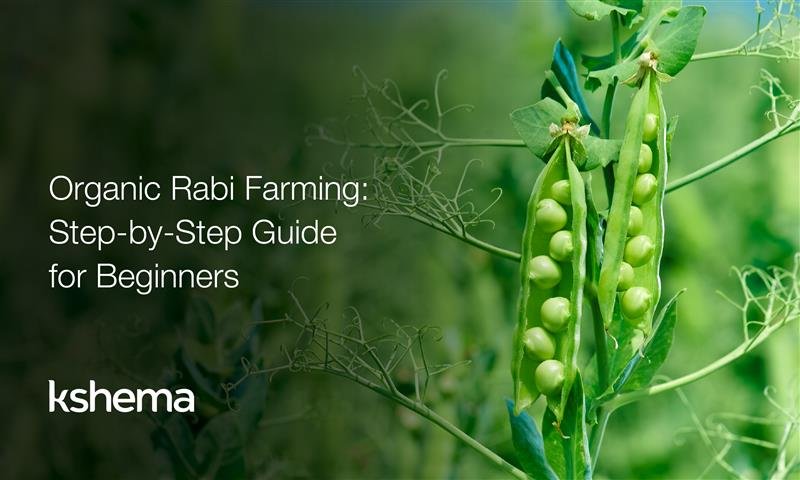
  • Peas
  • Chickpeas
Unlike conventional farming, organic methods avoid synthetic fertilisers and pesticides, relying instead on natural inputs like compost, green manure, and bio-pesticides. By focusing on soil health, biodiversity, and ecological balance, organic rabi farming ensures the produce is not only nutritious and healthier but also environmentally friendly.

Step 1: Selecting Suitable Crops

The first step towards organic rabi farming is choosing crops that thrive in your region’s climate and soil conditions.
  • Wheat and barley are staple rabi crops in northern India.
  • Mustard and chickpeas are popular in central and western regions.
  • Peas and lentils are excellent options for small-scale farmers.
In the context of organic farming in India, crop selection often depends on traditional knowledge passed down through generations, ensuring that local varieties are preserved and promoted.

Step 2: Preparing the Soil Organically

Healthy soil is the foundation of organic rabi farming. Instead of chemical fertilisers, farmers use:
  • Compost and farmyard manure: These enrich the soil with organic matter.
  • Green manure: Planting legumes before the rabi season helps fix nitrogen naturally.
  • Bio-fertilisers: Microbial inoculants improve nutrient availability.
This approach aligns with sustainable farming, as it reduces dependency on external inputs and enhances long-term soil fertility.

Step 3: Irrigation Management

Rabi crops require timely irrigation because they are grown in winter when rainfall is scarce. In organic rabi farming, water management is crucial:
  • Use drip irrigation or sprinklers to conserve water.
  • Harvest rainwater during the monsoon and store it for later use.
  • Mulching with crop residues helps retain soil moisture.
Efficient irrigation not only supports crop growth but also contributes to sustainable farming by minimising water wastage.

Step 4: Pest and Disease Control

One of the biggest challenges in organic rabi farming is managing pests without chemicals. But there are natural alternatives that farmers can use to overcome:
  • Neem oil sprays to deter insects.
  • Trichoderma and other bio-control agents to prevent fungal diseases.
  • Companion planting (e.g., growing mustard alongside wheat) to reduce pest attacks.
These conventional techniques are widely practiced in organic farming in India, where farmers rely on indigenous knowledge and eco-friendly solutions.

Step 5: Weed Management

Weeds compete with crops for nutrients and water. In organic rabi farming, farmers avoid chemical herbicides and instead use:
  • Manual weeding or mechanical tools.
  • Mulching to suppress weed growth.
  • Crop rotation to break weed cycles.
This ensures that farming remains aligned with sustainable farming principles, protecting biodiversity and reducing environmental harm.

Step 6: Harvesting and Post-Harvest Practices

Harvesting at the right time is critical in organic rabi farming. Crops should be harvested when they reach full maturity to ensure maximum yield and quality.
  • Use clean tools to avoid contamination.
  • Store grains in organic-certified bags or containers.
  • Maintain proper ventilation to prevent fungal growth.
Post-harvest handling is especially important in organic farming in India, where certification standards require strict adherence to organic practices from seed to storage.

Benefits of Organic Rabi Farming

The advantages of organic rabi farming go beyond just producing chemical-free food:
  • Healthier produce: Free from harmful residues.
  • Soil fertility: Maintained through organic inputs.
  • Environmental protection: Reduced pollution and greenhouse gas emissions.
  • Economic opportunities: Growing demand for organic products in India and abroad.
By adopting sustainable farming, farmers contribute to long-term agricultural resilience and food security.

Organic Farming in India: The Bigger Picture

While this blog focusses on organic rabi farming, it’s important to see how it fits into the larger movement of organic farming in India. India has a rich tradition of natural farming methods, with practices like crop rotation and mixed cropping deeply rooted in rural communities. Government initiatives such as the Parampara at Krishi Vikas Yojana (PKVY) encourage farmers to adopt organic methods. Learn more about India’s National Mission on Natural Farming here. States like Sikkim have already declared themselves fully organic, setting an example for others. This signifies that organic farming in India is seeing a revival of centuries-old wisdom but adapted to modern needs.

Sustainable Farming: The Future of Agriculture

The principles of organic rabi farming are closely tied to sustainable farming. Both emphasise:
  • Conserving natural resources.
  • Reducing environmental impact.
  • Promoting biodiversity.
  • Ensuring long-term productivity.
As climate change and resource depletion threaten agriculture, sustainable farming practices like organic methods are becoming essential for survival.

Checklist for Organic Rabi Farming

  • Select crops suited to your region.
  • Prepare soil with compost, green manure, and bio-fertilisers.
  • Manage irrigation efficiently using water-saving techniques.
  • Control pests with natural sprays and bio-agents.
  • Handle weeds through mulching, rotation, and manual methods.
  • Harvest carefully and store produce organically.
By following these steps, beginners can successfully practice organic rabi farming while contributing to the broader goals of organic farming in India and sustainable farming.

Conclusion

Organic rabi farming offers a practical and rewarding way to enter the world of organic agriculture. It not only produces healthier food but also nurtures the environment, supports rural livelihoods, and strengthens India’s agricultural heritage. When combined with the larger movement of organic farming in India, it becomes a powerful tool for promoting sustainable farming and ensuring food security for future generations. By taking small but consistent steps, farmers can transform their fields into thriving ecosystems, proving that organic rabi farming is more than just a method—it’s a commitment to a healthier planet and a prosperous future.

Frequently Asked Questions (FAQs) About Organic Rabi Farming

1. What is organic Rabi farming?

Organic Rabi farming uses natural inputs like compost and biofertilizers to maintain soil health and avoid chemicals.

Wheat, mustard, barley, and pulses are ideal for organic Rabi farming.

Farmers should use organic manure, crop rotation, and soil testing before sowing.

It improves soil fertility, reduces input costs, and ensures healthier crops.

Disclaimer:
“We do not assume any liability for any actions undertaken based on the information provided here. The information gathered from various sources and are displayed here for general guidance and does not constitute any professional advice or warranty of any kind.”
Download IconDownload Now
Scanner Icon Download Kshema App
Best-Rabi-Crops-to-Grow-for-Maximum-Yield-in-2025
English
Farmer checking rabi crop insurance deadlines and PMFBY last date for fasal bima enrolment
English
Fasal Bima Yojana, Infographic showing top 10 benefits of Fasal Bima Yojana (PMFBY) for small farmers, including low premiums, crop loss coverage and timely claim settlement
English
Pradhan Mantri Fasal Bima Yojana, Pradhan Mantri Fasal Bima Yojana helping rabi farmers with crop insurance during frost and hailstorm losses
English
rabi msp vs market price comparison for wheat, mustard, and pulses
English
organic rabi farming, organic farming in India, sustainable farming, rabi season farming tips, organic crop cultivation, eco-friendly farming methods, soil health in organic farming, pest control in organic farming, organic farming benefits, sustainable agriculture practices
English
Sustainable Agriculture, Rabi Season Farming, Wheat Farming Tips, Mustard Farming Guide, Eco-Friendly Farming Practices, Soil Health Improvement, Water Conservation in Agriculture, Integrated Pest Management, Crop Diversification Benefits, Organic Farming in India
English
Rabi Season, small farmers, wheat, mustard, rabi crops, wheat vs mustard, rabi crops MSP
English
PMFBY, crop insurance India, Kharif season insurance, Rabi season insurance, Pradhan Mantri Fasal Bima Yojana, Kshema crop insurance, PMFBY benefits, PMFBY premium rates
English
Rabi crops in India, AI technology in agriculture, smart farming solutions, predictive analytics in farming, crop health monitoring, sustainable agriculture India, soil and irrigation management, pest and disease forecasting, climate risk in farming, crop insurance for farmers
English
rabi crop season, rabi crop season in india, rabi farming tips, rabi crop preparation, soil testing for rabi crops, irrigation planning rabi season, best rabi crops india, crop insurance for rabi farmers, sustainable farming practices, rabi season agriculture guide
English
Rabi Crop Insurance, Rabi crops, Climate change India, Rabi crops insurance, crop insurance India, Kshema app, peril-based insurance, farm risk management, agriculture insurance, Rabi season farming, weather risk farming, smart farming India
English
peril-based crop insurance, crop insurance India, Rabi crop protection, Kshema Sukriti, Kshema Prakriti, PMFBY, RWBCIS, weather index insurance, yield-based insurance, farm risk management, insurance for farmers, Rabi season farming, agricultural insurance schemes, Telangana farmers, hailstorm insurance, flood insurance for crops
English
Rabi season, smart irrigation, water management in agriculture, drip irrigation, sprinkler irrigation, soil moisture sensors, irrigation scheduling apps, mulching techniques, rainwater harvesting, sustainable farming India
English
New Project (6)
English
Rabi Season, Crop Insurance Benefits, Kshema App, Farming in India, Agricultural Risk Management, Smart Farming Tools, Wheat and Mustard Crops, Satellite Crop Monitoring, Affordable Crop Insurance, Rural Farmer Protection,Farmer sowing wheat during Rabi season in India, Kshema app interface showing crop insurance plans
English
organic farming in India, sustainable agricultural practices, rural wellness, eco-friendly farming, Indian agriculture, organic produce, natural farming methods, farm-to-table India, organic certification India, climate-resilient farming
English
PMFBY, PMFBY in India 2025 Crop Insurance for Farmer Security, Crop insurance
English
Go to Top