
Knowing exactly when and how to file a Crop Insurance Claim can be the difference between a smooth payout and a rejected request. If your crops are hit by heavy rain, flood, drought, hail, pest attack, or sudden windstorm (aandhi/andhori), act fast. This guide explains the right time windows, step‑by‑step claim process (including PMFBY claim online), documents, and how to check your agriculture insurance company claim status—so you can recover quickly and protect the next season.
File immediately: Under PMFBY, intimate within 72 hours for localized calamity/post‑harvest loss; widespread yield loss claims are processed after crop‑cutting results—no individual intimation needed.
Where to file: PMFBY portal (pmfby.gov.in), Crop Insurance App, CSC/Bank branch, district Agri/Revenue office, or your insurer helpline. Keep policy, land, sowing proof, and geo‑tagged photos ready.
Track status: Check on PMFBY portal or insurer website using policy/claim number. Status terms like ‘Approved by IC’ mean the Insurance Company has accepted the claim pending payment.
- Buy in easy steps
- Premium Starts at INR 499
- Protect 100+ Crops
- Quick & Easy Claims
- Crop insurance claims must be reported within a fixed timeline
- Claim timelines vary based on the type of crop loss
- Late reporting is a common reason for claim rejection
- Claims are processed under approved crop insurance schemes
- Farmers can check crop insurance claim status online
What Is a Crop Insurance Claim?
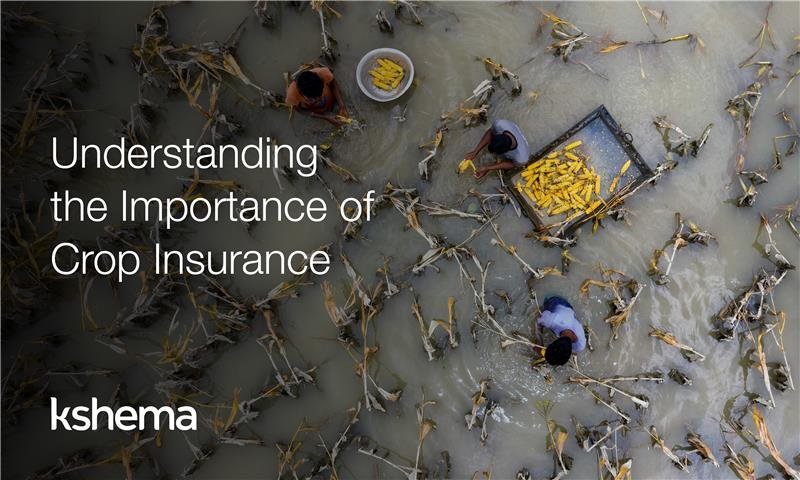
A Crop Insurance Claim is a request made by a farmer to receive compensation for crop loss or damage caused by events such as natural calamities, pests, diseases, or adverse weather conditions.
These claims are processed under approved crop insurance schemes and help farmers reduce financial stress during unexpected agricultural losses.
When Should You File a Crop Insurance Claim?
Use this quick rule: File as soon as you observe damage. Under PMFBY, you must intimate within 72 hours for localized calamities (hailstorm, landslide, inundation/flood, and windstorm or ‘andhori/aandhi’) and post‑harvest losses. For widespread yield losses due to drought, flood, or cyclone, claims are automated based on notified yield—no individual intimation is required, but ensure your policy and cropping details are correct with your bank/insurer.
Timelines that matter
- Localized calamity or post‑harvest loss: Intimate within 72 hours of the event or discovery of loss.
- Prevented sowing: Intimate within 72 hours from end of the sowing window if sowing could not be done due to adverse weather.
- Settlement window: After assessment and approvals, insurers typically settle PMFBY claims within 30–45 days of receiving final data/approvals from authorities.
Claim process: What happens after you file
- Registration: Your intimation is recorded and a claim number is generated.
- Assessment: Field officer/assessor visits for localized losses; for area approach, CCE/yield data is compiled by authorities.
- Approval: The insurer reviews reports. Status may show ‘Approved by IC’ once the Insurance Company accepts the claim.
- Payment: On approval, claim is credited to your bank account linked to the policy.
Steps to File a Crop Insurance Claim
- Inform the insurer or authorized channel immediately after crop loss
- Submit claim intimation with policy and land details
- Field inspection or yield assessment is conducted
- Claim is verified under the applicable crop insurance scheme
- Approved compensation is credited directly to the farmer’s bank account
How to check agriculture insurance company claim status
- PMFBY portal: Use your application/policy number under ‘Farmer Corner’ > ‘Track Application/Claim Status’.
- Insurer portal/app: Enter policy/claim number to see real‑time updates (Received, Under Assessment, Approved by IC, Paid).
- Bank/CSC: Ask the branch/CSC to check claim status against your KCC/policy.
- Helpline: Call insurer/PMFBY helpdesk with policy details.
Common reasons claims get delayed or rejected
- Late intimation beyond allowed window without valid reason.
- Incorrect crop/land details or mismatch with sowing declarations.
- Insufficient evidence (no geo‑tagged photos, missing documents).
- Missed field inspection due to unavailability at farm.
Role of Kshema General Insurance in Safeguarding the Small and Marginal Farmers
At Kshema General Insurance, we recognise the vital role of small and marginal farmers in India’s agricultural landscape. Our crop insurance solutions are tailored to meet the unique challenges faced by these farmers, offering them the financial security they deserve.
Our Key Offerings Include:
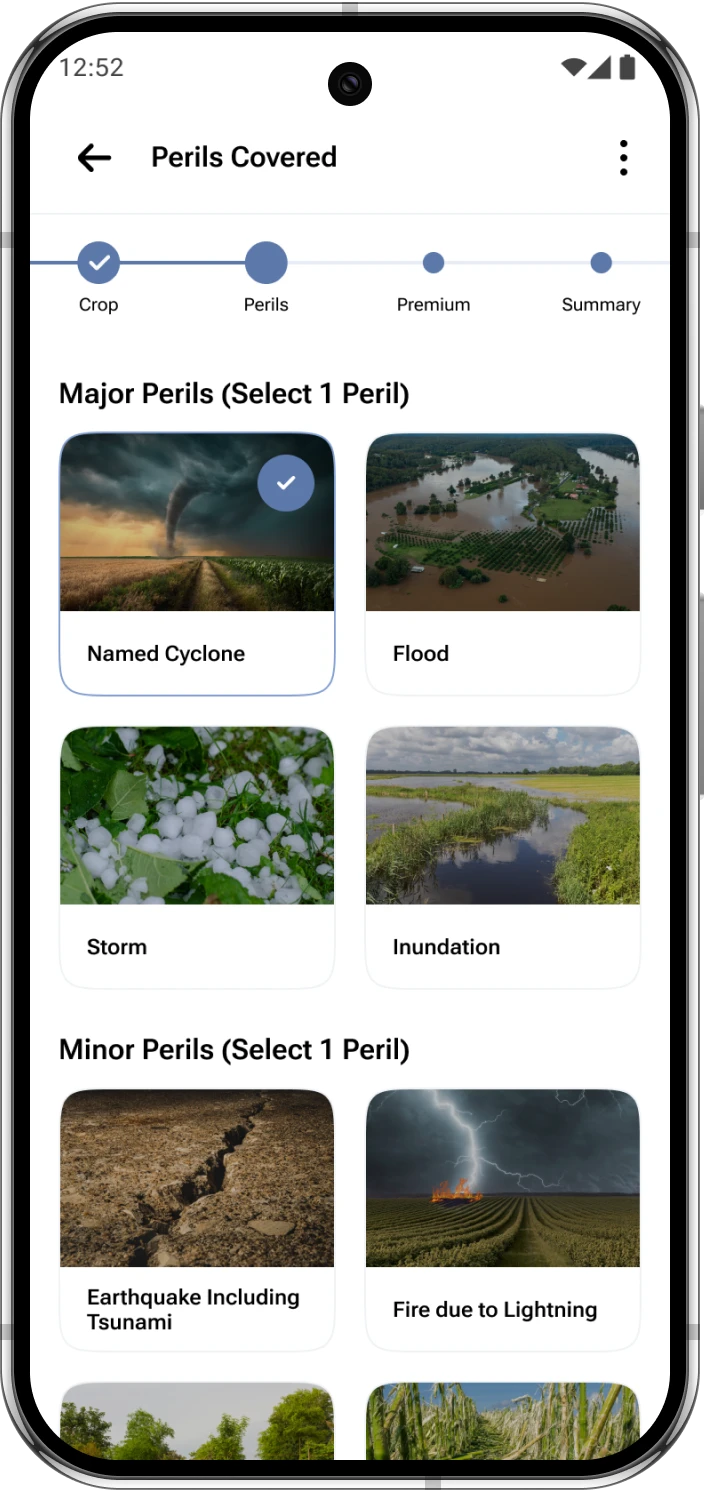
- Comprehensive or customisable protection against losses caused by 8 perils.
- Coverage for damage caused by wild animals like elephants, wild boars, monkeys, and rabbits.
- Simplified enrollment and claims processes using the Kshema app to ensure ease of access for farmers.
Understanding agricultural crop insurance claim types
1. Widespread yield loss (area approach)
2. Localized calamity (individual farm level)
3. Post‑harvest loss
4. Prevented sowing
How to file PMFBY claim online (step‑by‑step)
- Go to pmfby.gov.in or open the Crop Insurance App.
- Login/Register using your mobile and select ‘Report Crop Loss/Claim’.
- Enter policy details (season, district, crop) and loss category (localized/post‑harvest/prevented sowing).
- Upload geo‑tagged photos/video (with date/time), and add brief description (e.g., ‘andhori windstorm flattened 60% of maize’).
- Submit and note the claim reference number. Also inform your village revenue/agriculture officer or insurer helpline for inspection scheduling.
Beyond PMFBY:Other agriculture insurance options
Can I fill the claim form now?
Documents you will likely need
- Policy proof: Policy copy/passbook entry/KCC details.
- Farmer ID: Aadhaar and bank account details (cancelled cheque/passbook).
- Land records: 7/12, RoR, or tenancy/cultivation proof as per state norms.
- Sowing proof: Seed bills, sowing declaration, or photo evidence.
- Loss evidence: Geo‑tagged photos/videos, local officer’s report if available.
What to do right after a loss
- Take dated, geo‑tagged photos/videos from multiple angles.
- Note event details: date, time, rainfall/wind if available, village, survey number.
- Inform your village agriculture/revenue officer and neighbors (witnesses help).
- Do minimal salvage to prevent further loss; keep receipts and notes.
Need clarity on your claim process?
Coverage vs. exclusions (typical, check your policy)
| Category | Included (Illustrative) | Excluded (Common) |
|---|---|---|
| Perils | Drought, flood/inundation, cyclone, hailstorm, landslide, pests/diseases (as notified) | Damage due to negligence, wilful act, avoidable delay in harvest beyond covered window |
| Scope | Area approach (widespread yield loss) and individual farm level (localized/post‑harvest) | Losses outside notified crops/areas/season |
| Post‑harvest | Damage to harvested crop kept in field for drying (up to notified days, e.g., 14) | Damage after the covered post‑harvest window or in storage away from field (unless covered) |
Conclusion
To maximize your Crop Insurance Claim success: report fast (ideally within 72 hours for localized/post‑harvest losses), submit strong geo‑tagged evidence, keep your policy and bank details accurate, and regularly track your claim status on the PMFBY or insurer portal. For area-based yield losses, payments are made based on notified yield results—so ensure your records are always up to date. Prepare before the season, understand your coverage, and stay claim‑ready to protect your farm income.
Staying informed and acting promptly helps safeguard your farming income during unexpected agricultural risks.
If you need help, contact your Kshema General Insurance helpline or local agricultural insurance nodal officer. Ready to file a claim or check status? Reach out to Kshema support or log into your policy portal to start the process.