
What Is Organic Farming
Organic farming in India is becoming a practical choice for farmers who want healthier soil, lower input costs and better income from premium markets. With rising concerns about chemical usage, many rural communities are returning to natural and traditional farming methods. This guide explains the benefits of organic farming in India, the practices used, the government schemes available, and how it supports rural wellness and long‑term sustainability.
- Buy in easy steps
- Premium Starts at INR 499
- Protect 100+ Crops
- Quick & Easy Claims

Organic farming in India has emerged as more than just a trend. It is a transformative movement reshaping the agricultural landscape and empowering rural communities. As the country grapples with the environmental and health consequences of conventional farming, organic methods offer sustainable and holistic alternatives. This blog explores how organic farming is not only revitalising soil and ecosystems but also fostering rural wellness through economic resilience, community empowerment, and healthier lifestyles.
Switch to Organic. Secure Your Soil. Discover how organic farming in India boosts income, health, and resilience.
👉 Download the kshema app to explore crop protection plans
The Rise of Organic Farming in India
India’s agricultural heritage is deeply rooted in natural farming practices. Before the Green Revolution introduced chemical-intensive methods which played a significant part in making India a food-secure nation, Indian farmers relied on organic inputs, crop rotation, and biodiversity to maintain soil fertility and productivity. Today, as awareness is growing around the adverse effects of synthetic fertilisers and pesticides, there is a renewed interest in organic farming in India.
According to recent government data, India has over 2.7 million organic farmers—the highest in the world. States like Sikkim, which became the first fully organic state in 2016, are leading the way, demonstrating that large-scale adoption of sustainable agricultural practices is not only feasible but also beneficial.
What Makes Organic Farming Sustainable
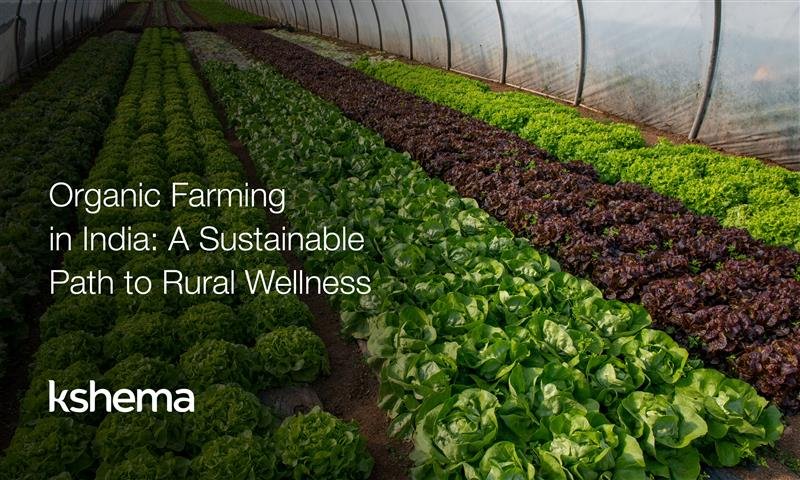
At its core, organic farming is about working with nature. It avoids synthetic chemicals, promotes biodiversity, and focuses on soil health through composting, green manuring, and crop rotation. These sustainable agricultural practices help maintain ecological balance and reduce pollution, making farming more resilient to climate change.
Organic farming is sustainable because it focuses on building soil rather than depending on chemicals. Farmers use compost, cow dung‑based mixtures, crop rotation and mulching to naturally improve soil fertility. These methods increase water retention, reduce pest attacks and make crops stronger against droughts. For small and marginal farmers, these practices reduce input costs and help maintain long‑term soil health.
Economic Empowerment Through Organic Farming
Many farmers practising organic farming in India earn 20–40% higher prices for certified produce in urban markets. Demand is especially strong for vegetables, fruits, pulses and millet-based organic foods. Because organic farming relies on natural inputs, farmers spend less on fertilisers and pesticides, helping them reduce debt and improve income stability.
Government initiatives like the Paramparagat Krishi Vikas Yojana (PKVY) and the National Programme for Organic Production (NPOP) are helping farmers transition to organic methods by providing financial support, training, and certification assistance. These programmes are instrumental in scaling sustainable agricultural practices across the country.
Moreover, organic farming reduces dependency on costly chemical inputs, lowering production costs. This is especially beneficial for farmers who are economically vulnerable as they may have taken debt to purchase fertilisers and pesticides.
Health and Wellness Benefits
The health benefits of organic farming extend beyond the farm. Organic produce is free from harmful residues of synthetic pesticides and fertilisers, making it safer for consumers. It’s also richer in nutrients, thanks to healthier soil and natural growth processes.
For rural communities, the shift to organic farming means reduced exposure to toxic chemicals, which have been linked to respiratory issues, skin diseases, and even cancer. By embracing organic farming, farmers in India are not only protecting their own health but also contributing to the wellness of their families and communities.
Organic farming In India challenges
Although organic farming has many benefits, farmers often face challenges such as certification costs, lack of market access and a temporary dip in yield during the transition phase. Training and government support can help overcome these hurdles, making the shift smoother and more profitable in the long run.
Community and Cultural Revival
Organic farming often involves the utilisation of traditional knowledge systems and community-based practices. In many parts of India, farmers are reviving age-old techniques such as Panchagavya (a mixture of cow-based products used as fertiliser) and Jeevamrut (a microbial culture for soil enrichment). These methods are deeply intertwined with local culture and spirituality, fostering a sense of pride and identity.
Community‑based organic farming increases collaboration among farmers. When farmers form FPOs or self-help groups, they can share inputs, reduce costs, and collectively negotiate better prices. Traditional methods like Jeevamrut and Panchagavya improve soil strength and help farmers stay connected to cultural practices.
Policy Support and Institutional Backing
The Indian government has taken significant steps to promote organic farming in the country through policy frameworks and institutional support. In addition to PKVY and NPOP, the Mission Organic Value Chain Development for Northeastern Region (MOVCDNER) aims to develop certified organic production in a value chain mode. These schemes not only provide financial incentives but also facilitate infrastructure development, capacity building, and market access.
Furthermore, the Food Safety and Standards Authority of India (FSSAI) has introduced the Jaivik Bharat logo to help consumers identify authentic organic products. This regulatory clarity is crucial for building trust and expanding the organic market.
Growing Consumer Awareness
Urban consumers are increasingly seeking healthier and environmentally friendly food options, driving demand for organic produce. This shift in consumer behaviour is creating new opportunities for farmers engaged in organic farming in India. E-commerce platforms, organic food stores, and farm-to-table models are bridging the gap between rural producers and urban buyers.
Organic farming in India is more than an agricultural method—it is a path to healthier soil, better income and stronger rural communities. With natural inputs, lower costs and growing consumer demand, organic farming offers long‑term benefits for farmers and the environment. To safeguard crops and strengthen resilience, farmers can explore tools and protection plans available on the Kshema app.
1. What is organic farming?
Farming without chemicals using natural, eco‑friendly methods.
2. Why is organic farming good for soil?
It improves soil health and keeps nutrients balanced.
3. Is organic farming profitable in India?
Yes, farmers earn more from premium organic produce.
4. What are common organic farming practices?
Composting, crop rotation, mulching and natural pest control.
5. Does organic farming reduce costs?
Yes, it cuts fertiliser and pesticide expenses.