
Crop insurance is a practical safety net for India’s farmers, reducing income volatility from weather shocks, pests and market disruptions. By shifting part of production risk to an insurer, crop insurance supports timely recovery, keeps credit cycles stable, and encourages investment in better inputs and practices. For smallholders and larger farms alike, understanding scheme features and enrolment options is the first step to building resilient agriculture.
Understanding the advantages of crop insurance helps farmers and policymakers recognise how it protects livelihoods and strengthens rural India.
- Buy in easy steps
- Premium Starts at INR 499
- Protect 100+ Crops
- Quick & Easy Claims

Key benefits at a glance:
- Protects farmers against crop loss from weather, pests and natural calamities.
- Key benefits: Financial stability, faster claim payouts, access to credit and input security.
- Who it helps: Smallholders, commercial farmers, agri-lenders and rural communities.
- How to act: Check eligibility, choose a plan, enroll before season start and keep records for claims.
| S.No | Advantage |
|---|---|
| 1 | Direct financial payouts after verified loss |
| 2 | Faster, often digital, claim settlement |
| 3 | Improved access to formal credit |
| 4 | Incentive to invest in modern agricultural inputs |
| 5 | Reduces distress sales and migration pressure |
| 6 | Supports long‑term climate resilience |
Why Crop Insurance Is Essential for Indian Farmers
Most Indian farmers depend heavily on seasonal rainfall and are vulnerable to climate change. A failed monsoon can eliminate an entire year’s income. Similarly, pest infestations or crop diseases can spread quickly, leaving farmers with no recoverable produce.
Without protection, farmers may fall into debt traps, forced to borrow at high interest rates to sustain their families. Crop insurance provides a financial cushion, ensuring that farmers are not left destitute when nature or markets turn against them. Among the many crop insurance benefits, the most important is its role in farmer income protection, which helps stabilise rural households.
Key Advantages of Crop Insurance for Farmers in India
- Risk mitigation: Crop insurance shields farmers from unexpected natural events such as droughts, floods, landslides etc.
- Income stability: Even when crops fail, farmers receive compensation, ensuring income protection through timely claim settlements.
- Encouragement of investment: With financial risks reduced, farmers feel more confident investing in modern farming practices, improved seeds, fertilisers and equipment.
- Better Access to Credit:Banks and financial institutions are more willing to provide loans to insured farmers, improving their financial stability and helping them grow their operations.
- Psychological security: The assurance of compensation reduces mental stress, allowing farmers to focus on productivity and long‑term planning.
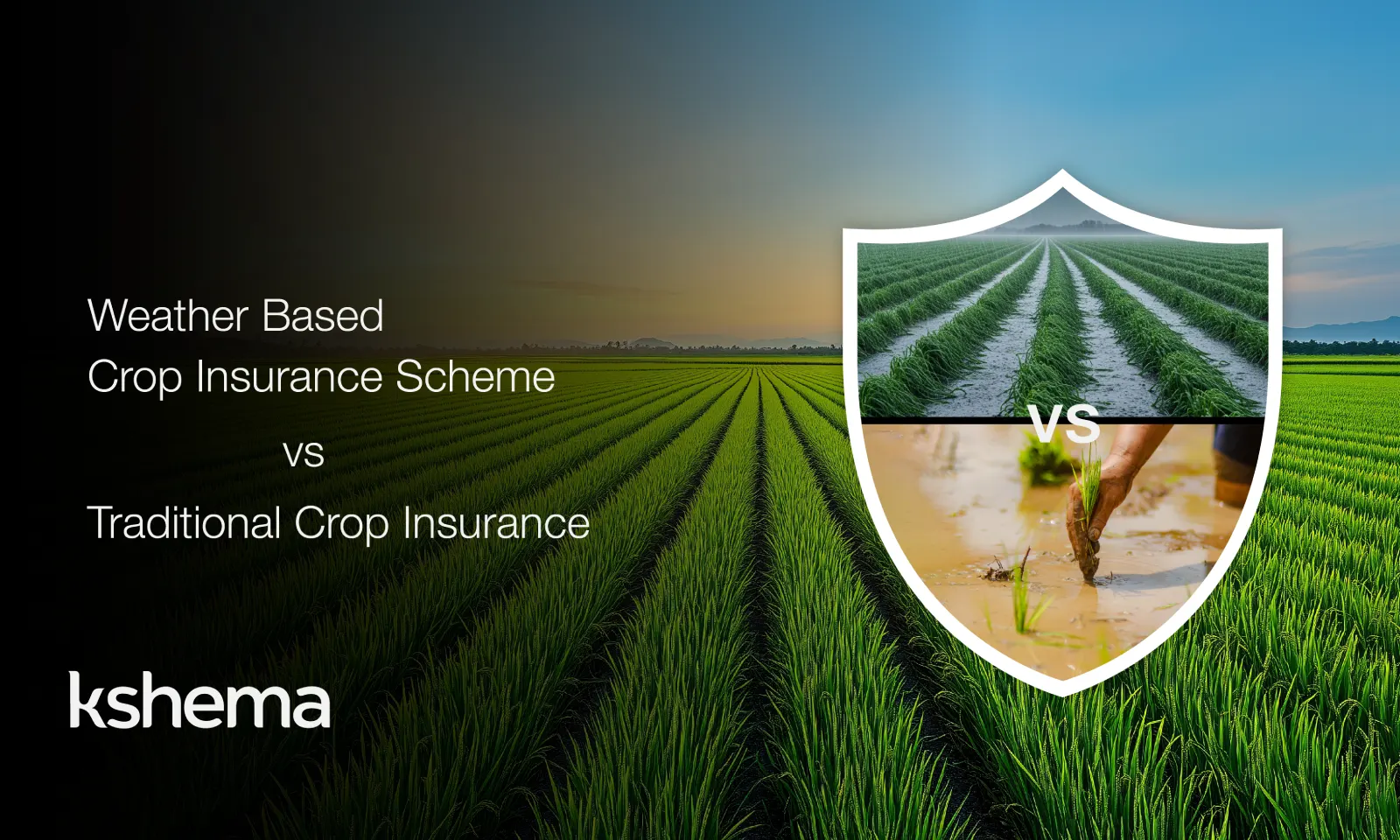
Comparison of Common Crop Insurance Types
| Type | Trigger | Best for | Verification method |
|---|---|---|---|
| Named‑peril / Yield‑based | Actual crop damage or yield loss | Individual fields, high‑value crops | Field inspection, yield measurement |
| Area‑yield | Area average yield drop | Regions with uniform yields | District or mandal yield data |
| Weather‑index | Weather thresholds (rainfall, temperature) | Smallholders, quick payouts | Automated weather stations or satellite data |
How Crop Insurance Protects Farmers’ Income
The most visible advantages of crop insurance occur during adverse events. When floods, droughts or pest outbreaks damage crops, insured farmers receive claim payouts that help them manage essential expenses, repay loans and prepare for the next season.
This prevents farmers from entering debt cycles. Additionally, when rural households remain financially stable, demand for goods and services in local markets increases—strengthening the overall economy.
Crop Insurance Schemes and Their Impact
India has introduced several crop insurance schemes, such as the Pradhan Mantri Fasal Bima Yojana,(PMFBY) to provide financial protection to farmers against crop loss. Private insurers like Kshema, with a focus on rural sectors, also provide customised crop insurance solutions designed to offer strong farmer income protection.
These initiatives aim to make insurance affordable and accessible to small and marginal farmers. By subsidising premiums and simplifying claim processes, the Government schemes aim to keep premiums affordable through subsidies and simplified processes. Private players complement these efforts by offering broader crop coverage, tailor‑made plans and faster claim settlement.
These combined efforts have improved agricultural resilience and reduced financial distress among farmers.
Long-Term Advantages of Crop Insurance
The advantages of crop insurance are not limited to immediate relief. Over time, crop insurance fosters resilience in the agricultural sector. By
- Reducing vulnerability,
- Farmers can plan long-term strategies,
- Diversify crops,and
- Adopt sustainable practices.
This contributes to national food security and strengthens India’s agricultural foundation.
Additionally, crop insurance benefits encourage innovation. Farmers are more willing to experiment with new technologies, high-yield seeds, and eco-friendly practices when they know their risks are covered. This progressive outlook enhances productivity and ensures that agriculture remains viable for future generations.
Challenges and the Way Forward
Despite its benefits, crop insurance faces challenges:
- Low awareness among farmers
- Delays in claim settlements
- Limited coverage in some regions
- Complicated processes that may reduce trust
To maximise the crop insurance benefits, policymakers must focus on improving awareness, streamlining claim processes, and expanding coverage to include more crops and regions. Digital platforms and mobile applications can play a vital role in bridging gaps, ensuring that farmers receive timely information and support.
Crop Insurance and Climate Change
Climate change has increased agricultural risks dramatically. Rising temperatures, unpredictable rainfall, prolonged dry spells and extreme weather events threaten crop output.
According to global agricultural research organisations like the Food and Agriculture Organization (FAO), climate change is increasing the frequency and severity of extreme weather events affecting agriculture worldwide.
Crop insurance helps farmers cope with these challenges by providing a financial buffer during weather‑related shocks. This ensures farmer income protection even under extreme conditions, helping maintain India’s agricultural stability.
Conclusion
The advantages of crop insurance in India are significant and far‑reaching. From income protection to climate resilience, crop insurance acts as a lifeline for millions of farming families. As climate risks grow, its role in safeguarding rural livelihoods will only become more important.
By reducing risks, stabilising incomes and supporting innovation, crop insurance strengthens not only individual farmers but also India’s entire agricultural foundation.
Frequently Asked Questions
1. What are the main advantages of crop insurance for farmers in India?
Crop insurance protects farmers from revenue loss due to weather, pests and natural calamities, ensuring quicker recovery, access to credit and reduced financial stress.
2. How does weather-index crop insurance work?
Weather-index insurance pays out when predefined weather metrics (like rainfall deficit) cross set thresholds—payouts are automatic and quicker, without needing field-by-field loss measurements.
3. Are there subsidies available for crop insurance premiums?
Yes. Central and many state governments subsidise a portion of premiums for eligible farmers, lowering out-of-pocket costs—check the latest local scheme rules and eligibility.
4. What are the long-term benefits of crop insurance?
Long‑term benefits include resilience, adoption of sustainable practices, crop diversification and improved productivity.
5. How does crop insurance help during climate change?
It provides a safety net when extreme weather events damage crops, helping farmers maintain financial stability despite unpredictable climate conditions.