


Crop insurance policies help farmers protect their crops from sudden and unpredictable events such as floods, cyclones, hailstorms and animal attacks. Small and large farmers across India face rising climate risks, and understanding what perils are covered is essential for securing farm income. This guide clearly explains the major perils covered under crop insurance policies and how Kshema’s crop insurance policies ensures farmers stay financially protected.
- Buy in easy steps
- Premium Starts at INR 499
- Protect 100+ Crops
- Quick & Easy Claims
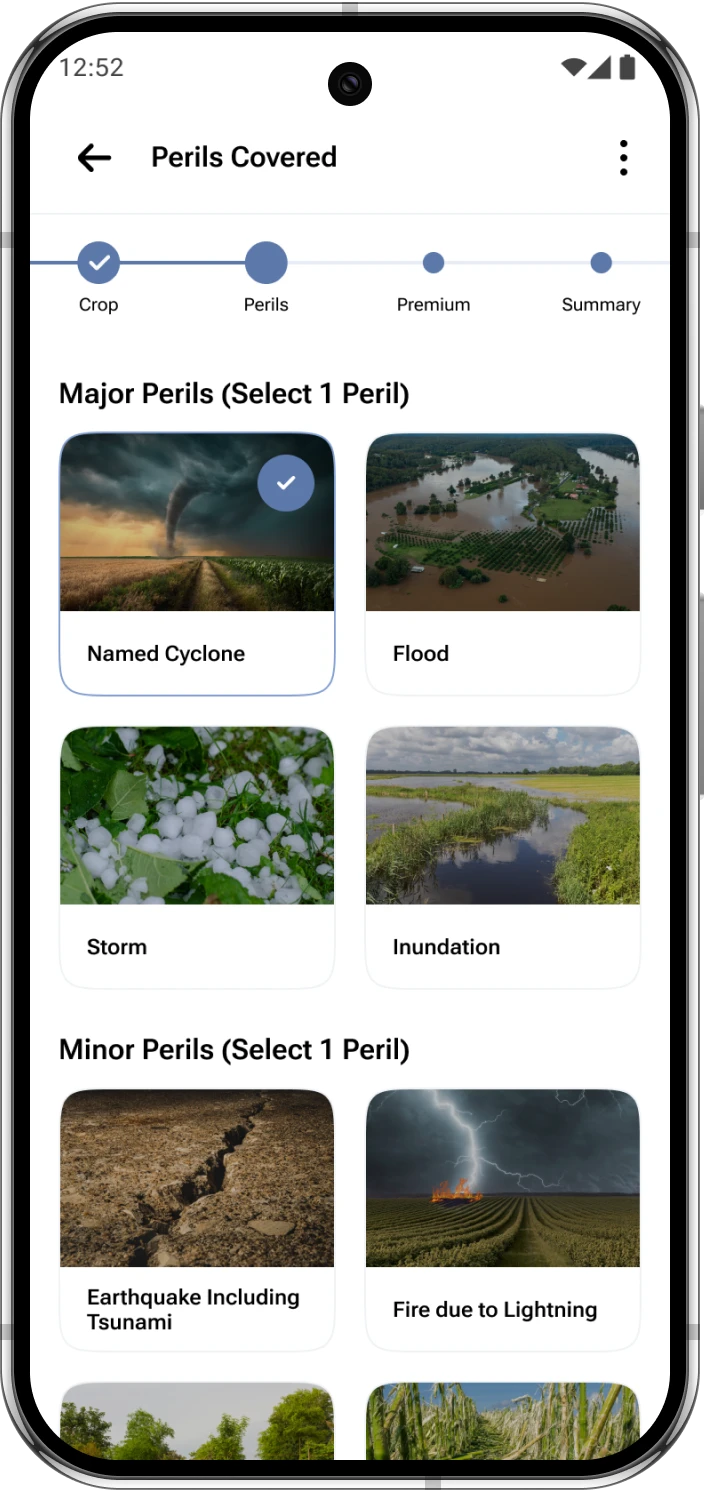
Farmers cannot always predict weather events or control external dangers, which makes crop insurance policies vital for every cropping season. Whether it is standing crop loss, soil erosion or physical crop damage, knowing the covered perils helps farmers choose the right protection.
Introduction to Kshema’s Crop Insurance Policies
Farming is an uncertain activity in the best of circumstances. However, irrespective of the number of precautions undertaken, crop yields can still be impacted significantly by factors beyond the control of farmers. Whether it’s a weather-related disaster, or an animal attack, these risks can have devastating consequences. Kshema crop insurance policies are designed to offer protection against these specific dangers. These insurance policies cover a variety of natural and external events that can lead to crop loss, offering farmers financial support and helping them recover more quickly.
1. Fire Due to Lightning
2. Landslides
3. Cyclone
4. Flood
5. Inundation
6. Earthquake
7. Animal Attack
8. Hailstorm
Why Farmers Need Kshema Crop Insurance
How Crop Insurance Policies Help Farmers Recover
Conclusion
Crop insurance policies give farmers strong protection against unpredictable natural and external risks. By covering perils such as lightning fires, flood, cyclone, hailstorm and animal attacks, Kshema ensures farmers can continue farming without financial fear. With reliable compensation and flexible coverage options, Kshema General Insurance helps farmers secure their livelihood and prepare confidently for the next season.
Frequently Asked Questions (FAQs)
1. What perils do crop insurance policies cover?
They cover flood, cyclone, hailstorm, lightning fires, earthquake and animal damage.
2. Are localised weather events covered?
Yes, many policies include protection from specific localised climate risks.
3. Does crop insurance cover sowing failure?
Some policies include sowing failure under weather triggered risks.
4. Are post harvest losses included?
Certain policies cover post harvest damage from unseasonal rain.
5. How can farmers see which perils are covered?
Farmers can check coverage details on the Kshema App or policy document.