

Cyclone Safety Tips for Farmers: Protecting Crops and Livelihoods
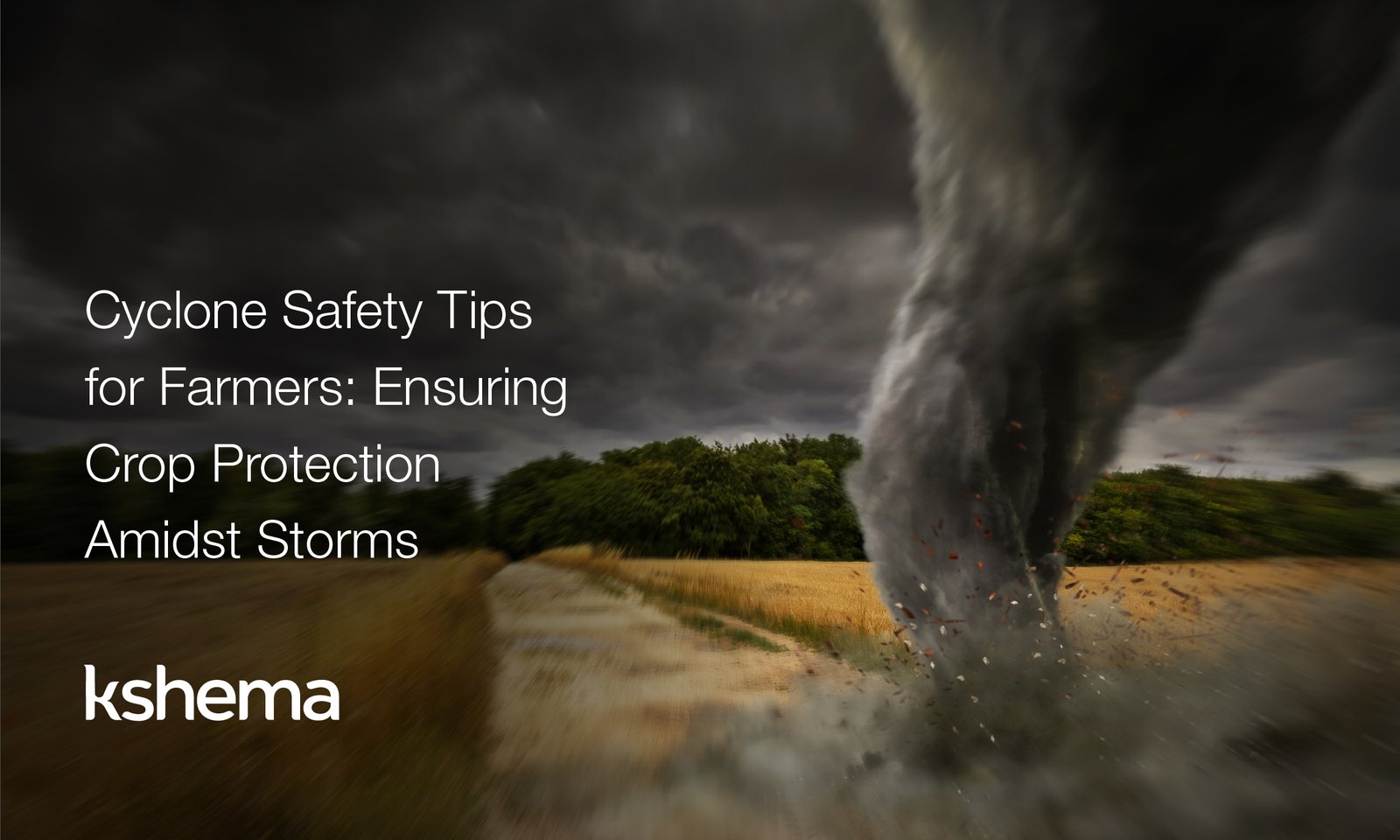
Cyclones pose a significant threat to farmers, causing widespread crop damage, infrastructure, and livelihoods. With unpredictable weather patterns becoming more frequent due to climate change, it’s crucial to implement effective strategies to safeguard crops and minimise losses.
Choose Kshema’s Reliable Protection for Your Crops
- Buy in easy steps
- Premium Starts at INR 499
- Protect 100+ Crops
- Quick & Easy Claims
Thank You!
The download link has been sent to your phone. Please check your SMS or WhatsApp messages

This blog provides cyclone safety tips for farmers to enhance preparedness, reduce risks, and ensure the protection of both crops and agricultural assets. By following these actionable strategies, farmers can mitigate cyclone damage, secure their livelihood, and improve recovery.
Cyclone Safety Tips for Farmers
Understanding the Impact of Cyclones on Agriculture
Cyclones often bring strong winds, heavy rainfall, high waves, and flooding, leading to:
- Crop destruction due to excessive water and wind damage.
- Soil erosion impacting long-term fertility.
- Infrastructure damage to storage units, farmhouses, and irrigation systems.
To combat these challenges, farmers must proactively prepare before, during, and after a cyclone.
Pre-Cyclone Preparedness: Essential Steps for Farmers
1. Stay Informed and Monitor Weather Updates
Farmers should consistently track weather reports through government meteorological agencies, mobile weather apps, and local agricultural extension services.
- Install weather apps like IMD (India Meteorological Department) or NOAA for real-time alerts.
- Follow emergency guidelines from authorities regarding evacuation and safety tips.
- Participate in local training programs to learn about disaster preparedness.
2. Strengthen Farm Infrastructure
A well-prepared farm can withstand high winds and heavy rainfall better than an unprotected one.
- Reinforce greenhouses and polyhouses with strong materials.
- Anchor farm structures such as irrigation pumps, storage units, and fences.
- Check drainage systems to prevent waterlogging and soil erosion.
3. Secure Livestock and Farm Equipment
Livestock and essential machinery should be secured well before the cyclone hits.
- Move animals to safer ground or designated shelters.
- Store machinery and tools in reinforced storage units.
- Ensure feed and water supplies for livestock are stocked in safe locations.
4. Harvest Crops Before the Cyclone Hits, if possible
If a cyclone is approaching, early harvesting can help save a significant portion of the yield.
- Harvest mature crops that are at risk of damage.
- Store harvested produce in waterproof containers or secure storage units.
- Dry grains properly to prevent fungal infections due to moisture.
5. Prepare Emergency Supplies
Farmers should keep an emergency kit ready, including:
- Battery-operated flashlights and radios.
- First-aid supplies and essential medicines.
- Sufficient food and drinking water for families and workers.
- Fuel reserves for generators or emergency vehicles.
During the Cyclone: Safety Measures for Farmers
6. Seek Safe Shelter
Once the cyclone arrives, prioritise some of the cyclone safety tips over everything.
- Move to cyclone-resistant shelters or secure indoor locations.
- Avoid staying near trees, weak buildings, or electrical poles.
- Follow local authorities’ evacuation orders if necessary.
7. Protect Stored Grains and Seeds
Cyclones often lead to moisture intrusion, which can ruin stored crops.
- Keep grains in elevated storage units.
- Use airtight, waterproof containers for seed storage.
- Ensure pesticides and fertilisers are safely stored to prevent contamination.
8. Disconnect Power Supply
To prevent electrical hazards:
- Turn off farm equipment to avoid short circuits.
- Disconnect irrigation pumps and machinery from power sources.
- Keep emergency lighting and inverters/generators ready.
Post-Cyclone Recovery: Restoring the Farm
9. Assess and Document Damage
After the storm passes, document all the damages for insurance claims and government relief applications.
- Take clear photographs of affected areas.
- Prepare a detailed list of lost crops, infrastructure damage, and livestock loss.
- Contact insurance providers for claim intimation and damage assessment.
10. Restore Soil Health and Drain Excess Water
Cyclones can degrade soil quality, making post-storm soil management crucial.
- Use organic compost to replenish nutrients.
- Implement soil-binding plants to prevent erosion.
- Ensure proper drainage arrangements to remove excess water quickly.
11. Replant and Diversify Crops
Farmers should consider fast-growing and climate-resilient crops post-cyclone.
- Opt for short-duration crops to regain financial stability.
- Diversify crops to reduce future risks.
- Seek government aid for replantation assistance.
12. Secure Crop Insurance for Financial Protection
Cyclones and extreme weather events can cause devastating losses for farmers. Kshema General Insurance offers comprehensive crop insurance solutions to safeguard your hard work and investment.
- Get insurance against various perils like cyclones, floods, etc., ensuring financial security during crisis.
- Maintain updated farm records to simplify and speed up the claim processes.
Conclusion
Cyclones pose severe challenges to farmers, but proactive preparation and strategic planning can significantly minimise damage. By staying informed, strengthening farm and storage infrastructure, and taking preventive measures, farmers can protect their crops, livestock, and livelihoods.
Implement these cyclone safety tips to ensure sustainable farming even in extreme weather conditions.
Frequently Asked Questions on Cyclone Safety Tips for Farmers
1. What are the best cyclone safety tips for farmers?
Farmers should secure farm structures, store seeds safely, use weather alerts, and adopt crop insurance to reduce cyclone risks.
2. What cyclone safety measures can protect crops?
Safety measures include timely harvesting, drainage preparation, windbreak plantation, and pesticide use to prevent post‑cyclone pest attacks.
3. How can pesticides help after a cyclone?
After cyclones, stagnant water increases pest infestations. Using recommended pesticides helps protect crops from secondary damage.
Disclaimer:
“We do not assume any liability for any actions undertaken based on the information provided here. The information gathered from various sources and are displayed here for general guidance and does not constitute any professional advice or warranty of any kind.”