
How Does Crop Insurance Work? A Complete Guide for Farmers
Crop insurance works by compensating farmers financially when their crops are damaged due to natural risks like drought, flood, pests, or disease.
If you’re wondering how does crop insurance work, this guide explains the complete process in simple terms—from buying a policy to receiving a claim payout.
In this guide, you’ll understand:
- What crop insurance means in agriculture
- How crop insurance works step by step
- What losses and crops are covered
- How premiums and claims are calculated
- Buy in easy steps
- Premium Starts at INR 499
- Protect 100+ Crops
- Quick & Easy Claims
What is Crop Insurance?
Crop insurance in agriculture is a specific form of insurance solution designed to protect farmers from financial losses resulting from natural disasters, animal attacks, and other unforeseen circumstances that can impact their crops and, hence livelihoods. Insurance provides a safety net by compensating the insured for crop losses, allowing them to recover and continue their operations.
What Is Crop Insurance in Agriculture?
Crop insurance is a risk‑management tool that protects farmers from financial losses caused by events beyond their control. By paying a small premium, farmers receive compensation if their crop is damaged during the season.
How Does Crop Insurance Work?
Crop insurance policies work by offering farmers a payout for successful claims for losses to their crops caused due to perils covered under the policy. The process involves several key steps that may vary depending on the policy type and provider.
This process explains how crop insurance works for farmers, ensuring they receive timely compensation for covered losses.
Step 1 – Buying a Crop Insurance Policy
Farmers buy a crop insurance policy before or at the start of the crop season. The policy is chosen based on the crop type, location, season, and expected value of the crop.
Farmers purchase crop insurance policies from a general insurer like Kshema General Insurance.These policies come with different coverage options, allowing the farmers to tailor the coverage based on the type of crop and the potential risks they face.
Step 2 – Paying the Premium
Farmers pay a premium to buy the crop insurance policy. This payment is typically made at the start of every crop season after the sowing is done. The premium depends on the crop, insured value, and risk level of the area.
Step 3 – Crop Coverage During the Season
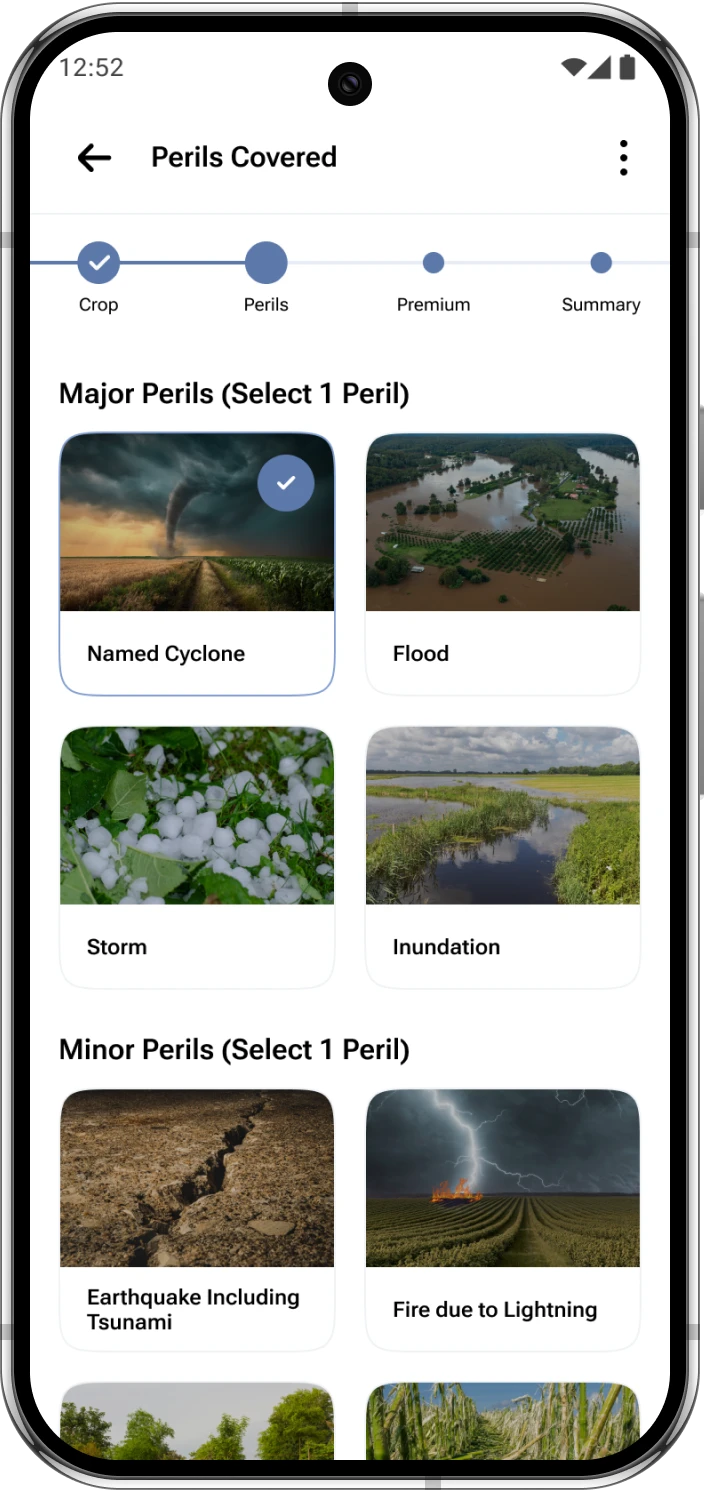
Once insured, the crop is protected against covered risks such as drought, floods, hailstorms, cyclones, pest attacks, and crop diseases.
Step 4 – Reporting Crop Loss
If a covered event damages the crop, the farmer must report the loss within the specified time. The damage is assessed through field inspections or technology‑based methods.
Step 5 – Claim Settlement
If a covered event occurs (e.g., hailstorm, flood, animal attack, etc.), the farmer can file a claim with the insurer. After assessing the extent of the damage to the crops, the insurer settles the claim of the farmer based on the agreed-upon policy terms. After verification, the insurance company calculates the loss and transfers the approved claim amount directly to the farmer’s bank account.
What Does Crop Insurance Cover?
Crop insurance usually covers losses caused by:
- Drought and dry spells
- Floods and excess rainfall
- Cyclones, storms, and hailstorms
- Pest attacks and crop diseases
- Post‑harvest losses (for a limited period)
Coverage depends on the policy terms and the notified crop area.
Which Crops Are Covered Under Crop Insurance?
Most crop insurance plans cover major crops such as rice, wheat, maize, pulses, oilseeds, millets, and commercial crops like cotton and sugarcane. Coverage depends on notified crops and regions for the season.
Why is Crop Insurance Essential?
Financial Protection Against Losses:
Stable Income
Encourages Investment and Growth:
Facilitates Access to Credit:
Promotes Food Security
Most Reliable Crop Insurance
Conclusion:
Understanding how does crop insurance work helps farmers protect their income from unpredictable weather patterns. From buying a policy to receiving a claim, crop insurance provides a reliable safety net throughout the farming season.
At Kshema General Insurance, we offer tailored crop insurance policies designed to meet the specific needs of farmers, providing peace of mind and a reliable safety net for your crops.
With the right coverage in place, farmers can continue cultivation with confidence, knowing that unexpected losses won’t disrupt their future.
Frequently Asked Questions
1. How does crop insurance work in simple words?
Crop insurance works by paying farmers compensation when their crops are damaged due to covered risks, in exchange for a small premium.
2. What is crop insurance meaning for farmers?
Crop insurance means financial protection for farmers against crop loss caused by natural events like drought, floods, pests, or diseases.
3. When should farmers buy crop insurance?
Farmers should buy crop insurance at the beginning of the crop season, usually around sowing time.
4. Does crop insurance cover partial crop damage?
Yes, compensation is paid based on the percentage of loss assessed if the damage is caused by a covered risk.
5. How long does it take to receive a crop insurance claim?
After damage assessment and approval, the claim amount is credited directly to the farmer’s bank account.