

Quick Answer:
- Buy in easy steps
- Premium Starts at INR 499
- Protect 100+ Crops
- Quick & Easy Claims
Weather Forecast in Farming: Importance, Uses & Benefits for Farmers
Weather forecasting is one of the most important tools for modern farming. Accurate forecasts help farmers decide the right time for sowing, irrigation, fertiliser application and harvesting. With climate change causing unpredictable rain, droughts and heat waves, farmers depend on timely weather updates to reduce crop loss and improve efficiency. This guide explains the importance of weather forecasting in farming, its uses, benefits and how it supports better agricultural decisions. And its role in improving farming efficiency more critical than ever.
Delays in the monsoon, unseasonal or excessive rain, and extreme weather patterns like heat or cold waves can impact crop growth, as well as the quality and quantity of production.
Quick Summary: Weather Forecast in Farming
- Helps plan sowing and harvesting
- Reduces irrigation and fertiliser wastag
- Protects crops from heavy rain, heatwaves, storms and drought
- Supports smart farming and better decision-making
- Essential for climate-risk management and crop insurance
In this blog, you will learn
- Why weather forecasting is important for farming
- How forecasts improve farming efficiency
- Weather-based farming practices
- Modern smart-farming techniques
- How crop insurance reduces weather risks
Importance of Weather Forecasting in Farming
The weather forecast in farming plays a vital role in modern agriculture because it directly influences every stage of crop production. From sowing to harvesting, farmers depend on accurate forecasts to make informed decisions that reduce risks and improve yields. The importance of weather forecasting in agriculture has grown significantly with climate change, as unpredictable rainfall, droughts, and heat waves threaten crop productivity.
Accurate weather forecasts help farmers avoid losses from unexpected rain, dry spells or sudden temperature drops. They also help farmers protect high‑value crops, choose suitable varieties for the season and avoid scheduling field operations during risky weather periods.
By using the weather forecast in farming, farmers can:
- Plan the right time for sowing and harvesting to avoid crop damage.
- Optimize irrigation schedules, saving both water and energy.
- Apply fertilizers and pesticides more effectively, reducing wastage.
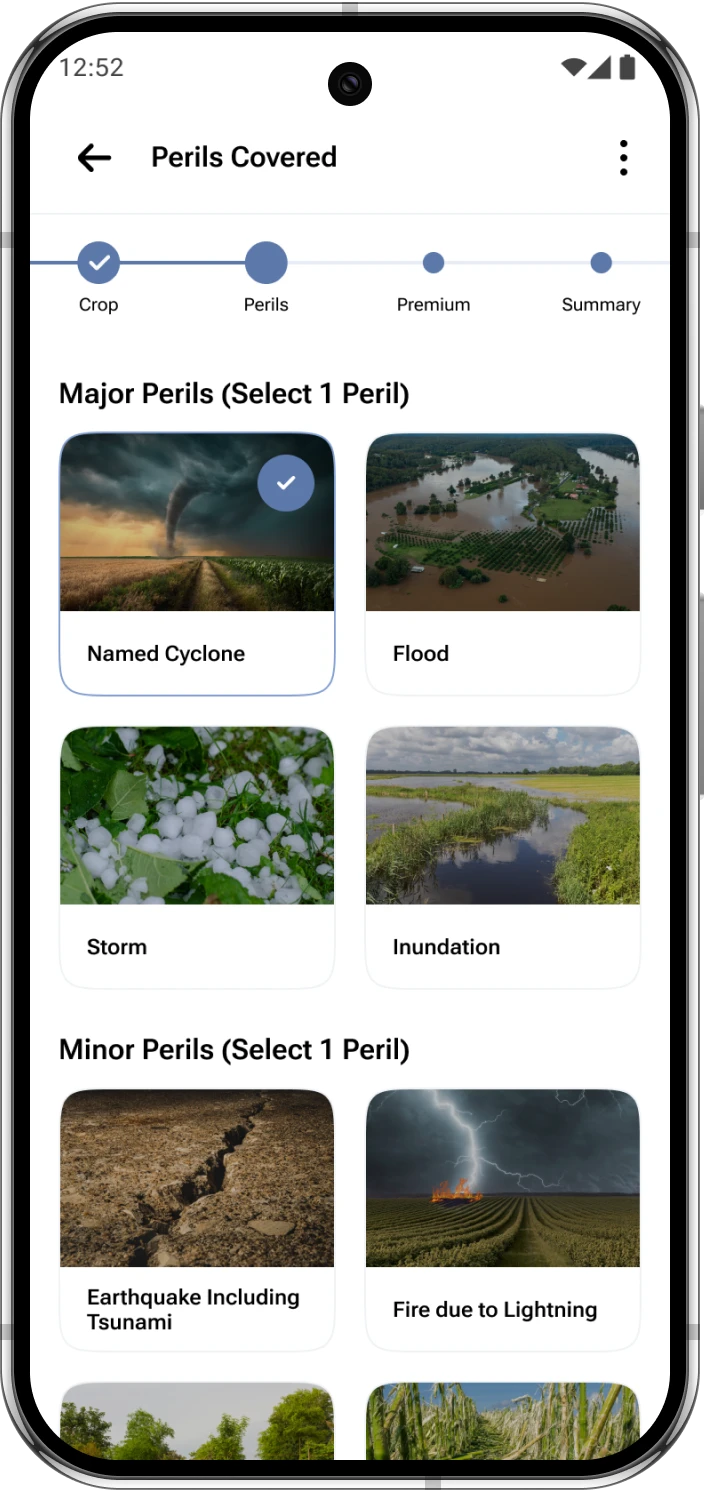
- Prepare for extreme weather events like storms, floods, or droughts.
For small and marginal farmers, the weather forecast in farming is more than just information—it is a lifeline that helps protect their livelihoods. Accurate weather forecasting for farmers ensures they can minimize losses, improve efficiency, and secure stable incomes. In short, the role of weather forecasting in agriculture is to provide farmers with the knowledge they need to adapt to changing weather conditions and sustain food production.
How Weather Forecasting Supports Agriculture
Climate change has worsened the situation by disrupting weather patterns across the globe. According to a World Resources Institute study, global agricultural productivity might be reduced by 17% by 2050 as fertile farmlands face ruin due to extreme climate events caused by climate change. Flooding, inundation, drought, cyclones are depleting the soil of its nurturing properties for agriculture.
In view of such uncertainties, the weather forecast and its dissemination to farmers assumes more importance. Weather forecasts in farming are the answer to these problems.It is like having intelligence that helps farmers make better agricultural decisions by assessing the weather’s impact on crops. This intelligence helps make smarter decisions, such as optimizing irrigation, timing fertilization, and choosing the best days for fieldwork to enhance productivity.
Study by the University of Chicago’s Energy Policy Institute in Telangana
A study by the University of Chicago’s Energy Policy Institute in Telangana found that farmers who followed weather forecasts in farming could adjust their planting decisions, highlighting forecasts as a vital climate adaptation tool for agriculture.
Weather forecasting boosts productivity by helping farmers apply fertilisers at the right time, avoid irrigation before rainfall, schedule pesticide spraying safely and plan fieldwork efficiently. This reduces resource wastage and improves soil health while increasing crop output.
Accurate medium-term and real-time weather updates can mitigate weather impact on crops.
A farmer could save water and money by skipping irrigation when rain is expected. Similarly, agricultural weather forecasts would lead to farmers choosing the optimum time and rate to apply fertiliser. Farmers can delay fertilizer application if rain is forecast to prevent runoff and ensure there is adequate soil moisture.This underlines the role of weather forecasting in agriculture as a vital tool for farmers to adapt to climate change and protect yields.
Weather-Based Farming Practices
Weather forecasts in farming makes agriculture more efficient along with encouraging cost-saving farming methods. Weather-based farming counters the effects of weather aberrations which may cause
- Physiological under-performance by crops
- Physical damage to crops
- Soil erosion and
- May render the agricultural inputs ineffective.
Weather based farming relies on weather information, especially in precision agriculture which emphasises accuracy and control while growing crops. This practice uses modern technology like GPS, satellite imagery, IoT, sensors, drones, and AI to optimize farming by analyzing data.
These technologies provide real-time data to map and monitor conditions, enabling final conclusions to be drawn alongside weather forecasts. The farmers can then utilise this information to manage their farming decisions better and increase their produce. Weather-based farming techniques make agriculture more scientific by reducing losses caused by farmers’ reliance on intuition, experience, and observation to predict weather.
Weather forecasting for agriculture also supports crop weather forecasts and outlooks, helping farmers anticipate seasonal risks and plan accordingly.
Farming Efficiency Tips Based on Weather Forecasts
Weather based farming techniques coupled with modern agricultural practices bring in more efficiency in farming. These smart farming solutions increase agricultural productivity. Some of these farming efficiency tips would include methods like drip irrigation and rainwater harvesting. The former delivers water directly to the plant’s roots. It reduces water requirements while increasing crop yields. Similarly, rainwater harvesting is a cost-saving method that helps farmers collect and store water, providing valuable support during dry spells.
Cover cropping and crop rotation are interrelated practices that protect soil health as extreme climate events threaten this vital agricultural resource. Cropping is essentially planting specific crops to cover the soil during periods when the primary crops are not growing. Crop rotation is the practice of rotating the types of crops grown in a specific area each season. These two methods enrich the soil apart from preventing soil erosion.
Other farming efficiency tips include crop diversification, vertical farming, aeroponics, and hydroponics, where farmers use weather forecasts to reduce risk and increase productivity and income.By combining modern farming practices with agriculture weather forecasting, farmers can improve yields while reducing costs.By combining modern farming practices with agriculture weather forecasting, farmers can improve yields while reducing costs and resource wastage
Crop Insurance and Weather Risk Management for Farmers
Weather forecast, weather based farming, efficient farming practices equip the farmer with the knowledge to reduce risk to both crops and their income. However, one of the most effective ways for farmers to protect their incomes from any harm caused to their crops by extreme climate events is to buy crop insurance.
Crop insurance builds a financial safety net around farmers while providing them much needed security. The University of Chicago study cited above also found that crop insurance changes the behaviour of farmers towards farming.
Together, weather forecasts in farming and crop insurance form a dual shield—forecasts guide decisions, while insurance mitigates financial risks.
Farmers who purchased crop insurance expanded their cultivated land and increased up-front investments in seeds and fertilizer. With the safety net provided by insurance, they made larger investments despite forecasts suggesting they should reduce spending. In this way, insurance and forecasts work together as climate adaptation strategies: forecasts guide investment decisions, while insurance mitigates risk.
This study emphasizes the link between accurate forecasts guiding agricultural investments, leading to more prosperous farmers and a stronger economy. Crop insurance, meanwhile, played a complementary role because it increased cultivated land and upfront investment by about 12 percent.
This shows the important role that crop insurance plans can play in mitigating risks to farmers’ produce and incomes when used in a strategic manner with weather forecasts in farming.
In conclusion, the weather forecast in farming is not just about predicting rain or sunshine—it is about empowering farmers with knowledge to improve efficiency, reduce risks, and secure their livelihoods in the face of climate change.
Conclusion:
Frequently Asked Questions About Weather Forecast in Farming
1. Why is weather forecasting important for farmers?
2. How does weather forecasting help farmers?
Weather forecasting helps farmers plan sowing, irrigation, fertiliser application and harvesting activities. It also allows them to prepare for heavy rain, drought or strong winds and reduce crop damage.
3. What are the uses of weather forecasting in agriculture?
It is used for irrigation planning, pesticide spraying, fertiliser timing, crop selection, harvest management, and preparing for weather risks like storms, dry spells or heat waves.
4. What are the types of weather forecasting in agriculture?
Short‑term (1–3 days), medium‑range (3–10 days), long‑range/seasonal forecasts and real‑time alerts via apps, satellites and Doppler radar.