

Quick Answer:
- Buy in easy steps
- Premium Starts at INR 499
- Protect 100+ Crops
- Quick & Easy Claims

In this blog, you will learn
- Why farming communities are important
- How communities support farmers
- Benefits of community-based farming
- Role of farmer networks in modern agriculture
- How crop insurance supports farming communities
Farming is often seen as an individual effort.
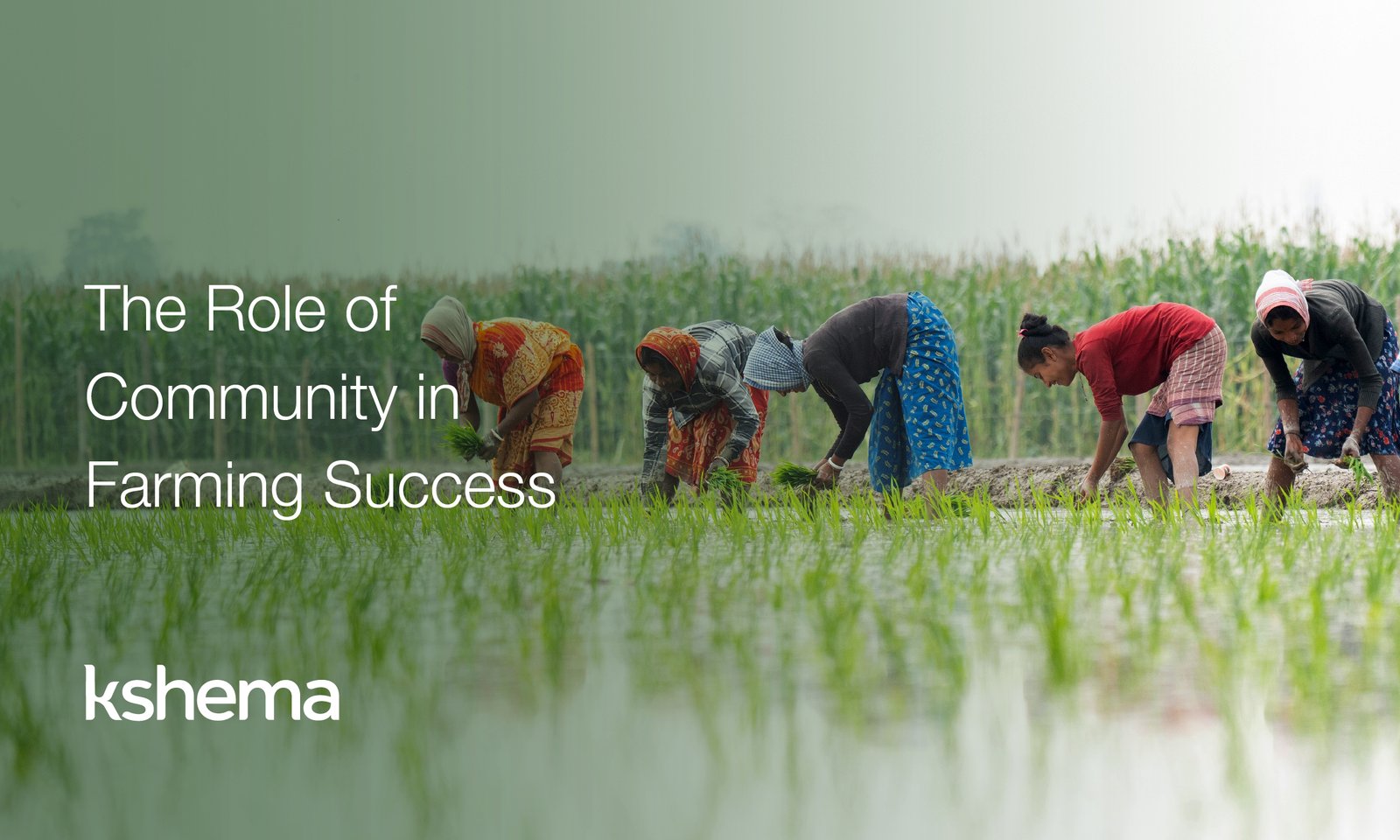
In reality, agriculture has always been a community-driven activity.
Shared knowledge, resources, and cooperation play a key role in farming success.
The Importance of a Farming Community
The role of the community in farming is critical in overcoming the many challenges that farmers face today. Climate change, pest and disease outbreaks, volatile markets, and complex supply-chain issues have made farming riskier than ever before. However, strong farming communities create a buffer against these uncertainties by fostering knowledge exchange, resource-sharing, and collaborative problem-solving.
A strong farming community in India not only supports farmers but also strengthens the entire agricultural community.
A well-knit farming community can help with:
Sharing Knowledge and Expertise:
No farmer has all the answers. Agricultural practices, soil types, pest control methods, and even equipment usage vary from farm to farm. In a farming community, farmers can share best practices, discuss their problems, and learn from each other’s successes and failures. This mutual learning creates an environment where all members of the community benefit from collective knowledge sharing.
Read Also : The Importance of Soil Health and How to Maintain It
Pooling Resources
Farming requires significant investments in land, equipment, seeds, fertilisers, and labour. Many small-scale farmers may not have the financial means to afford these resources individually. By pooling resources, a community can invest in machinery, irrigation systems, and even storage facilities that would be too expensive for any one farmer to afford.
This shared ownership reduces costs and ensures that everyone has access to the necessary tools for success. This model is often referred to as group farming or community based farming, where farmers share assets and reduce costs.
Collective Bargaining Power:
Individually, small farmers may not have the leverage to negotiate fair prices for their products or supplies. However, the farming communities can have a much stronger voice. By forming cooperatives or farmer networks, they can negotiate better prices for inputs like seeds and fertilisers or get better deals when selling their produce.
Collective bargaining also allows for easier access to crop insurance schemes, as larger groups of farmers are more attractive to insurers.Such initiatives show how farmers’ communities can negotiate better deals and support sustainable agriculture.
Resilience in Times of Crisis:
Natural disasters, market downturns, or personal tragedies can significantly impact a farmer’s livelihood. A strong farming community provides a support network that helps farmers in such situations. Whether it’s through lending a helping hand, sharing surplus resources, or providing emotional support, the role of a farming community is indispensable in ensuring that no farmer is left to face challenges alone.
Adapting to Changing Technologies:
As the agricultural technologies advance, keeping up with new tools and techniques can be overwhelming for individual farmers. Farmer networks often serve as hubs for innovation, where new technologies such as precision farming tools, automated equipment, or improved seed varieties, are tested and adopted. This collective learning helps the community adapt quickly to technological advancements boosting overall productivity.
Benefits of Community in Farming
Community in farming offers numerous benefits, both to the farmers involved and the environment. As the pressures of modern agriculture intensify, many are turning to community-based farming models that emphasise sustainability, collaboration, and shared success.
Here are some key benefits:
Environmental Sustainability:
Community in farming often encourages sustainable practices that minimise harm to the environment. By working together, farmers can adopt crop rotation, organic farming methods, and natural pest control practices that improve soil health, preserve water resources, and reduce the use of chemical inputs. Such methods are more viable when implemented collectively, as the community can spread the costs and benefits among its members.
Increased Productivity:
Access to Markets:
Social Cohesion:
Farming communities help strengthen social bonds among members. Farming can be an exhausting and isolating profession, especially in rural areas. Being part of a farming community allows individuals to connect, share experiences, and support one another. This social cohesion leads to greater collaboration and shared success, ultimately fostering a sense of purpose and belonging.
Protect your crops and community from farming risks.
Learn how Kshema Crop Insurance works
Farmer Networks: The Way to Achieve Farming Success
The role of farmer networks in modern agriculture is becoming increasingly important. With the challenges facing the agricultural sector today, no single farmer can hope to succeed alone. Farmer networks, which connect individual farmers both locally and globally, provide invaluable resources for knowledge-sharing, technology transfer, and market access.
1. Digital Farmer Networks:
2. Collaborative Problem-Solving:
In a farmer network, no problem is too big. Whether combating a pest outbreak or facing unpredictable weather, networks foster collaboration and provide farmers with the tools to address these challenges. The collective wisdom of the network allows for innovative solutions to emerge, benefiting all members.
Read also : Top 10 Benefits of Crop Insurance for Farmers
How Kshema General Insurance Supports Farming Communities
At Kshema General Insurance, we recognise the importance of strong farming communities and farmer networks in achieving agricultural success. Our crop insurance policies are designed to complement the collaborative efforts of farming communities by providing coverage that helps mitigate risks like weather-related crop failures, pest infestations, or market volatility.
We work closely with farmer networks and cooperatives to ensure that our policies meet the unique needs of each community, providing financial security and peace of mind.
Kshema General Insurance supports farmers’ resilience and prosperity in India by fostering community cooperation and offering essential crop insurance services. We believe that by working together, we can overcome modern agricultural challenges and build a more sustainable farming future.strong farming communities and community farming initiatives are essential for sustainable agriculture.
By working together, the farmer community can overcome challenges, improve productivity, and ensure long‑term farming success
Frequently Asked Questions About Farming Communities
1. What is community farming?
2. What is a farming community?
3. How do farmers help the community?
4. What are the benefits of agriculture to the community?
Agriculture provides food security, economic growth, cultural heritage, and environmental sustainability for communities.