

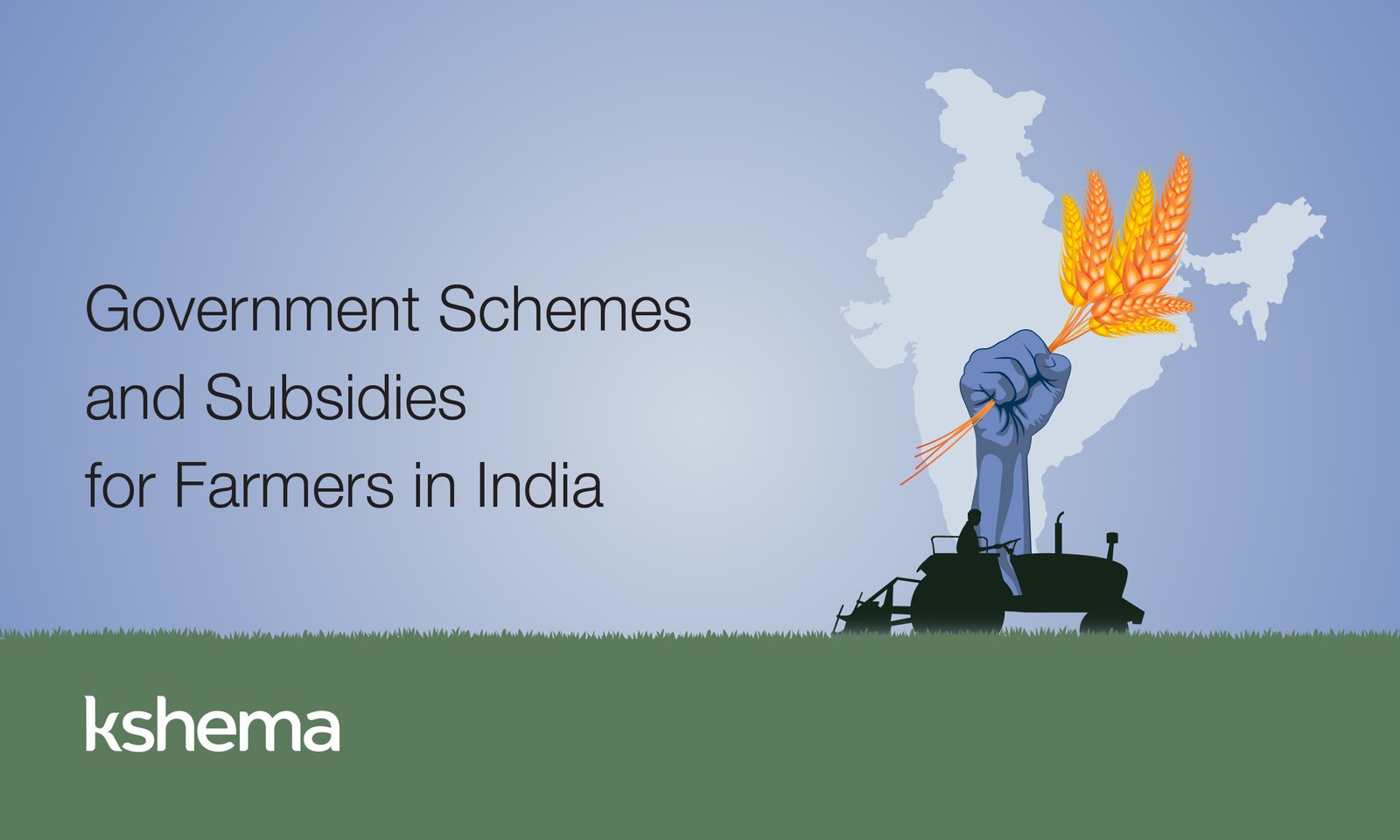
Agricultural subsidies in India play a crucial role in helping farmers reduce input costs, improve productivity and protect crops against unpredictable risks. These subsidies include support for fertilisers, seeds, irrigation, electricity and crop insurance—ensuring that farmers can continue farming sustainably and affordably.
Also, Read: Check best Rabi crops for 2026
This updated 2026 farmer guide explains the key agricultural subsidies in India, major government schemes, benefits for farmers, and how to apply through state portals and the Kshema App.
- Buy in easy steps
- Premium Starts at INR 499
- Protect 100+ Crops
- Quick & Easy Claims

Quick Summary: Key Subsidies for Indian Farmers (2026)
- Fertiliser subsidies for reduced nutrient costs
- Seed subsidies for high‑yield, certified seeds
- Irrigation & electricity support
- PM‑KISAN direct income support
- PMFBY crop insurance premium subsidy
- Kisan Credit Card (KCC) low‑interest loans
- Soil Health Card for better nutrient planning
- State‑specific subsidy portals (Telangana, Gujarat, etc.)
What Are Agricultural Subsidies in India?
Agricultural subsidies are government support programmes designed to reduce the financial burden on farmers. These include cost reductions on seeds, fertilisers, irrigation and credit, along with weather‑risk protection through subsidised crop insurance.
These subsidies enable farmers to adopt modern practices, manage farming costs more effectively and safeguard their income during difficult seasons.
Why Agricultural Subsidies Matter for Farmers
Indian farmers deal with high input costs, unpredictable weather, pest attacks and market fluctuations. Agricultural subsidies help by lowering cultivation expenses, reducing climate risks, supporting modern equipment adoption and improving income stability—ensuring stronger financial resilience for farming families.
In 2026, Indian farmers can benefit from a wide range of government schemes and agricultural subsidies designed to reduce input costs, improve productivity, and protect against climate risks. From farmer subsidy schemes to crop insurance and NABARD-backed programs, these initiatives offer financial and technical support across all farming sectors.
Government subsidies are designed to:
Support Production Costs: By subsidising seeds, fertilizers, and other inputs, the government helps reduce the burden on farmers.
Mitigate Risks: Schemes like crop insurance provide a safety net against crop loss due to natural calamities or other unforeseen factors.
Encourage Modernization: Subsidies for adopting advanced equipment and farming techniques aim to make Indian agriculture more efficient and competitive.
Promote Welfare: Many schemes focus on providing financial and social security to small and marginal farmers.
Apply for farmer subsidies using the Kshema App
Top government schemes and agricultural subsidies in India (2025–2026)
1. PM‑KISAN - Direct income support
PM‑KISAN provides ₹6,000 per year to eligible small and marginal farmers in three instalments, paid directly into the bank account. This helps manage expenses during key farming periods.
Benefits: This financial aid helps farmers meet their expenses during critical periods of the agricultural cycle. It also provides some level of economic security, enabling them to invest in their crops.
2. Pradhan Mantri Fasal Bima Yojana (PMFBY) - crop insurance support
PMFBY provides crop insurance coverage and financial support in case of crop failure or low yield, reducing financial burden. Premium rates are kept low to improve access
Benefits: The scheme ensures that farmers receive compensation for their losses, reducing their financial burden. Premium rates for farmers are kept low, making it accessible to all. At Kshema General Insurance, we are proud to offer crop insurance policies under PMFBY to safeguard farmers’ livelihoods.
3. Kisan Credit Card (KCC) Scheme - Affordable farm loans
Affordable Farm Loans Introduced in 1998, The KCC provides short-term credit at affordable rates for seeds, fertilisers, pesticides and other inputs.
Benefits: KCC offers timely financial support and flexible repayment options, reducing the need for farmers to rely on high-interest informal loans. The scheme also covers allied activities like animal husbandry and fisheries.
4. Soil Health Card — better fertiliser use, better yields
Boosting Productivity this initiative, launched in 2015, aims to promote soil testing and provide farmers with a detailed analysis of the health of their soil. The scheme helps farmers make informed decisions about the appropriate use of fertilizers and nutrients.
Benefits: Proper soil management improves crop yields and reduces input costs. By maintaining soil health, farmers can enhance their productivity and reduce environmental degradation.
5. Paramparagat Krishi Vikas Yojana (PKVY)— support for organic farming
PKVY focuses on promoting organic farming through cluster-based approaches and farmer training.
Benefits: Farmers receive financial aid to cover the cost of certification, training, and inputs for organic farming. The scheme encourages sustainable agricultural practices, which can lead to higher market prices for organic produce.
6. Fertiliser and seed subsidies
The government offers subsidies on fertilizers, seeds, and other essential inputs to reduce production costs for farmers.
Benefits: Affordable inputs enable farmers to maintain productivity without incurring heavy expenses. Subsidised high-yielding seeds further boost their crop output.
How to Apply for Agricultural Subsidies in India via Kshema App
- Registration: Farmers need to register themselves with their respective State Agriculture Departments or authorized agencies to avail the benefits under specific schemes.
- Required Documentation: Most schemes require basic documentation, including Aadhaar numbers, bank account details, and land records. Ensuring these documents are in order simplifies the application process.
- Awareness Programs: The government frequently organises workshops, training sessions, and awareness programs to inform farmers about available schemes. Farmers can actively participate to stay updated.
Read also: How to Ensure Your Crop Rotation Practices Align with Insurance Policies
Telangana agriculture subsidy schemes / Ikhedut portal (Gujarat): where to check
- State Agriculture Department website or local agriculture office for current subsidy windows.
- State portals (e.g., Gujarat’s Ikhedut portal) for scheme lists and application steps.
Role of Crop Insurance in Supporting Farmers
While farmer subsidies and government schemes help reduce production costs and increase market access, crop insurance serves as a critical financial safeguard. With unpredictable weather and other risks affecting crop yields, crop insurance provides farmers with much-needed protection. By compensating for crop loss, insurance minimises financial stress and ensures that farmers can reinvest in their crops.
At Kshema General Insurance, we offer comprehensive crop insurance policies tailored to the needs of Indian farmers. We offer the PMFBY policy as well as our own insurance policies Sukriti and Prakriti to complement government initiatives like PMFBY, ensuring that the farmers receive timely and adequate compensation when they need it the most.
The Indian government’s commitment to supporting farmers through various schemes and subsidies is commendable. By leveraging these initiatives and programs, farmers can reduce their production costs, improve their yields, and safeguard their livelihoods. At Kshema General Insurance, we believe in empowering farmers through crop insurance solutions that align with these government efforts, fostering a more resilient and prosperous farming community in India.
Trusted References
- According to the Ministry of Agriculture & Farmers Welfare, the Government of India provides multiple subsidy schemes to support farmers.Official Agriculture Source
- The Pradhan Mantri Fasal Bima Yojana (PMFBY) portal provides official details on crop insurance subsidies for farmers.Official PMFBY Portal
Frequently Asked Questions on Agricultural Subsidies in India
1. What are agricultural subsidies in India?
Agricultural subsidies are government support programmes that reduce farming costs and help improve farmer income and productivity.
2. Which agriculture subsidy schemes are available for farmers in 2025–2026?
PM‑KISAN, PMFBY crop insurance, Kisan Credit Card loans, Soil Health Card, PKVY organic farming support, fertiliser subsidies, seed subsidies and various state-level schemes.
3. Is crop insurance part of agricultural subsidies?
Yes. Under PMFBY, farmers receive subsidised premiums to protect crops from weather risk, pests, flood, drought and natural calamities.
4. How can I find the list of agricultural schemes in India 2026?
Check the Ministry of Agriculture website, your state agriculture portal or reliable apps like Kshema for updated scheme details.
5. Where can I check Telangana agriculture subsidy schemes or Ikhedut portal scheme lists?
Telangana farmers can check the official agriculture department site, while Gujarat farmers can use the Ikhedut portal for complete subsidy lists.
6. Why are agricultural subsidies important?
They reduce input costs, support modern farming, protect farmers from climate risks and improve income stability, especially for small farmers.
Summary:
Agricultural subsidies in India play a vital role in supporting farmers through financial assistance, reduced input costs and protection from climate risks. From PM‑KISAN to fertiliser subsidies and subsidised crop insurance under PMFBY, these schemes empower farmers to manage cultivation more effectively.
Using the Kshema App, farmers can easily access insurance support aligned with government efforts, ensuring a more stable and resilient farming future.