
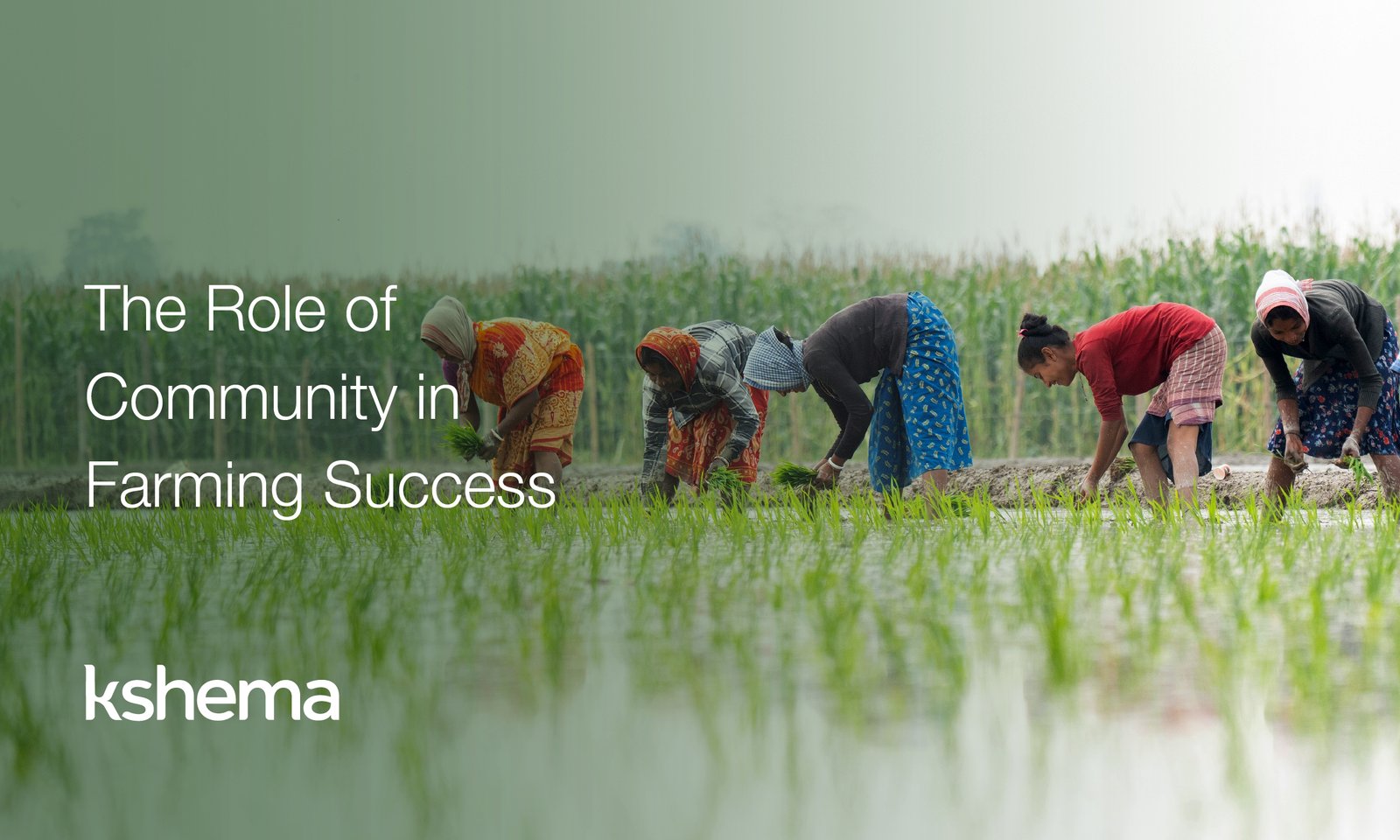
Farmers rarely succeed alone. Markets, weather, pests, and input costs change fast—and the difference between a good and a great season often comes down to one factor: strong farming communities. Whether it’s a village-level FPO, a WhatsApp group of growers, or a cooperative that negotiates better prices, communities reduce risk, share knowledge, and unlock better income for Indian farmers.
This article explains how farming communities drive real outcomes—higher yields, fair prices, faster recovery after loss—and how you can plug into the right networks.
- Buy in easy steps
- Premium Starts at INR 499
- Protect 100+ Crops
- Quick & Easy Claims
Key takeaway: Strong farming communities improve yields, reduce costs, and increase price realization through collective bargaining, shared learning, and risk pooling.
Direct answer: Join or form an FPO/co-op, pool inputs and market produce together, standardize quality, and set up community risk tools (weather alerts, savings groups, insurance literacy) for resilient income.
Fast wins: Start a 50–100 member WhatsApp group by crop/mandi; bulk-buy seeds/fertilizer; adopt shared agronomy calendars; digitize records; coordinate transport and storage to avoid distress sales.
Why Farming Communities Matter Now
Small and marginal farmers face volatile prices, fragmented markets, climate shocks, and rising input costs. Farming communities—FPOs, cooperatives, SHGs, and digital networks—help farmers lower per-acre costs, improve quality, access better buyers, and manage risk collectively. In India, community-led approaches have consistently delivered higher net incomes and faster recovery after adverse events.
The Core Benefits of Strong Farmer Networks
1. Lower Input Costs and Better Quality
- Bulk purchasing of seeds, fertilizers, and machinery reduces per-unit cost by 8–20%.
- Community-led trials and peer validation help avoid counterfeit inputs.
- Shared soil testing and advisory improve fertilizer efficiency and yields.
Read Also : The Importance of Soil Health and How to Maintain It
2. Better Market Access and Prices
- Aggregated volumes meet institutional buyer thresholds, unlocking premium prices.
- Standardized grading, packaging, and timing reduce rejections and deductions.
- Collective logistics (shared trucks, cold storage) prevent distress sales.
3. Faster Knowledge Transfer
- Local, crop-specific groups exchange timely pest alerts and weather updates.
- On-farm demos and success stories reduce adoption risk for new practices.
- Agri-entrepreneurs and lead farmers provide trusted, contextual advice.
4. Community Risk Management
- Shared early-warning systems (rainfall, heatwave, pest migration).
- Group saving/credit and insurance literacy to manage shocks.
- Coordinated claims support: evidence collection, geo-tagging, and tracking.
Types of Farming Communities in India and How They Work
Farmer Producer Organisations (FPOs)
Cooperatives
Self-Help Groups (SHGs) and JLGs
Digital and Social Communities
From Problem to Solution: A Practical Blueprint
Problem: High Input Costs and Yield Variability
Solution: Community Input Desk + Agronomy Calendar
- Set up a 5-member purchase committee to negotiate seasonal input MoUs.
- Adopt a shared crop calendar (sowing, irrigation, pest thresholds).
- Publish weekly agronomy tips based on local weather and soil tests.
Problem: Price Uncertainty and Distress Sales
Solution: Aggregation + Quality Grades + Scheduled Dispatch
- Pool produce by grade to match bulk-buyer specs.
- Coordinate staggered harvest and cold storage where viable.
- Negotiate forward rates with buyers using aggregated volumes.
Problem: Climate and Pest Shocks
Solution: Community Early-Warning and Risk Tools
- Designate 2–3 volunteers to monitor IMD alerts and pest advisories.
- Run a standing WhatsApp protocol: photo, location, time, crop stage, action taken.
- Build a shared checklist for documenting losses for timely support and claims.
India-Focused Use Cases
Vegetable Clusters (Maharashtra)
Paddy and Wheat (Punjab/Haryana)
Horticulture (Andhra/Telangana)
Rainfed Crops (Bundelkhand, Vidarbha)
Governance: What Makes a Farming Community Work
- Clear bylaws and elected committees with term limits.
- Transparent pricing, weight, and payment records (digitized, auditable).
- Quality SOPs and compliance checks before dispatch.
- Conflict resolution protocol and whistleblower channel.
- Annual training on finance, produce grading, and digital tools.
How Communities Build Food Security
Collective production planning, storage, and market linkages reduce post-harvest loss, stabilize supply, and improve household nutrition. Globally, non-profit efforts (e.g., food banks) spotlight farmers’ role in reducing hunger; in India, farmer communities achieve this by minimizing waste, boosting productivity, and keeping prices fair through direct market connections.
Global Context: Intentional Communities and Learning
Action Plan: Start or Strengthen Your Farmer Group in 60 Days
- Map 50–200 farmers by crop and village; identify 2 lead growers.
- Create a WhatsApp group with clear rules (no spam; crop-specific).
- Negotiate a 90-day input MoU with 2 suppliers; fix delivery windows.
- Adopt a grading SOP and simple digital ledger for weights/payments.
- Pilot one buyer relationship with aggregated volume; document results.
- Run a monthly risk drill: weather alert, pest scouting, loss documentation.
- Review: costs saved, price improvement, claim turnaround, member satisfaction.
Insurance and Claims: Community Advantages
- Documentation discipline: geo-tagged photos, date/time stamps, plot IDs.
- Faster intimation: one trained coordinator helps members report quickly.
Learn how Kshema Crop Insurance works - Aggregation: easier for assessors to schedule visits and verify losses.
- Literacy: periodic sessions on coverage, exclusions, and timelines reduce disputes.
Explore different crop insurance policies to protect your farm against unexpected risks.
Also Read: Read more about Kshema insurance rollout
| Community Type | Best For | Key Strengths | Common Gaps | Quick Fixes |
|---|---|---|---|---|
| FPO | Input savings, aggregation, buyers | Scale, formal credit, scheme access | Governance, cash flow, QA | Audit-ready ledgers, SOPs, buyer MoUs |
| Cooperative | Processing, branding, steady demand | Member ownership, legacy trust | Bureaucracy, slow decisions | Professional management, KPIs |
| SHG/JLG | Women farmers, smallholders, credit | Trust, discipline, flexibility | Limited scale for buyers | Cluster SHGs, shared logistics |
| Digital Groups | Fast info, spot deals, alerts | Speed, low cost, wide reach | Misinformation, quality control | Verified admins, rulebook, source tagging |
Conclusion
Farming communities turn individual effort into collective strength—lower input costs, better market prices, faster knowledge flow, and smoother risk management. Start with a focused group, clear rules, and one or two high-impact initiatives like bulk inputs and aggregated sales. Over time, add quality SOPs, digital records, and a simple risk-and-claims playbook. Together, farmers can build more resilient incomes and stronger local food systems.
With the support of providers like Kshema General Insurance, farmers can build more resilient incomes and stronger local food systems.