

Farmers across India depend heavily on Rabi crops like wheat, mustard and gram. But frost, hailstorms and sudden rain can destroy an entire season’s harvest within hours. The Pradhan Mantri Fasal Bima Yojana (PMFBY) provides farmers with affordable and comprehensive crop insurance to protect against such losses. This guide explains how PMFBY supports Rabi farmers, what losses are covered, which crops are eligible, and how farmers can apply easily. With climate risks rising every year, PMFBY has become essential for securing farmer income and ensuring stable Rabi production.
- Buy in easy steps
- Premium Starts at INR 499
- Protect 100+ Crops
- Quick & Easy Claims
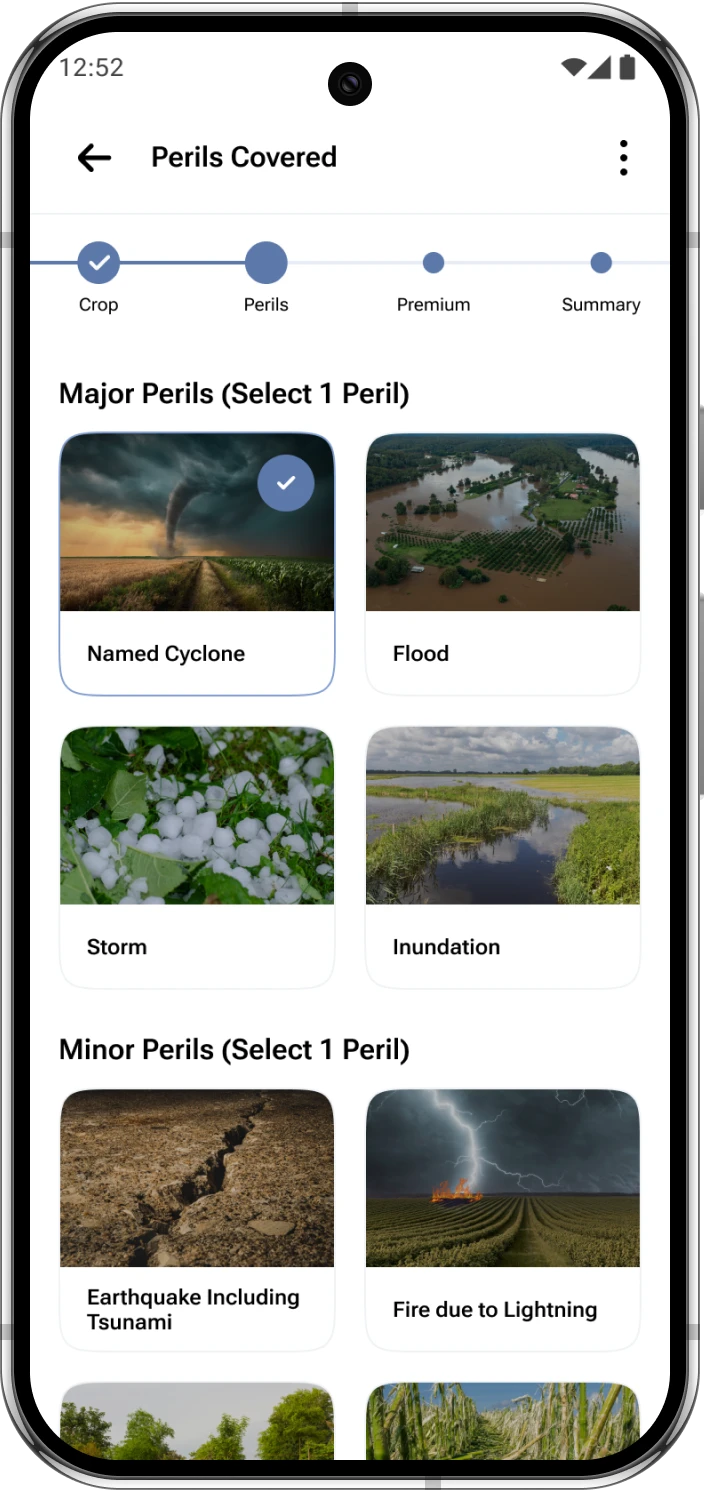
Key highlights of Pradhan Mantri Fasal Bima Yojana:
- Affordable premiums: Farmers pay a nominal share, while the government covers the majority.
- Wide coverage: Protection against drought, flood, hail, frost, pests, and diseases.
- Quick compensation: Claims are settled based on crop-cutting experiments and remote sensing technology.
- Accessibility: Farmers can register through Common Service Centres, Lok Mitra Kendras, or the official PMFBY portal.
Visit the official PMFBY website
PMFBY Coverage for Rabi Farmers
- Frost
- Hailstorm
- Unseasonal rainfall
- Flood (rare in Rabi, but covered if it happens)
- Fire
- Localised calamities (landslide, inundation)
- Pests and diseases
Why Rabi Farmers Need (PMFBY) Pradhan Mantri Fasal Bima Yojana Protection
Rabi crops are particularly sensitive to climatic variations. A sudden frost can damage mustard fields, while hailstorms can flatten wheat crops overnight. Unlike kharif crops, which rely heavily on monsoon rains, rabi crops depend on stable winter conditions. Any deviation can lead to significant losses.
For example:
- Wheat farmers face risks from unseasonal rains during harvest.
- Mustard growers often struggle with frost damage.
- Barley and gram cultivators are vulnerable to pest infestations
Without rabi crop insurance, these farmers would have no financial cushion to absorb such shocks. The Pradhan Mantri Fasal Bima Yojana bridges this gap by offering timely compensation.
How PMFBY Helps Rabi Farmers During Crop Loss
1. Financial Security Against Weather Extremes
Rabi crops are highly vulnerable to frost and hailstorms. Under the fasal bima yojana, farmers receive compensation proportional to their losses. For instance, wheat farmers in northern states pay a small premium but can claim substantial compensation if their fields are damaged. This financial support prevents them from losing their entire investment.
2. Encouraging Risk-Taking in Agriculture
3. Reducing Dependence on Informal Credit
4. Technology-Driven Claim Settlement
5. Inclusive Coverage for Small and Marginal Farmers
PMFBY Real Case Studies: Impact on Rabi Farmers
- Wheat Farmers in Himachal Pradesh: Farmers insured their wheat crops at nominal premiums. After unexpected hailstorms, they received compensation that saved them from financial ruin.
- Mustard Growers in Rajasthan: Frost damage threatened mustard yields, but PMFBY provided timely payouts, enabling farmers to reinvest in the next season.
- Potato Farmers in Uttar Pradesh: Pest attacks often reduce potato yields. Under rabi crop insurance, farmers received compensation that covered their input costs, ensuring continuity in farming.
These examples highlight how the Pradhan Mantri Fasal Bima Yojana transforms lives by offering stability in uncertain times.
PMFBY Benefits Beyond Compensation
- Psychological Relief: Farmers feel secure knowing their crops are insured.
- Boost to Rural Economy: Compensation ensures money continues to circulate in rural markets.
- Policy Integration: PMFBY works alongside other government schemes like soil health cards and irrigation programmes, creating a holistic support system.
Pradhan Mantri Fasal Bima Yojana Challenges and Improvements
- Awareness gaps: Many farmers are unaware of registration deadlines.
- Delayed claims: Though technology has improved, some regions still face delays.
- Need for localisation: Different states face unique risks, requiring customised insurance models.
PMFBY Enrolment Dates for Rabi Season
How to Apply for Pradhan Mantri Fasal Bima Yojana: Simple Steps
- Visit your nearest CSC / agriculture office
- Provide Aadhaar, land documents and bank account
- Select the notified crop and area
- Pay the subsidised premium
- Receive the insurance receipt as confirmation
Conclusion: PMFBY A Lifeline for Rabi Farmers
The Pradhan Mantri Fasal Bima Yojana is a crucial safety net for Rabi farmers facing weather uncertainties. By offering low premiums, wide coverage and faster claim settlement, PMFBY ensures farmers can continue farming confidently. With climate risks rising, enrolling in PMFBY is the most reliable way to secure Rabi crops and protect farmer income.
Frequently Asked Questions
Q1.What is Pradhan Mantri Fasal Bima Yojana (PMFBY)?
Government crop insurance protecting farmers from weather, pest and disease losses.
Q2. How does PMFBY help rabi farmers?
It compensates losses from frost, hailstorms and unseasonal rainfall during Rabi season.
Q3. Which crops are covered under Pradhan Mantri Fasal Bima Yojana for the rabi season?
Wheat, mustard, gram, barley and other notified winter crops are covered.
Q4. How can farmers apply for Pradhan Mantri Fasal Bima Yojana?
Q5. What are the benefits of PMFBY for small and marginal farmers?
Low premiums, wide coverage and timely compensation to reduce financial stress.