

Am I eligible for crop insurance? (1‑minute checklist)
- Farmer type: Landowner / Tenant (valid lease) / Sharecropper
- Insurable crop grown in notified area
- Sowing within the notified window
- Documents ready: Aadhaar, bank details, land record or lease
- Premium can be paid before the last date
- Buy in easy steps
- Premium Starts at INR 499
- Protect 100+ Crops
- Quick & Easy Claims
Introduction
Crop insurance eligibility in India depends on the crop, season, and valid land or tenancy records. Both loanee and non-loanee farmers can apply if they meet notified criteria for the season.
Farmers who own land, cultivate leased land, or sharecroppers can apply for crop insurance under PMFBY and other schemes. Eligibility depends on crop type, location, and timely premium payment. This guide explains who qualifies, required documents, and how to apply for crop insurance in India.
Crop insurance is a critical safety net. It not only protects farmers from livelihood loss but also builds financial resilience among them.
At the heart of Kshema General Insurance lies a bold vision: to shift the mindset from traditional, defensive risk management to a strategic and progressive approach to resilience. We believe that true strength lies not just in surviving uncertainty, but in being prepared for it.
And Kshema fulfills this vision by providing tailored crop insurance solutions to help farmers secure their livelihoods. But who qualifies to buy a crop insurance policy?
In this guide, we’ll explore the eligibility for farm insurance, key requirements, and how Kshema General Insurance can help you protect your crops effectively.
Quick Answer
Farmers growing notified crops during the declared season with valid land or tenancy records are eligible for crop insurance.
Who is eligible for crop insurance in India?
Farmers owning land, tenant farmers with valid lease agreements, and sharecroppers managing crop production are eligible.
Eligibility for Crop Insurance:
• Farmers owning land and cultivating crops.
• Tenant farmers with valid lease agreements.
• Sharecroppers managing crop production.
Individual Farmers and Landowners
- Own land where you actively grow crops.
- Cultivate insurable crops.
- Be located in a region where farm insurance is available.
Tenant Farmers and Sharecroppers
- Have a valid lease agreement with the landowner.
- Bear the responsibility of crop management and production expenses.
Affordable & Customisable Policy
Kshema has designed its farm insurance plan – Kshema Sukriti – by keeping affordability and customisation in mind for farmers who are looking for tailormade solutions.
Kshema Sukriti offers:
- Affordable premium rate, starting at INR 499 / acre .
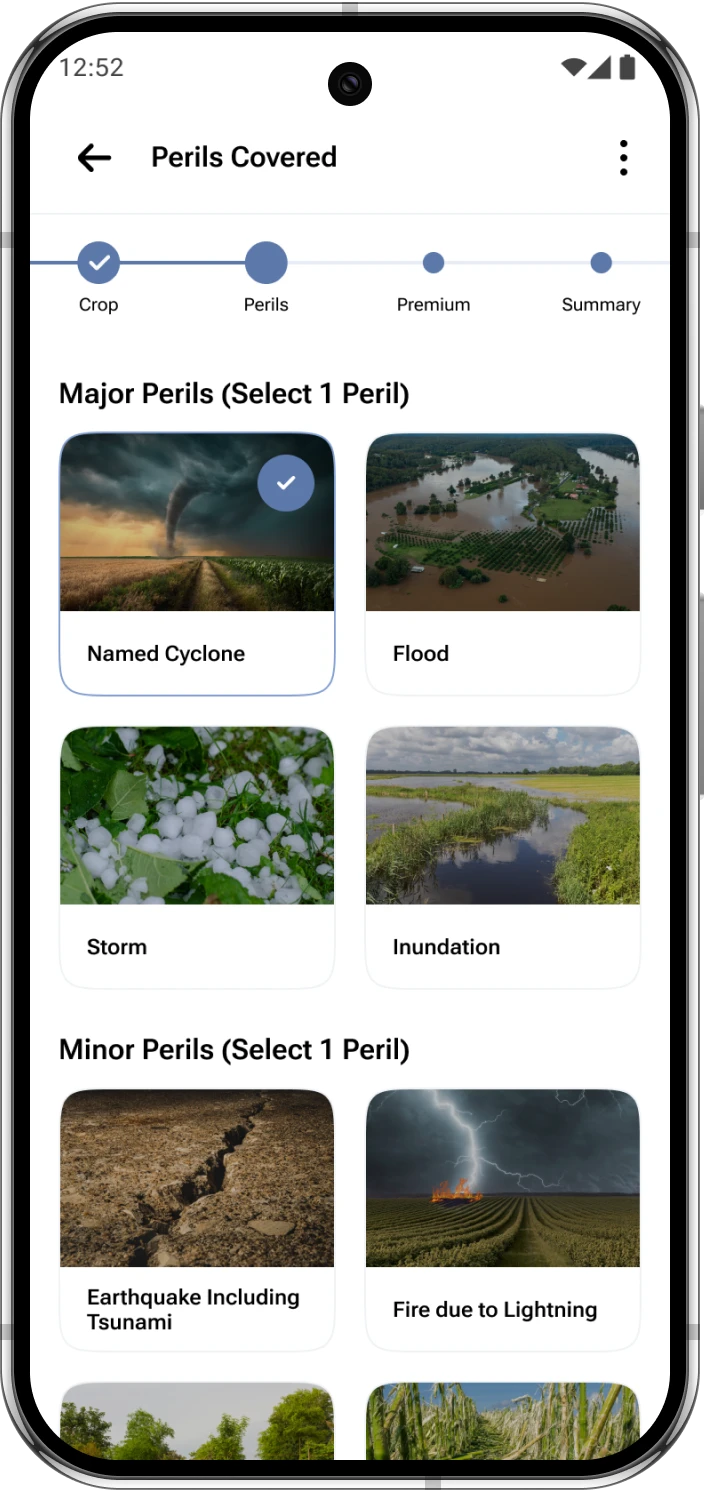
- Flexibility to choose 2 out of the 8 listed perils based on the risks in your area
| Farmer type | Proof needed | Eligible? |
|---|---|---|
| Landowner | Land record (RoR/Patta) | Yes |
| Tenant | Valid lease agreement | Yes |
| Sharecropper | Proof of cultivation responsibility | Yes |
Factors Affecting Crop Insurance Eligibility
Type of Crops Grown
- Regional agricultural practices.
- Crop-specific risk levels.
Location and Climate Conditions
- Higher premiums due to increased risk.
- Limited coverage options based on historical loss data.
Previous Insurance Claims and Risk History
- Higher premium rates.
- Restrictions on certain types of coverage.
- More stringent eligibility checks.
How to Apply for Crop Insurance with Kshema General Insurance
- Choose the right policy – Explore Kshema General Insurance’s crop insurance options.
- Gather necessary documents – Include land ownership or lease agreements and crop production records.
- Download the Kshema App – Download the Kshema app on your phone, mark your farm, choose a policy and pay the premium.
- Consult an insurance expert – Get advice on the best policy for your farming needs by calling our toll-free number 1800 572 3013.
- Stay informed – Follow up on policy updates and claim procedures.
Conclusion
Crop insurance is essential for protecting farmers against financial losses due to natural disasters and unpredictable events. Whether you are a marginal farmer, tenant, or a large farm-land owner farmer, Kshema General Insurance offers tailored solutions to ensure your financial resilience.
If you’re looking for a reliable crop insurance provider, Kshema General Insurance is here to help. Contact us today to explore the best insurance options for your crop!
Secure your crops today! Download the Kshema App or visit the PMFBY portal to apply for crop insurance and protect your farm in 2026
Frequently Asked Questions (FAQs)
1. Who is eligible for crop insurance in India?
Landowners, tenant farmers with valid leases, and sharecroppers—if the crop is notified and premiums are paid on time.
2. Can tenant farmers apply for crop insurance?
Yes, tenant and sharecropper farmers can apply with valid proof.
3. Is Aadhaar mandatory for crop insurance?
Yes, Aadhaar is generally required for identification and claims.
4. What documents are required for crop insurance?
Land records, Aadhaar, bank details, and crop information.
5. Does eligibility affect claim approval?
Yes, incorrect eligibility details can lead to rejection.