
Why PMFBY is Essential for Kharif and Rabi Seasons: A Complete Guide
Introduction:
PMFBY Kharif and Rabi crop insurance rules differ based on season, crop type, and state-level notifications. The coverage, premium rates, and risks insured under the scheme vary for Kharif and Rabi seasons depending on notified areas.
- Buy in easy steps
- Premium Starts at INR 499
- Protect 100+ Crops
- Quick & Easy Claims
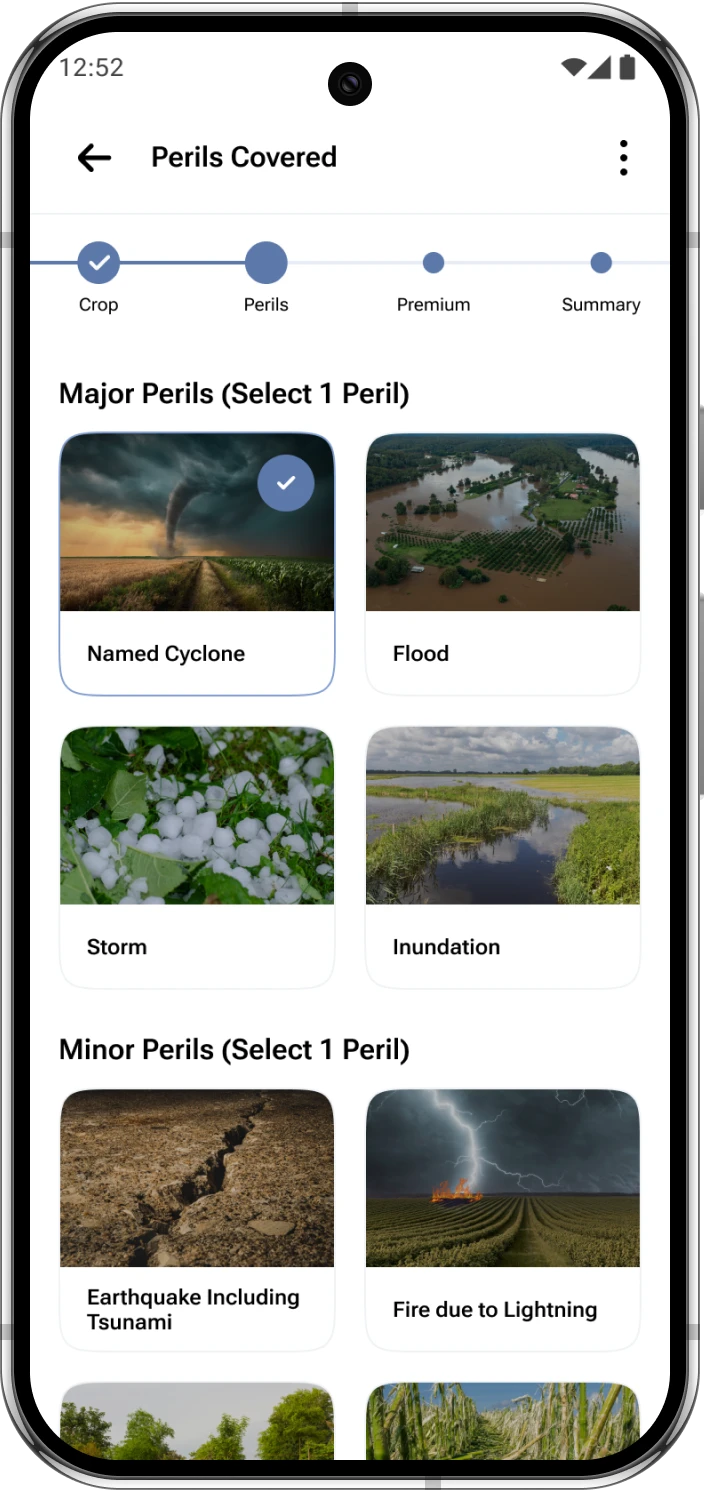
This page explains crops covered under Kharif and Rabi, applicable premium rates, major seasonal risks, and key differences farmers should understand before enrolling.
The Pradhan Mantri Fasal Bima Yojana (PMFBY), launched in 2016, is a transformative crop insurance scheme, offering farmers across India a safety net against financial losses. This is the largest such crop insurance scheme in the world. This blog explores why PMFBY is indispensable for Kharif and Rabi seasons and how Kshema, as a part of it in multiple clusters, is making it more accessible and transparent.
Understanding Kharif and Rabi Seasons
India’s agricultural calendar is divided into two primary seasons:
- Kharif (June–October): Crops are sown with the onset of monsoon and harvested in autumn. Major crops include rice, maize, cotton, soybeans, and pulses.
- Rabi (October–March): Crops are sown after the monsoon and harvested in spring. Key crops include wheat, barley, mustard, and peas.
Each season presents unique challenges. Kharif crops often suffer from excessive or erratic rainfall, floods, and cyclones, while Rabi crops face drought, frost, and unseasonal rains. These risks can destroy yields and push farmers into debt traps.
What is PMFBY?
- Provide financial support in case of crop failure.
- Stabilise farmer income.
- Encourage adoption of sustainable farming practices.
- Ensure credit flow to the agriculture sector.
Affordable Premiums for Farmers
- Kharif crops: 2% of the sum insured.
- Rabi crops: 1.5% of the sum insured.
- Commercial and horticultural crops: 5% of the sum insured.
Impact of PMFBY on Seasonal Agriculture
- Over 4 crore farmers enrolled annually.
- Claims worth ₹1.83 lakh crore paid since launch.
- Coverage extended to tenant farmers, previously excluded from insurance schemes.
Digital Access: PMFBY Status Check
- The official Pradhan Mantri Fasal Bima Yojana portal.
- Common Service Centres (CSCs).
- Bank branches.
- Krishi Rakshak Helpline (14447).
Promoting Sustainable Agriculture
Kshema’s Role in Enhancing PMFBY Access
- Education: Through blogs, infographics, social media and on-ground campaigns, Kshema educates farmers about seasonal risks, insurance benefits, and sustainable practices.
Challenges and Solutions
Despite its success, PMFBY faces challenges:
- Delayed claim settlements.
- Low awareness among farmers.
- Data discrepancies in crop loss assessment.
Solutions include:
- Strengthening technology infrastructure.
- Promoting real-time crop monitoring.
- Enhancing transparency in claim processing.
Kshema is actively addressing these issues through data analytics, digital tools, and farmer education, ensuring that crop insurance becomes a reliable safety net.
This approach not only saves time but also builds confidence among farmers who often feel overwhelmed by traditional insurance systems.
The Future of Crop Insurance
Frequently Asked Questions on PMFBY for Kharif & Rabi Seasons
1.What is PMFBY and why is it important for farmers?
2.What is PMFBY crop insurance?
PMFBY provides financial protection against crop loss due to natural calamities.
3. How much premium do farmers pay under Pradhan Mantri Fasal Bima Yojana?
4. How can farmers apply for PMFBY during Rabi season?
Farmers can apply through banks or online portals before sowing.
5. How does Kshema make Pradhan Mantri Fasal Bima Yojana more accessible?
6. Is PMFBY different for each season?
Yes, crops and premium rates vary by season.
7. Can farmers apply twice a year?
Yes, once per crop season.