

Stay Updated with Our Latest Blogs
Subscribe to our blog and get the latest insurance tips, guides, and industry updates delivered to your inbox
Subscribe to our blog and get the latest insurance tips, guides, and industry updates delivered to your inbox
Crop Insurance
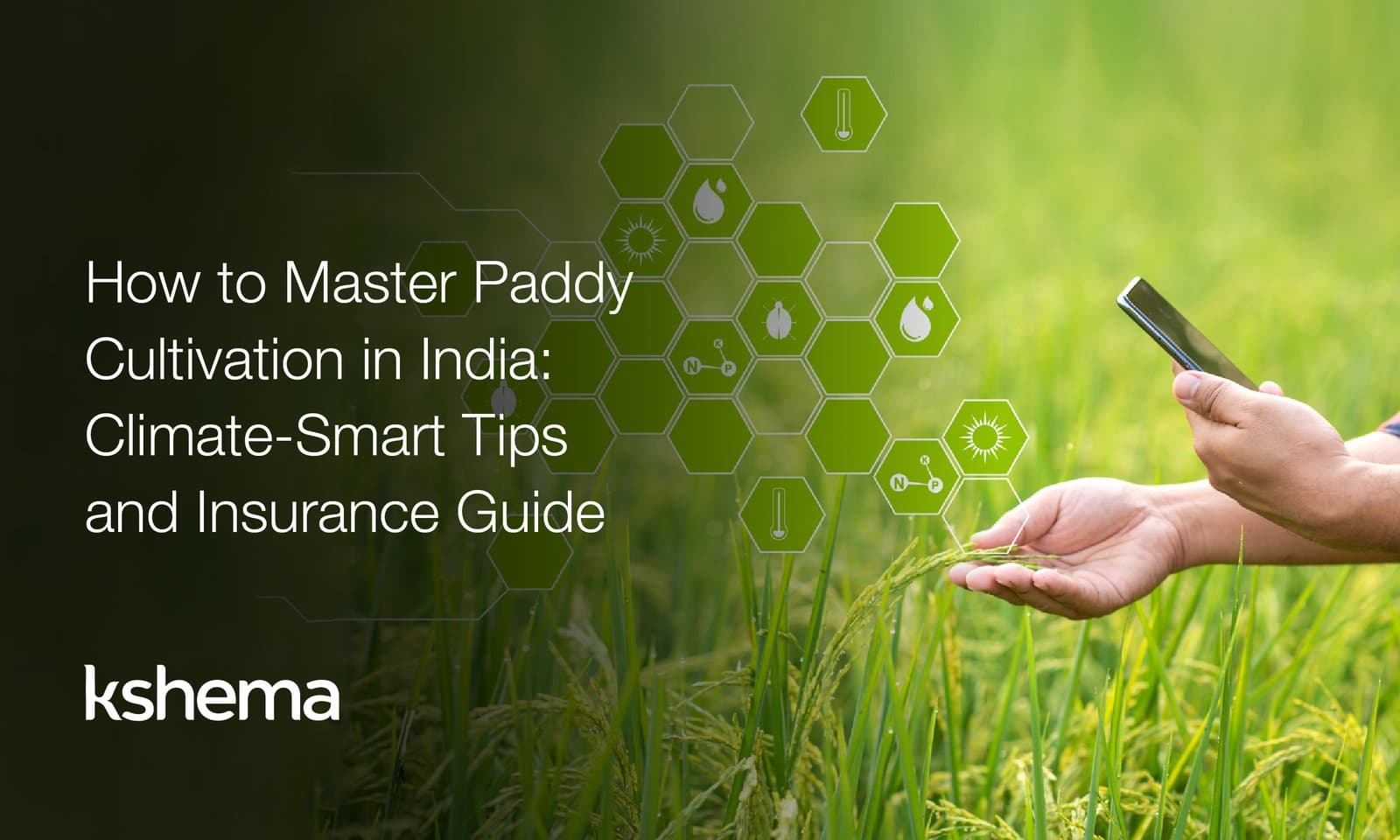
Paddy cultivation plays a pivotal role in India’s agriculture. It is the main crop of the Kharif season, which is essential to guarantee India’s food security (opens in a new tab). With nearly 50% of India’s population dependent on agriculture, mastering the best practices for paddy cultivation has never been more crucial. From choosing the right variety to climate adaptation strategies and securing crop insurance, this guide covers everything a farmer needs for a successful paddy seasons.
India recently overtook China as the largest producer of rice in the world. Paddy cultivation is not only important for food security of the country but it also forms the backbone of rural livelihoods. It is primarily grown during the Kharif season (opens in a new tab) (June to October), though Rabi paddy is also cultivated in specific regions.
Due to changing climate patterns, water scarcity, and pest outbreaks, farmers must adopt sustainable and climate-smart paddy cultivation (opens in a new tab) practices to ensure both yield and income stability.
Paddy can be covered by crop insurance when your district/season/crop is officially notified by the program or provider. Coverage typically includes weather risks (flood, drought, cyclone, hail) and may include pest/disease per local rules. Eligibility requires sowing within the notified window, valid documents, and on‑time premium payment. Always confirm notifications and last dates for your area before enrolling.
Eastern States: West Bengal, Odisha, Assam, BiharSouthern States: Andhra Pradesh, Telangana, Tamil Nadu, KarnatakaNorthern States: Punjab, Haryana, Uttar PradeshNorth-Eastern Hills: Arunachal Pradesh, Manipur, Nagaland, and Tripura
Tip: Monitor local weather conditions regularly to adjust sowing and irrigation practices
Choose high-yielding, pest-resistant, or climate-resilient varieties suited to your region. Treat seeds with fungicides and biofertilisers to prevent early-stage infections.
Plough land 3–4 times and maintain a smooth levelled field for uniform water distribution. Ensure binding to avoid runoff and moisture loss.
. Maintain appropriate spacing (20×20 cm) to allow better root and tiller development
Avoid water stagnation in early vegetative stages. Maintain 2–5 cm standing water during active tillng and flowering. Practice Alternate Wetting and Drying (AWD) to conserve water.
Subscribe to agri-weather alerts for sowing, irrigation, and pesticide scheduling.
Varieties like Sahbhagi Dhan and DRR Dhan 42 are suitable for water-scarce regions.
Reduces water usage, labour, and greenhouse gas emissions.
Conserves soil moisture and reduces weed pressure in paddy fields.
Paddy farmers are highly vulnerable to losses due to drought, floods, pest outbreaks, and cyclones. Crop insurance (opens in a new tab) ensures financial stability in such cases.
Protection against natural calamities Coverage for pre-sowing to post-harvest stages Compensation for yield loss or crop damage Boosts confidence to invest in better practices
Modern farming tools like drones (opens in a new tab), soil sensors, satellite imagery, and AI-powered platforms such as Kshema are revolutionising paddy cultivation in India. These tools offer:
Kshema’s intelligent mobile app (opens in a new tab) helps farmers track rainfall patterns, identify optimal sowing windows, receive fertiliser recommendations, and manage insurance claims (opens in a new tab)—all in one place. This reduces guesswork and enhances on-ground decision-making.
By integrating Kshema's digital solutions, farmers can adopt precision farming practices that not only improve yield but also reduce costs. Kshema also connects farmers with government schemes (opens in a new tab) and insurance products tailored to their region, ensuring both financial safety and agronomic efficiency. Embracing technology through Kshema can truly transform paddy cultivation into a profitable and future-ready enterprise.
Paddy cultivation in India stands at the intersection of age-old traditions and emerging innovation. To succeed in a climate-vulnerable world, Indian farmers must adopt sustainable practices, leverage technology, and protect their crops through insurance.
Kshema empowers farmers (opens in a new tab) with the tools, knowledge, and security they need by providing tailormade insurance solutions – Prakriti, Sukriti, and Samriddhi (opens in a new tab) for their crops to protect their livelihoods. From climate-smart tips to insurance support, Kshema is not just a service—it’s a farming companion. Whether you’re seeking guidance on soil health, protection from unpredictable weather, or faster access to claims, Kshema ensures you're never farming alone.
By adopting Kshema’s (opens in a new tab) suite of solutions, farmers can boost productivity, minimise risk, and ensure a stable livelihood. Together, let’s cultivate a safer, smarter, and more resilient future for Indian agriculture.
Paddy cultivation involves land preparation, nursery raising, transplanting seedlings, irrigation, pest management, and harvesting.
In Haryana, the paddy season begins with sowing in June–July (Kharif season) and harvesting in October–November.
Paddy (rice) is India’s staple food crop, feeding millions, supporting rural livelihoods, and contributing significantly to agricultural GDP.
“We do not assume any liability for any actions undertaken based on the information provided here. The information gathered from various sources and are displayed here for general guidance and does not constitute any professional advice or warranty of any kind.”


IntroductionIf you own a vehicle, understanding third-party car insurance is essential. It is the most basic form of motor insurance and is required by law for all vehicles driven on Indian roads.What This Blog Covers • What third-party insurance means and how it works. • Why it is considered mandatory car insurance in India. • The benefits, coverage, and limitations of this policy. • The consequences of ignoring the car insurance legal requirement.This guide provides a clear overview of the leg

Meri Fasal Mera Byora is a Haryana government initiative to benefit the farmers of the state. It is an important platform for crop registration and provides access to various government agriculture-related benefits. As the Kharif 2026 season is in progress, completing registration correctly can help farmers avoid delays in receiving support and scheme benefits by understanding benefits of insurance to farmers.What This Guide CoversWho should register for kharif 2026Documents and details required
IntroductionCrop Loss in Karnataka remains a critical challenge for farmers, especially during the kharif season when weather uncertainties are at their peak. Understanding the causes and taking preventive measures can significantly reduce risks and improve yields by understanding proven ways to protect crops.In this blog, you’ll learn:Major causes behind crop damage in KarnatakaKey Karnataka kharif crop risks farmers should watch out forPractical strategies to minimise losses and protect cropsP
IntroductionThe Rythu Bharosa scheme in Telangana continues to play a crucial role in supporting farmers during Kharif 2026. This is the Telangana government’s flagship farmer investment support scheme for seeds, fertilisers, and labour. By providing timely financial assistance, it helps reduce input costs and stabilise agricultural income and improve financial security through benefits of insurance to farmers.What this blog coversKey advantages of the scheme in Kharif 2026How Rythu Bharosa supp
IntroductionThis is our Maharashtra Kharif crops guide that can help the farmers of Maharashtra plan the upcoming monsoon season effectively. With the right crop choices, sowing time, and risk protection strategies, farmers can maximise yield and reduce uncertainty with the help of https://kshema.co/plans/What this blog covers:Best crops suited for the Kharif season in MaharashtraIdeal sowing dates to ensure higher productivityRegion-wise considerations for crop planningPractical insurance tips
If your PM Kisan payment has not been credited in 2026, it can be both confusing and frustrating. Many farmers across India face delays due to technical or verification issues, but most problems can be resolved with the right steps.In this blog, you will learn:Why your instalment may be delayed or missingHow to complete a quick PM Kisan status checkWays to fix errors and receive future paymentsWhere to seek help if the issue persistsUnderstanding the PM-Kisan Samman Nidhi Scheme in 2026The PM-Ki