

Stay Updated with Our Latest Blogs
Subscribe to our blog and get the latest insurance tips, guides, and industry updates delivered to your inbox
Subscribe to our blog and get the latest insurance tips, guides, and industry updates delivered to your inbox
Crop Insurance
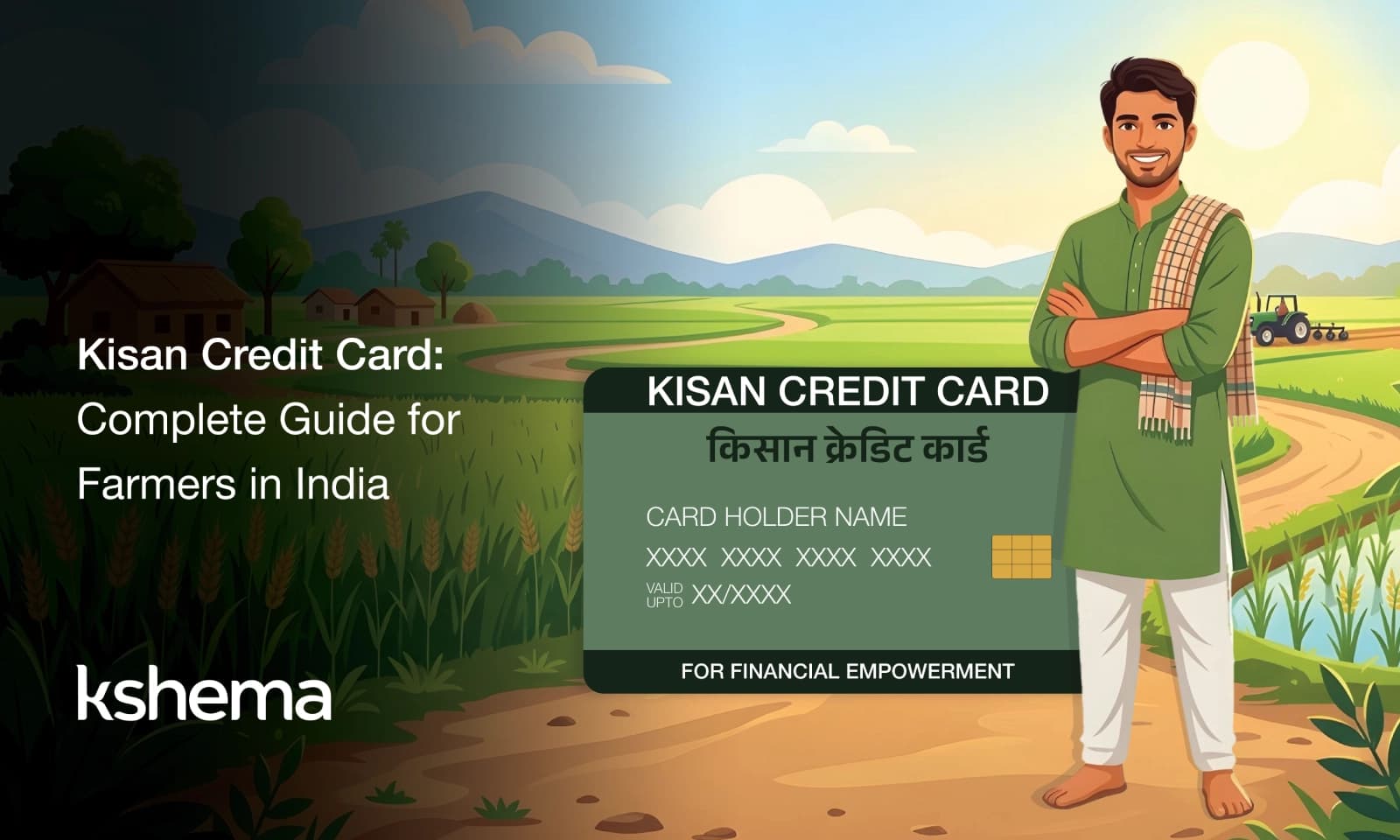
The Kisan Credit Card (KCC) is a Government of India initiative designed to provide farmers with easy access to credit for agricultural needs. It simplifies borrowing, extends financial inclusion, and ensures timely monetary support. The Ministry of Agriculture and Farmers Welfare operates this beneficial scheme.
Farmers can use the card much like a debit card, withdrawing funds as needed within the sanctioned limit. This ensures that they have timely access to money during sowing, harvesting (opens in a new tab) , and other critical stages of farming. The scheme was further extended for the investment credit requirement of farmers viz. allied and non farm activities The scheme provides broad guidelines to banks for operationalising the KCC scheme. Implementing banks have the discretion to adopt the same to suit institution/location-specific requirements.
The Kisan Credit Card scheme aims at providing adequate and timely credit support from the banking system under a single window with the flexible and simplified procedures to the farmers for their cultivation and other needs as indicated below:
The KCC interest rate is one of the most attractive features of the scheme. According to the KCC circular dated 20 April 2012, the interest rate is 7% p.a. on short-term credit with a INR 3 lakh upper limit on the principal amount. The Government of India provides interest subvention of 2% and Prompt Repayment Incentive of 3% to the farmers, thus making the credit available at a very subsidised rate of 4% per annum. This makes the KCC interest rate far more affordable than borrowing from informal lending sources like moneylenders, who often charge exorbitant rates.
To apply for a Kisan Credit Card, farmers must meet certain eligibility (opens in a new tab) requirements:
The application process for a Kisan Credit Card is simple, straightforward and can be completed both online and offline.
A farmer can visit the branch of the bank offering KCC benefits, fill the application form, provide details and documents sought for the bank to verify eligibility. An applicant can seek the assistance of a bank representative to complete the application process. The bank verifies the identity of the applicant, residence and land-related papers and eligibility under the scheme. Once the bank is satisfied with its due diligence it approves the application and the card is issued with a credit limit.
The KCC benefits are many for the farmers. It provides them with financial security as they go about cultivating their land.
The Kisan Credit Card thus acts as a comprehensive financial tool for farmers.
The Kisan Credit Card is more than just a loan facility; it is a lifeline for farmers. KCC interest rate is low, the scheme offers flexible repayment, and KCC benefits are instrumental in empowering farmers to invest in better seeds, modern equipment, and improved farming practices. By reducing reliance on informal lenders, the scheme promotes financial inclusion and rural development.
The Kisan Credit Card is a transformative initiative for Indian agriculture. It provides farmers with affordable credit, insurance protection, and financial flexibility. With its attractive KCC interest rate and wide-ranging KCC benefits, it remains one of the most impactful schemes (opens in a new tab) for rural India.
This validity period is 5 years. The tenure you do get depends on the type of activity you plan to use the money for
You should be a minimum of 18 years of age and be a maximum age of 75 years. If you are a senior citizen, then it is mandatory to have a co-borrower who is a legal heir.
The interest rate will be left to the discretion of the bank. However, according to the KCC circular dated 20 April 2012, the interest rate is 7% p.a. on short-term credit with a INR 3 lakh upper limit on the principal amount.
Kisan Credit Card & Term loan
For limits up to INR 1.60 lakh & limits up to INR 3 lakh (in case of tie up), security is the hypothecation of crops. For limits above the specified norms, mortgage of land/or third party guarantee in addition to hypothecated crops/asset.
The interest subvention @2% and prompt repayment incentive benefit @3% on KCC loan (i.e. crop loan + working capital loan for animal husbandry and fisheries) will be available on an overall limit of INR 3 lakh per annum and subject to a maximum limit of INR 2 lakh per farmer involved in activities only related to animal husbandry and/or fisheries.
We do not assume any liability for any actions undertaken based on the information provided here. The information gathered from various sources and are displayed here for general guidance and does not constitute any professional advice or warranty of any kind.


IntroductionIf you own a vehicle, understanding third-party car insurance is essential. It is the most basic form of motor insurance and is required by law for all vehicles driven on Indian roads.What This Blog Covers • What third-party insurance means and how it works. • Why it is considered mandatory car insurance in India. • The benefits, coverage, and limitations of this policy. • The consequences of ignoring the car insurance legal requirement.This guide provides a clear overview of the leg

Meri Fasal Mera Byora is a Haryana government initiative to benefit the farmers of the state. It is an important platform for crop registration and provides access to various government agriculture-related benefits. As the Kharif 2026 season is in progress, completing registration correctly can help farmers avoid delays in receiving support and scheme benefits by understanding benefits of insurance to farmers.What This Guide CoversWho should register for kharif 2026Documents and details required
IntroductionCrop Loss in Karnataka remains a critical challenge for farmers, especially during the kharif season when weather uncertainties are at their peak. Understanding the causes and taking preventive measures can significantly reduce risks and improve yields by understanding proven ways to protect crops.In this blog, you’ll learn:Major causes behind crop damage in KarnatakaKey Karnataka kharif crop risks farmers should watch out forPractical strategies to minimise losses and protect cropsP

IntroductionThe Rythu Bharosa scheme in Telangana continues to play a crucial role in supporting farmers during Kharif 2026. This is the Telangana government’s flagship farmer investment support scheme for seeds, fertilisers, and labour. By providing timely financial assistance, it helps reduce input costs and stabilise agricultural income and improve financial security through benefits of insurance to farmers.What this blog coversKey advantages of the scheme in Kharif 2026How Rythu Bharosa supp
IntroductionThis is our Maharashtra Kharif crops guide that can help the farmers of Maharashtra plan the upcoming monsoon season effectively. With the right crop choices, sowing time, and risk protection strategies, farmers can maximise yield and reduce uncertainty with the help of https://kshema.co/plans/What this blog covers:Best crops suited for the Kharif season in MaharashtraIdeal sowing dates to ensure higher productivityRegion-wise considerations for crop planningPractical insurance tips
If your PM Kisan payment has not been credited in 2026, it can be both confusing and frustrating. Many farmers across India face delays due to technical or verification issues, but most problems can be resolved with the right steps.In this blog, you will learn:Why your instalment may be delayed or missingHow to complete a quick PM Kisan status checkWays to fix errors and receive future paymentsWhere to seek help if the issue persistsUnderstanding the PM-Kisan Samman Nidhi Scheme in 2026The PM-Ki