

Stay Updated with Our Latest Blogs
Subscribe to our blog and get the latest insurance tips, guides, and industry updates delivered to your inbox
Subscribe to our blog and get the latest insurance tips, guides, and industry updates delivered to your inbox
Crop Insurance
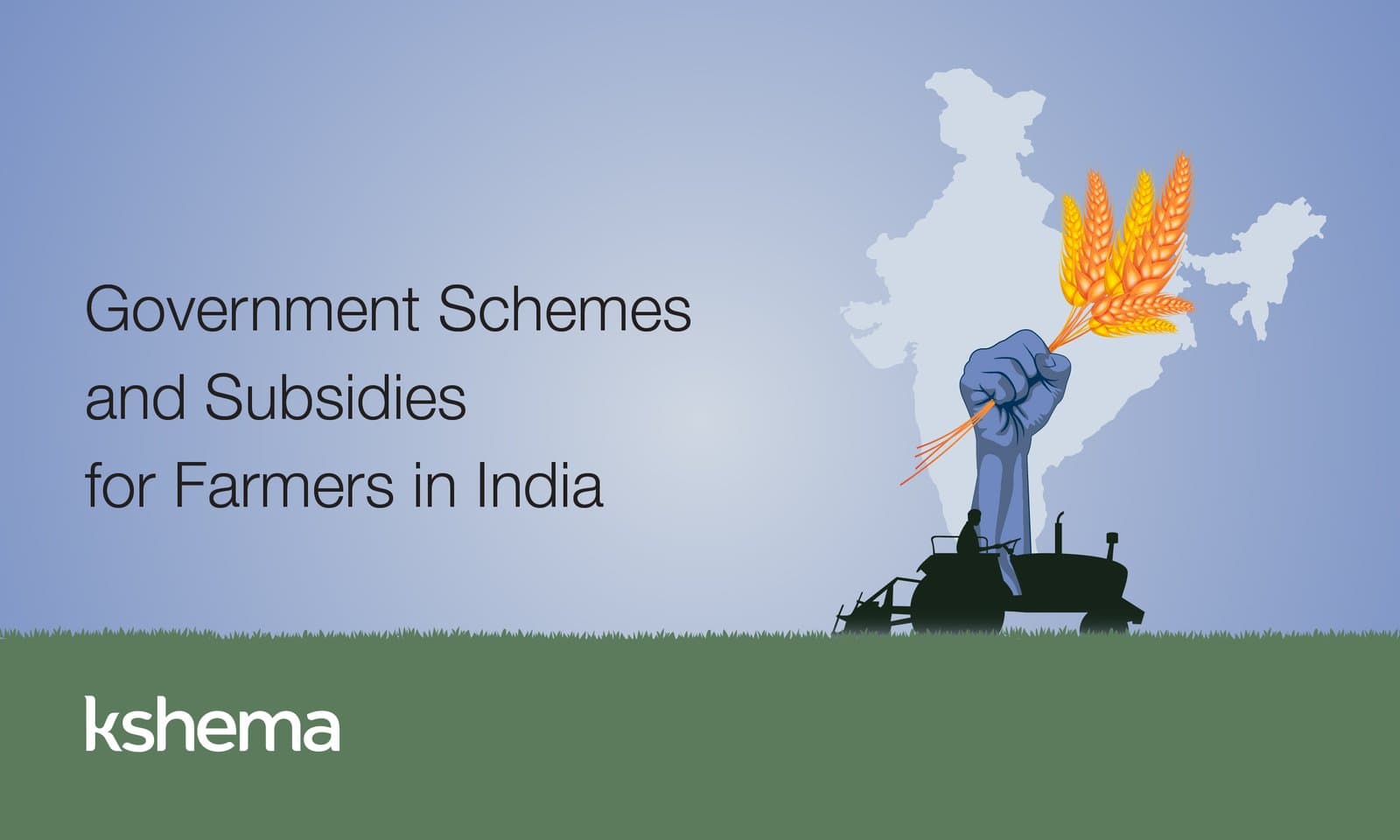
Agricultural Subsidies in India help reduce farming costs, lower risk, and improve access to inputs like seeds, fertilizer, irrigation, machinery, and credit. If you are a farmer or agri-entrepreneur, this guide explains key subsidy types, who is eligible, how much support you can expect, and the fastest ways to check and track your subsidy status online.
Also, Read: Check best Rabi crops for 2026 (opens in a new tab)
This updated 2026 farmer guide explains the key agricultural subsidies in India, major government schemes, benefits for farmers, and how to apply through state portals and the Kshema App.
Agricultural subsidies in India include direct cash support (PM-KISAN), input subsidies (seeds, fertilizer, electricity), insurance premium support (PMFBY), irrigation/solar pump support (PM-KUSUM/PMKSY), mechanization (SMAM), credit interest subvention (KCC), and infrastructure funding (AIF).
Eligibility depends on land records, category (small/marginal), activity (crop, dairy, horticulture), and state-specific rules. Most benefits are paid via DBT to your Aadhaar-linked bank account., How to check subsidy: Use official portals like PM-KISAN, PMFBY, State DBT Agriculture portals, PFMS Know Your Payments, and your bank statement/passbook.
Agricultural subsidies are government support programmes designed to reduce the financial burden on farmers. These include cost reductions on seeds, fertilisers, irrigation and credit, along with weather‑risk protection through subsidised crop insurance.
These subsidies enable farmers to adopt modern practices, manage farming costs more effectively and safeguard their income during difficult seasons.
Subsidies bridge the gap between high input costs and volatile output prices. They reduce risk from weather and market shocks, support adoption of better technology, and improve farm incomes—especially for small and marginal farmers who form the majority in India.
Apply for farmer subsidies using the Kshema App (opens in a new tab)
PM-KISAN: Direct cash transfer to eligible landholding farmers in installments each year. Paid via DBT to Aadhaar-linked bank accounts.
Pradhan Mantri Fasal Bima Yojana (PMFBY): Farmers pay a capped premium share; the remaining premium is subsidized by Centre and State. Covers notified crops against weather and yield losses.
. Read also: Top 10 Benefits of Crop Insurance for Farmers
Beyond individual farmers, agri MSMEs, FPOs, cooperatives, and startups can access support for processing, storage, logistics, quality certification, and working capital.
Read also: How to Ensure Your Crop Rotation Practices Align with Insurance Policies (opens in a new tab)
Each state operates a DBT portal for inputs, irrigation, mechanization, and horticulture schemes. Steps typically include:
For KCC, PMFBY, and some equipment subsidies, you can apply via your bank branch or Common Service Centre. Always keep acknowledgment receipts and application IDs.
Note: Exact percentages and caps vary by scheme, state, and year. Always verify latest guidelines on official portals.
Central schemes set broad guidelines; states fine-tune subsidy percentages, beneficiary priorities, and application windows. Power tariff subsidy, farm electricity connections, and certain equipment lists are largely state-driven. Always check your State Agriculture/Horticulture/Power department sites for circulars.
Names and budgets can change across financial years. For the most accurate and current subsidy list for 2025–26 or 2026, follow this approach:
Name mismatch between Aadhaar, bank, and land records.Incomplete e-KYC or unseeded bank account.Applying for non-notified crops/equipment or missing documents.Physical verification pending or failed due to absence or incorrect location details.
Subsidies reduce input costs, but weather and price risks remain. Crop insurance (PMFBY) and relevant general insurance covers protect cash flows and investments—especially after adopting subsidized assets like drip systems or machinery. Choosing transparent, digital-first insurers can make enrollment and claims faster and easier.
Because subsidy availability can vary by state and season, farmers should check
While farmer subsidies and government schemes help reduce production costs and increase market access, crop insurance serves as a critical financial safeguard. With unpredictable weather and other risks affecting crop yields, crop insurance provides farmers with much-needed protection. By compensating for crop loss, insurance minimises financial stress and ensures that farmers can reinvest in their crops.
At Kshema General Insurance (opens in a new tab), we offer comprehensive crop insurance policies tailored to the needs of Indian farmers. We offer the PMFBY policy as well as our own insurance policies Sukriti (opens in a new tab) and Prakriti (opens in a new tab) to complement government initiatives like PMFBY, ensuring that the farmers receive timely and adequate compensation when they need it the most.
The Indian government’s commitment to supporting farmers through various schemes and subsidies is commendable. By leveraging these initiatives and programs, farmers can reduce their production costs, improve their yields (opens in a new tab), and safeguard their livelihoods. At Kshema General Insurance, we believe in empowering farmers through crop insurance solutions that align with these government efforts, fostering a more resilient and prosperous farming community in India.
It is financial support from the government to reduce farming costs or risks—through direct transfers (PM-KISAN), cheaper inputs (seeds, fertilizer, electricity), premium subsidy for crop insurance, or capital support for irrigation, machinery, and infrastructure.
Use the specific scheme portal (PM-KISAN, PMFBY, PM-KUSUM, State DBT Agriculture) with your Aadhaar/mobile/application ID. Also check PFMS Know Your Payments and your bank passbook for DBT credits.
Agri businesses, FPOs, and MSMEs can access AIF (interest subvention + guarantee) for warehouses and processing, SMAM for machinery/CHCs, and MoFPI schemes for food processing, branding, and common infrastructure.
Check your State DBT Agriculture portal for active schemes, and central portals for PM-KISAN, PMFBY, PMKSY, PM-KUSUM, SMAM, and AIF. Verify payments via PFMS. Schemes and percentages may change yearly
Telangana farmers can check the official agriculture department site, while Gujarat farmers can use the Ikhedut portal for complete subsidy lists.
Many schemes require land records, but FPOs, tenant farmers in some states, and agri-entrepreneurs can access specific programs (e.g., AIF, CHCs, horticulture, and processing). Check state guidelines and eligibility notes.
“We do not assume any liability for any actions undertaken based on the information provided here. The information gathered from various sources and are displayed here for general guidance and does not constitute any professional advice or warranty of any kind.”


IntroductionIf you own a vehicle, understanding third-party car insurance is essential. It is the most basic form of motor insurance and is required by law for all vehicles driven on Indian roads.What This Blog Covers • What third-party insurance means and how it works. • Why it is considered mandatory car insurance in India. • The benefits, coverage, and limitations of this policy. • The consequences of ignoring the car insurance legal requirement.This guide provides a clear overview of the leg

Meri Fasal Mera Byora is a Haryana government initiative to benefit the farmers of the state. It is an important platform for crop registration and provides access to various government agriculture-related benefits. As the Kharif 2026 season is in progress, completing registration correctly can help farmers avoid delays in receiving support and scheme benefits by understanding benefits of insurance to farmers.What This Guide CoversWho should register for kharif 2026Documents and details required
IntroductionCrop Loss in Karnataka remains a critical challenge for farmers, especially during the kharif season when weather uncertainties are at their peak. Understanding the causes and taking preventive measures can significantly reduce risks and improve yields by understanding proven ways to protect crops.In this blog, you’ll learn:Major causes behind crop damage in KarnatakaKey Karnataka kharif crop risks farmers should watch out forPractical strategies to minimise losses and protect cropsP

IntroductionThe Rythu Bharosa scheme in Telangana continues to play a crucial role in supporting farmers during Kharif 2026. This is the Telangana government’s flagship farmer investment support scheme for seeds, fertilisers, and labour. By providing timely financial assistance, it helps reduce input costs and stabilise agricultural income and improve financial security through benefits of insurance to farmers.What this blog coversKey advantages of the scheme in Kharif 2026How Rythu Bharosa supp

IntroductionThis is our Maharashtra Kharif crops guide that can help the farmers of Maharashtra plan the upcoming monsoon season effectively. With the right crop choices, sowing time, and risk protection strategies, farmers can maximise yield and reduce uncertainty with the help of https://kshema.co/plans/What this blog covers:Best crops suited for the Kharif season in MaharashtraIdeal sowing dates to ensure higher productivityRegion-wise considerations for crop planningPractical insurance tips
If your PM Kisan payment has not been credited in 2026, it can be both confusing and frustrating. Many farmers across India face delays due to technical or verification issues, but most problems can be resolved with the right steps.In this blog, you will learn:Why your instalment may be delayed or missingHow to complete a quick PM Kisan status checkWays to fix errors and receive future paymentsWhere to seek help if the issue persistsUnderstanding the PM-Kisan Samman Nidhi Scheme in 2026The PM-Ki