

Stay Updated with Our Latest Blogs
Subscribe to our blog and get the latest insurance tips, guides, and industry updates delivered to your inbox
Subscribe to our blog and get the latest insurance tips, guides, and industry updates delivered to your inbox
Crop Insurance
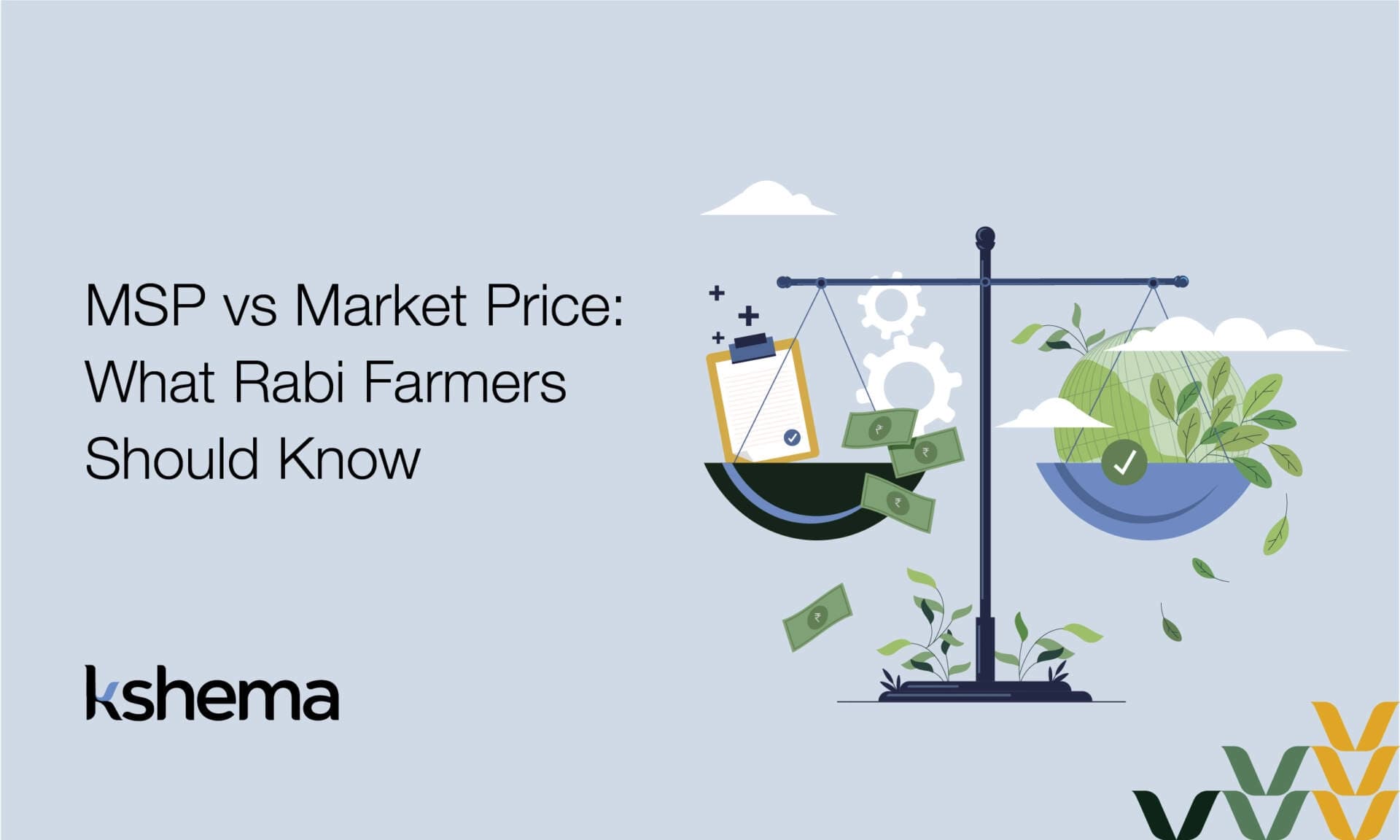
Rabi MSP (Minimum Support Price) is the government-fixed rate for crops like wheat, barley, and mustard, ensuring farmers earn a minimum return regardless of market fluctuations. In contrast, market price changes daily based on demand and supply. This guide explains the key differences between MSP and market price, why MSP matters for farmers, and how to make informed selling decisions during the Rabi season.
India is primarily an agrarian country with more than half of its population engaged in agriculture and allied activities. Among the many challenges that farmers face, one of the most pressing is the difference between the Minimum Support Price (MSP) and the market price. For those engaged in rabi cultivation, understanding rabi MSP is crucial to making informed decisions about sowing, selling, and sustaining livelihoods. This blog explores the nuances of rabi MSP, compares it with market prices, and explains what every farmer should know to thrive in an agricultural landscape which is increasingly impacted by rising population, climate change, environmental degradation.
The MSP is a government-declared rate at which crops are purchased directly from farmers, ensuring they receive a fair return regardless of market fluctuations. For rabi crops (opens in a new tab), the rabi MSP acts as a safety net, protecting farmers from distress sales when market prices fall below production costs.
The crops list to be part of the MSP is updated annually by the government, covering both kharif and rabi crops (opens in a new tab). This list is vital because it tells farmers which crops are eligible for MSP procurement. For example, wheat, barley, gram, lentils, and mustard are prominent entries in the MSP crops list during the rabi season.
The distinction between rabi MSP and market price lies in their purpose and determination:
While rabi MSP provides stability, market prices often fluctuate. Farmers may find themselves in situations where the market price is higher than MSP, encouraging them to sell in open markets. Conversely, when market prices dip, MSP procurement becomes a lifeline.
Explore: Best Rabi Crops 2025 (opens in a new tab)
For rabi farmers (opens in a new tab), the rabi MSP is more than just a number—it is a guarantee of survival. Here’s why:
Learn More: Rabi Season Crop Insurance Benefits (opens in a new tab)
Despite its importance, rabi MSP faces several challenges:
These challenges often push farmers to rely on market prices, even when MSP is available.
Selling at market price can sometimes be more profitable than relying on rabi MSP. For instance, if demand for mustard oil rises, mustard seeds may fetch higher rates in local mandis compared to MSP. However, this comes with risks:
Thus, while market prices can offer opportunities, they lack the stability of rabi MSP.
Read Next: Sustainable Agriculture Rabi Season Tips (opens in a new tab)
Let’s break down the comparison:
For farmers, the choice often depends on local conditions, crop type, and government support (opens in a new tab).
The MSP crops list plays a pivotal role in guiding farmers’ decisions. By checking which crops are included, farmers can align their sowing strategies with government support. For example:
Understanding the MSP crops list helps farmers balance risk and opportunity.
Government policies around rabi MSP are designed to ensure food security (opens in a new tab) and farmer welfare. However, awareness campaigns are equally important. Farmers must be informed about:
Without awareness, even the best policies fail to reach the grassroots.
For rabi farmers navigating the MSP vs market price dilemma, here are practical steps:
By combining MSP security with market opportunities, farmers can maximise returns.
Check official MSP rates for rabi crops here: Press Information Bureau MSP Notification
Rabi MSP (Minimum Support Price) is the guaranteed price the government pays farmers for selected rabi crops like wheat, barley, gram, lentil, and mustard. It’s set before sowing to ensure farmers receive at least a minimum return over their cost of production.
Rabi MSP is a government‑fixed floor price based on CACP recommendations and cost margins, while market price is driven by local demand, supply, and trader dynamics in mandis. Farmers may choose the higher of the two depending on local conditions and accessibility.
Sell under MSP when mandi rates fall below MSP or when procurement is easily accessible; sell in the open market when demand spikes (e.g., mustard) and prices exceed MSP after accounting for transport and commissions. Use both to balance risk and profit.
Rapeseed & mustard saw the highest increase (+₹300/q), followed by lentil (+₹275/q). Wheat, gram, safflower, and barley also rose, supporting diversification beyond rice and wheat.
Refer to the Press Information Bureau and the Department of Agriculture and Farmers Welfare notifications for current MSPs and procurement details; these are authoritative sources updated each season.
“We do not assume any liability for any actions undertaken based on the information provided here. The information gathered from various sources and are displayed here for general guidance and does not constitute any professional advice or warranty of any kind.”


IntroductionIf you own a vehicle, understanding third-party car insurance is essential. It is the most basic form of motor insurance and is required by law for all vehicles driven on Indian roads.What This Blog Covers • What third-party insurance means and how it works. • Why it is considered mandatory car insurance in India. • The benefits, coverage, and limitations of this policy. • The consequences of ignoring the car insurance legal requirement.This guide provides a clear overview of the leg


Meri Fasal Mera Byora is a Haryana government initiative to benefit the farmers of the state. It is an important platform for crop registration and provides access to various government agriculture-related benefits. As the Kharif 2026 season is in progress, completing registration correctly can help farmers avoid delays in receiving support and scheme benefits by understanding benefits of insurance to farmers.What This Guide CoversWho should register for kharif 2026Documents and details required

IntroductionCrop Loss in Karnataka remains a critical challenge for farmers, especially during the kharif season when weather uncertainties are at their peak. Understanding the causes and taking preventive measures can significantly reduce risks and improve yields by understanding proven ways to protect crops.In this blog, you’ll learn:Major causes behind crop damage in KarnatakaKey Karnataka kharif crop risks farmers should watch out forPractical strategies to minimise losses and protect cropsP

IntroductionThe Rythu Bharosa scheme in Telangana continues to play a crucial role in supporting farmers during Kharif 2026. This is the Telangana government’s flagship farmer investment support scheme for seeds, fertilisers, and labour. By providing timely financial assistance, it helps reduce input costs and stabilise agricultural income and improve financial security through benefits of insurance to farmers.What this blog coversKey advantages of the scheme in Kharif 2026How Rythu Bharosa supp

IntroductionThis is our Maharashtra Kharif crops guide that can help the farmers of Maharashtra plan the upcoming monsoon season effectively. With the right crop choices, sowing time, and risk protection strategies, farmers can maximise yield and reduce uncertainty with the help of https://kshema.co/plans/What this blog covers:Best crops suited for the Kharif season in MaharashtraIdeal sowing dates to ensure higher productivityRegion-wise considerations for crop planningPractical insurance tips
If your PM Kisan payment has not been credited in 2026, it can be both confusing and frustrating. Many farmers across India face delays due to technical or verification issues, but most problems can be resolved with the right steps.In this blog, you will learn:Why your instalment may be delayed or missingHow to complete a quick PM Kisan status checkWays to fix errors and receive future paymentsWhere to seek help if the issue persistsUnderstanding the PM-Kisan Samman Nidhi Scheme in 2026The PM-Ki