

Stay Updated with Our Latest Blogs
Subscribe to our blog and get the latest insurance tips, guides, and industry updates delivered to your inbox
Subscribe to our blog and get the latest insurance tips, guides, and industry updates delivered to your inbox
Crop Insurance
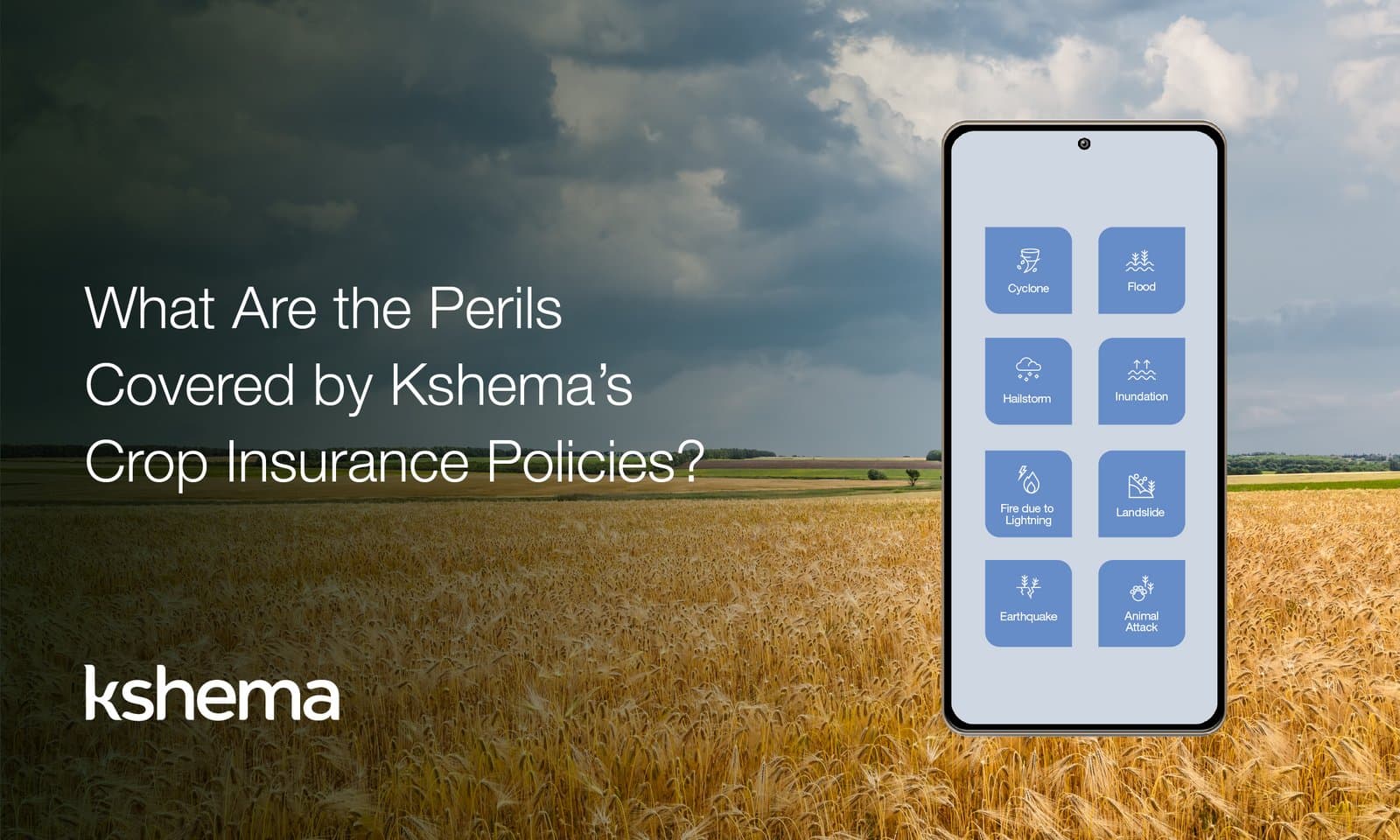
Crop insurance policies help farmers protect their crops from sudden and unpredictable events such as floods, cyclones, hailstorms and animal attacks. Small and large farmers across India face rising climate risks, and understanding what perils are covered is essential for securing farm income. This guide clearly explains the major perils covered under crop insurance policies and how Kshema’s crop insurance policies (opens in a new tab) ensures farmers stay financially protected.
Farmers cannot always predict weather events or control external dangers, which makes crop insurance policies vital for every cropping season. Whether it is standing crop loss, soil erosion or physical crop damage, knowing the covered perils helps farmers choose the right protection.
Farming is an uncertain activity in the best of circumstances. However, irrespective of the number of precautions undertaken, crop yields (opens in a new tab) can still be impacted significantly by factors beyond the control of farmers. Whether it's a weather-related disaster, or an animal attack (opens in a new tab), these risks can have devastating consequences. Kshema crop insurance policies are designed to offer protection against these specific dangers. These insurance policies cover a variety of natural and external events that can lead to crop loss, offering farmers financial support and helping them recover more quickly.
Lightning is one of the most common causes of wildfires, especially in dry regions. A single bolt of lightning can ignite crops, trees, or fields, especially in areas with little moisture. The fire can spread rapidly, destroying everything around. With Kshema (opens in a new tab), farmers are covered against losses caused by fires resulting from lightning. This coverage helps mitigate the financial damage and supports farmers as they recover from such unexpected events.
Landslides, especially in hilly or mountainous areas, can result in the displacement of large amounts of soil and debris. This can bury crops, uproot plants, and destroy farms completely. Landslides are hazardous to farming communities. Kshema’s crop insurance policies provide coverage for damage caused by landslides, ensuring that farmers can file claims (opens in a new tab) and recoup their crop loss.
Cyclones are powerful storms that bring high winds, heavy rain, and flooding. These storms can cause devastating damage to standing crops by uprooting them or destroying agricultural fields altogether and flooding agricultural lands. Kshema’s crop insurance policies cover the destruction of crops caused by cyclones (opens in a new tab), providing a financial safety net to farmers affected by theis extreme weather event. Farmers in cyclone-prone areas can benefit significantly from this coverage, knowing their crops loss will be mitigated in the event of a storm.
Flooding occurs when rivers or dams overflow, heavy rainfall (opens in a new tab) saturates the land, or drainage systems fail. Flooded fields often result in crop submergence, washing away plants, and eroding valuable topsoil. Floods can also introduce harmful pollutants or debris that may damage crops further. Kshema’s crop insurance policies cover crop loss caused by flooding, allowing farmers to recover their investments which lessens the financial strain that flood damage causes to their crops.
Inundation refers to prolonged waterlogging where farmland remains submerged for many hours or days, causing crop suffocation and complete failure. This can occur due to floods or heavy rainfall that overwhelms the land’s drainage capacity. Inundation can cause crops to drown, leading to reduced growth or complete crop failure. Kshema’s crop insurance policies cover losses due to inundation (opens in a new tab), ensuring farmers have the requisite protection if their crops are ruined due to excessive water exposure.
Earthquakes, can cause massive damage to farmland. This natural peril can disrupt the structure of the land, damage irrigation systems, and even cause soil liquefaction, which can be harmful to crops. In more severe cases, earthquakes may also trigger landslides, further contributing to crop destruction. Kshema’s coverage for crop losses caused by earthquakes (opens in a new tab) ensures that farmers are not left without support during such catastrophic events.
Animals such as rabbits, monkeys, wild boars and elephants can destroy crops by eating, trampling or digging into fields. These sudden attacks can wipe out crops overnight, making insurance protection essential.”. An unexpected animal attack can cause extensive damage to an entire crop field, making it difficult for farmers to recover financially. Kshema covers losses caused by animal attacks (opens in a new tab), ringfencing the income of farmers.
Hailstorms can be one of the most destructive natural events for crops. Hailstones, depending on their size, can break plant stems, destroy crops, crush fruits, and leave lasting damage. Fields that experience a severe hailstorm often see significant losses in production, as the storm can wipe out entire sections of crops. Kshema’s crop insurance policies offer coverage against damage caused by hailstorms, giving farmers one more tool in the arsenal to protect their incomes from such extreme weather events.
The perils covered by Kshema (opens in a new tab) are some of the most significant risks that farmers face in their profession. Without insurance, a single event—whether it’s a cyclone, hailstorm, or animal attack—can wipe out a year’s worth of hard work and financial investment. By offering coverage for these specific perils, Kshema helps to alleviate financial stress and allows farmers to recover, replant for the next season, and rebuild after a loss. Additionally, the peace of mind that comes with knowing that their crops are protected against a range of unpredictable events is invaluable to the farmers. This sense of security enables them to focus on improving their agricultural practices and growing their businesses, knowing that they have financial support when disaster strikes.
Crop insurance policies ensure farmers do not bear the full cost of crop loss. After disasters like floods, hailstorms or animal attacks, farmers receive compensation that helps them replant, buy inputs and prepare for the next season without falling into debt.
Crop insurance policies give farmers strong protection against unpredictable natural and external risks. By covering perils such as lightning fires, flood, cyclone, hailstorm and animal attacks, Kshema ensures farmers can continue farming without financial fear. With reliable compensation and flexible coverage options, Kshema General Insurance helps farmers secure their livelihood and prepare confidently for the next season.
They cover flood, cyclone, hailstorm, lightning fires, earthquake and animal damage.
Yes, many policies include protection from specific localised climate risks.
Some policies include sowing failure under weather triggered risks.
Certain policies cover post harvest damage from unseasonal rain.
Farmers can check coverage details on the Kshema App or policy document.
“We do not assume any liability for any actions undertaken based on the information provided here. The information gathered from various sources and are displayed here for general guidance and does not constitute any professional advice or warranty of any kind.”


IntroductionIf you own a vehicle, understanding third-party car insurance is essential. It is the most basic form of motor insurance and is required by law for all vehicles driven on Indian roads.What This Blog Covers • What third-party insurance means and how it works. • Why it is considered mandatory car insurance in India. • The benefits, coverage, and limitations of this policy. • The consequences of ignoring the car insurance legal requirement.This guide provides a clear overview of the leg

Meri Fasal Mera Byora is a Haryana government initiative to benefit the farmers of the state. It is an important platform for crop registration and provides access to various government agriculture-related benefits. As the Kharif 2026 season is in progress, completing registration correctly can help farmers avoid delays in receiving support and scheme benefits by understanding benefits of insurance to farmers.What This Guide CoversWho should register for kharif 2026Documents and details required
IntroductionCrop Loss in Karnataka remains a critical challenge for farmers, especially during the kharif season when weather uncertainties are at their peak. Understanding the causes and taking preventive measures can significantly reduce risks and improve yields by understanding proven ways to protect crops.In this blog, you’ll learn:Major causes behind crop damage in KarnatakaKey Karnataka kharif crop risks farmers should watch out forPractical strategies to minimise losses and protect cropsP

IntroductionThe Rythu Bharosa scheme in Telangana continues to play a crucial role in supporting farmers during Kharif 2026. This is the Telangana government’s flagship farmer investment support scheme for seeds, fertilisers, and labour. By providing timely financial assistance, it helps reduce input costs and stabilise agricultural income and improve financial security through benefits of insurance to farmers.What this blog coversKey advantages of the scheme in Kharif 2026How Rythu Bharosa supp
IntroductionThis is our Maharashtra Kharif crops guide that can help the farmers of Maharashtra plan the upcoming monsoon season effectively. With the right crop choices, sowing time, and risk protection strategies, farmers can maximise yield and reduce uncertainty with the help of https://kshema.co/plans/What this blog covers:Best crops suited for the Kharif season in MaharashtraIdeal sowing dates to ensure higher productivityRegion-wise considerations for crop planningPractical insurance tips
If your PM Kisan payment has not been credited in 2026, it can be both confusing and frustrating. Many farmers across India face delays due to technical or verification issues, but most problems can be resolved with the right steps.In this blog, you will learn:Why your instalment may be delayed or missingHow to complete a quick PM Kisan status checkWays to fix errors and receive future paymentsWhere to seek help if the issue persistsUnderstanding the PM-Kisan Samman Nidhi Scheme in 2026The PM-Ki