

Stay Updated with Our Latest Blogs
Subscribe to our blog and get the latest insurance tips, guides, and industry updates delivered to your inbox
Subscribe to our blog and get the latest insurance tips, guides, and industry updates delivered to your inbox
Crop Insurance
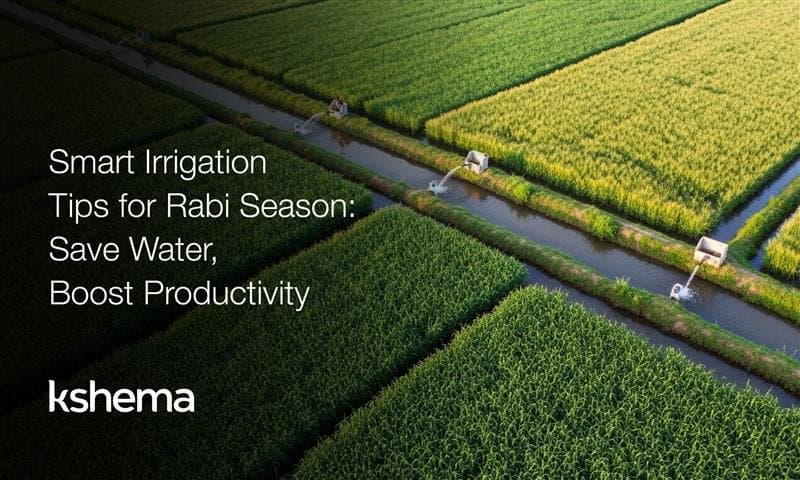
Smart irrigation is the practice of applying the right amount of water at the right time using crop needs, soil moisture, and weather conditions. For Indian farmers growing Rabi crops such as wheat, mustard, chickpeas, and lentils, smart irrigation plays a critical role in saving groundwater, reducing irrigation costs, and improving yield stability.
Unlike traditional flood irrigation, smart irrigation methods like drip systems, sprinklers, soil moisture sensors, mulching, and weather‑based scheduling help farmers manage water efficiently during dry winter months when rainfall is minimal.
With increasing pressure on groundwater and unpredictable weather patterns, adopting efficient irrigation strategies (opens in a new tab) is essential.
Smart irrigation means using data‑driven methods—such as soil moisture levels, crop growth stage, and weather forecasts—to decide when and how much to irrigate crops. It reduces water wastage, prevents crop stress, and improves fertiliser efficiency.
The Rabi season is the winter cropping period in India. Sowing usually starts after the monsoon ends in October–November, and harvesting happens in March–April. Unlike Kharif crops, Rabi crops grow using controlled irrigation because rainfall is very low.
Key points
Rabi Crops Water Requirement Chart Understanding the water needs of each Rabi crop helps farmers plan irrigation more efficiently. This chart provides a simple overview of water requirements, irrigation frequency and key notes for major Rabi crops. Crop Water Need Irrigation Count Notes Wheat Medium 4–5 irrigations Tillering and grain filling stages are crucial Mustard Low 2–3 irrigations Avoid standing water; prefers light, well‑drained soil Chickpeas Very low 1–2 irrigations Mostly rainfed; light irrigation around flowering stage Lentils Low 1–2 irrigations Light irrigation during flowering and pod formation Vegetables Medium–high Depends on crop
Drip Irrigation:
recommended for uniform moisture and water saving
Soybean is mainly a Kharif crop, but in some irrigated regions farmers experiment with short-duration winter varieties. Paddy is also a Kharif crop, but in a few regions winter paddy is grown using irrigation. Farmers should check local conditions before choosing these crops.
Simple Rabi Irrigation Plan
Smart irrigation means applying the right amount of water at the right time based on crop needs, soil moisture and weather conditions. It reduces water wastage, improves crop health and helps farmers increase yield with less input cost.
Key points :
Rabi crops such as wheat, barley, mustard, chickpeas, and lentils require precise water management. Over-irrigation can lead to waterlogging, root diseases, and nutrient leaching, while under-irrigation can stunt growth and reduce yields. Smart irrigation ensures:
With climate change affecting rainfall patterns and groundwater levels, farmers must shift from traditional flood irrigation to smarter, more sustainable methods.
Different Rabi crops have different water needs
Understanding critical growth stages—germination, tillering, flowering, and grain filling—helps schedule irrigation effectively and avoid unnecessary watering
Soil moisture sensors measure actual moisture content and guide irrigation timing. Benefits include
Affordable models are available via agri-extension centers and online platforms. Pairing sensors with mobile alerts or automated systems improves efficiency
Flood irrigation wastes up to 40% of water. Drip and sprinkler systems deliver water directly to the root zone.
.Drip Irrigation
Sprinkler Irrigation:
Government schemes (opens in a new tab) like PMKSY offer subsidies—check with local agri offices.
Use weather apps or agri-tech platforms to monitor
Avoid irrigating before expected rain and adjust schedules during cold spells to prevent frost damage
Mulching retains soil moisture and benefits crops like vegetables and pulses.
Use straw, dry leaves, sugarcane trash, or biodegradable films. Mulching complements drip irrigation by keeping the root zone moist longer.
Uneven fields cause water pooling and dry patches. Laser land levelling ensures uniformity
Many FPOs and cooperatives offer shared access to equipment
Mobile apps help farmers plan irrigation based on: Crop type Soil texture Weather data Growth stage These tools offer calculators, reminders, and expert advice—ideal for small and marginal farmers.
Rainwater harvesting during monsoon supports Rabi season irrigation. Farm ponds and check dams store runoff
State governments offer financial aid under watershed development programs
Smart irrigation includes smart cropping. Rotate water-intensive crops with drought-tolerant ones
This conserves water, improves soil health, and diversifies income
Even with good irrigation practices, unexpected weather events like frost, drought, pump failure and sudden temperature drops can damage Rabi crops. This is why farmers need crop insurance along with smart irrigation. Insurance protects the investment you make in water, labour, seeds and fertilisers.
Crop insurance helps farmers recover losses when irrigation fails due to delayed rainfall, pump failure, drought or sudden cold waves during Rabi season. Kshema’s crop insurance plans like Sukriti and Prakriti are designed to support farmers using smart irrigation by covering risks like drought, equipment failure, and delayed rainfall. Explore
Smart irrigation is essential for Rabi season farming because crops depend on controlled watering rather than rainfall. Using methods like drip systems, sprinklers, soil moisture sensors, mulching and weather based irrigation helps farmers save water and increase yield. But irrigation alone cannot protect crops from sudden winter risks. With Kshema’s crop insurance plans, farmers can stay safe from drought, pump failure, frost damage and unexpected dry spells. This Rabi season, protect your hard work—use smart irrigation and secure your farm with the Kshema App.
For more insights on sustainable irrigation practices and government-backed initiatives, you can also explore this resource from the Federation of Seed Industry of India: Innovative Options for Sustainable Irrigation.
Smart irrigation uses soil data, crop needs, and weather conditions to apply the right amount of water at the right time.
It prevents over‑watering by irrigating only when crops actually need water.
Yes. Low‑cost sprinklers, mulching, and basic soil sensors make smart irrigation affordable.
Wheat, mustard, chickpeas, lentils, vegetables, and barley benefit significantly.
Yes. It reduces water stress, root disease, and yield loss due to improper watering.
“We do not assume any liability for any actions undertaken based on the information provided here. The information gathered from various sources and are displayed here for general guidance and does not constitute any professional advice or warranty of any kind.”


IntroductionIf you own a vehicle, understanding third-party car insurance is essential. It is the most basic form of motor insurance and is required by law for all vehicles driven on Indian roads.What This Blog Covers • What third-party insurance means and how it works. • Why it is considered mandatory car insurance in India. • The benefits, coverage, and limitations of this policy. • The consequences of ignoring the car insurance legal requirement.This guide provides a clear overview of the leg

Meri Fasal Mera Byora is a Haryana government initiative to benefit the farmers of the state. It is an important platform for crop registration and provides access to various government agriculture-related benefits. As the Kharif 2026 season is in progress, completing registration correctly can help farmers avoid delays in receiving support and scheme benefits by understanding benefits of insurance to farmers.What This Guide CoversWho should register for kharif 2026Documents and details required
IntroductionCrop Loss in Karnataka remains a critical challenge for farmers, especially during the kharif season when weather uncertainties are at their peak. Understanding the causes and taking preventive measures can significantly reduce risks and improve yields by understanding proven ways to protect crops.In this blog, you’ll learn:Major causes behind crop damage in KarnatakaKey Karnataka kharif crop risks farmers should watch out forPractical strategies to minimise losses and protect cropsP
IntroductionThe Rythu Bharosa scheme in Telangana continues to play a crucial role in supporting farmers during Kharif 2026. This is the Telangana government’s flagship farmer investment support scheme for seeds, fertilisers, and labour. By providing timely financial assistance, it helps reduce input costs and stabilise agricultural income and improve financial security through benefits of insurance to farmers.What this blog coversKey advantages of the scheme in Kharif 2026How Rythu Bharosa supp
IntroductionThis is our Maharashtra Kharif crops guide that can help the farmers of Maharashtra plan the upcoming monsoon season effectively. With the right crop choices, sowing time, and risk protection strategies, farmers can maximise yield and reduce uncertainty with the help of https://kshema.co/plans/What this blog covers:Best crops suited for the Kharif season in MaharashtraIdeal sowing dates to ensure higher productivityRegion-wise considerations for crop planningPractical insurance tips

If your PM Kisan payment has not been credited in 2026, it can be both confusing and frustrating. Many farmers across India face delays due to technical or verification issues, but most problems can be resolved with the right steps.In this blog, you will learn:Why your instalment may be delayed or missingHow to complete a quick PM Kisan status checkWays to fix errors and receive future paymentsWhere to seek help if the issue persistsUnderstanding the PM-Kisan Samman Nidhi Scheme in 2026The PM-Ki