

Stay Updated with Our Latest Blogs
Subscribe to our blog and get the latest insurance tips, guides, and industry updates delivered to your inbox
Subscribe to our blog and get the latest insurance tips, guides, and industry updates delivered to your inbox
Crop Insurance

Crop insurance is a practical safety net for India’s farmers, reducing income volatility from weather shocks, pests and market disruptions. By shifting part of production risk to an insurer, crop insurance supports timely recovery, keeps credit cycles stable, and encourages investment in better inputs and practices. For smallholders and larger farms alike, understanding scheme features and enrolment options is the first step to building resilient agriculture.
Understanding the advantages of crop insurance (opens in a new tab) helps farmers and policymakers recognise how it protects livelihoods and strengthens rural India.
Most Indian farmers depend heavily on seasonal rainfall and are vulnerable to climate change. A failed monsoon can eliminate an entire year’s income. Similarly, pest infestations or crop diseases can spread quickly, leaving farmers with no recoverable produce.
Without protection, farmers may fall into debt traps, forced to borrow at high interest rates to sustain their families. Crop insurance provides a financial cushion, ensuring that farmers are not left destitute when nature or markets turn against them. Among the many crop insurance benefits, the most important is its role in farmer income protection (opens in a new tab), which helps stabilise rural households.
The advantages of crop insurance go far beyond simple compensation. They encompass economic, social, and psychological dimensions that collectively empower farmers. Some of the most notable crop insurance benefits include
. These advantages of crop insurance build a strong safety net for both individual farmers and the wider agricultural economy
Type Trigger Best for Verification method Named‑peril / Yield‑based Actual crop damage or yield loss Individual fields, high‑value crops Field inspection, yield measurement Area‑yield Area average yield drop Regions with uniform yields District or mandal yield data Weather‑index Weather thresholds (rainfall, temperature) Smallholders, quick payouts Automated weather stations or satellite data
The most visible advantages of crop insurance occur during adverse events. When floods, droughts or pest outbreaks damage crops, insured farmers receive claim payouts (opens in a new tab) that help them manage essential expenses, repay loans and prepare for the next season.
This prevents farmers from entering debt cycles. Additionally, when rural households remain financially stable, demand for goods and services in local markets increases—strengthening the overall economy.
India has introduced several crop insurance schemes, (opens in a new tab) such as the Pradhan Mantri Fasal Bima Yojana,(PMFBY) to provide financial protection to farmers against crop loss. Private insurers like Kshema, with a focus on rural sectors, also provide customised crop insurance solutions designed to offer strong farmer income protection.
These initiatives aim to make insurance affordable and accessible to small and marginal farmers. By subsidising premiums and simplifying claim processes, the Government schemes aim to keep premiums affordable through subsidies and simplified processes. Private players complement these efforts by offering broader crop coverage, tailor‑made plans and faster claim settlement.
These combined efforts have improved agricultural resilience and reduced financial distress among farmers.
The advantages of crop insurance are not limited to immediate relief. Over time, crop insurance fosters resilience in the agricultural sector. By
This contributes to national food security and strengthens India’s agricultural foundation.
Additionally, crop insurance benefits encourage innovation. Farmers are more willing to experiment with new technologies, high-yield seeds, and eco-friendly practices when they know their risks are covered. This progressive outlook enhances productivity and ensures that agriculture remains viable for future generations.
Despite its benefits, crop insurance faces challenges:
To maximise the crop insurance benefits, policymakers must focus on improving awareness, streamlining claim processes (opens in a new tab), and expanding coverage to include more crops and regions. Digital platforms and mobile applications can play a vital role in bridging gaps, ensuring that farmers receive timely information and support.
Climate change (opens in a new tab) has increased agricultural risks dramatically. Rising temperatures, unpredictable rainfall, prolonged dry spells and extreme weather events threaten crop output.
According to global agricultural research organisations like the Food and Agriculture Organization (FAO), climate change is increasing the frequency and severity of extreme weather events affecting agriculture worldwide.
Crop insurance helps farmers cope with these challenges by providing a financial buffer during weather‑related shocks. This ensures farmer income protection even under extreme conditions, helping maintain India’s agricultural stability.
The advantages of crop insurance in India are significant and far‑reaching. From income protection to climate resilience, crop insurance acts as a lifeline for millions of farming families. As climate risks grow, its role in safeguarding rural livelihoods will only become more important.
By reducing risks, stabilising incomes and supporting innovation, crop insurance strengthens not only individual farmers but also India’s entire agricultural foundation.
Crop insurance protects farmers from revenue loss due to weather, pests and natural calamities, ensuring quicker recovery, access to credit and reduced financial stress.
Weather-index insurance pays out when predefined weather metrics (like rainfall deficit) cross set thresholds—payouts are automatic and quicker, without needing field-by-field loss measurements.
Yes. Central and many state governments subsidise a portion of premiums for eligible farmers, lowering out-of-pocket costs—check the latest local scheme rules and eligibility.
Long‑term benefits include resilience, adoption of sustainable practices, crop diversification and improved productivity.
It provides a safety net when extreme weather events damage crops, helping farmers maintain financial stability despite unpredictable climate conditions.


IntroductionIf you own a vehicle, understanding third-party car insurance is essential. It is the most basic form of motor insurance and is required by law for all vehicles driven on Indian roads.What This Blog Covers • What third-party insurance means and how it works. • Why it is considered mandatory car insurance in India. • The benefits, coverage, and limitations of this policy. • The consequences of ignoring the car insurance legal requirement.This guide provides a clear overview of the leg


Meri Fasal Mera Byora is a Haryana government initiative to benefit the farmers of the state. It is an important platform for crop registration and provides access to various government agriculture-related benefits. As the Kharif 2026 season is in progress, completing registration correctly can help farmers avoid delays in receiving support and scheme benefits by understanding benefits of insurance to farmers.What This Guide CoversWho should register for kharif 2026Documents and details required
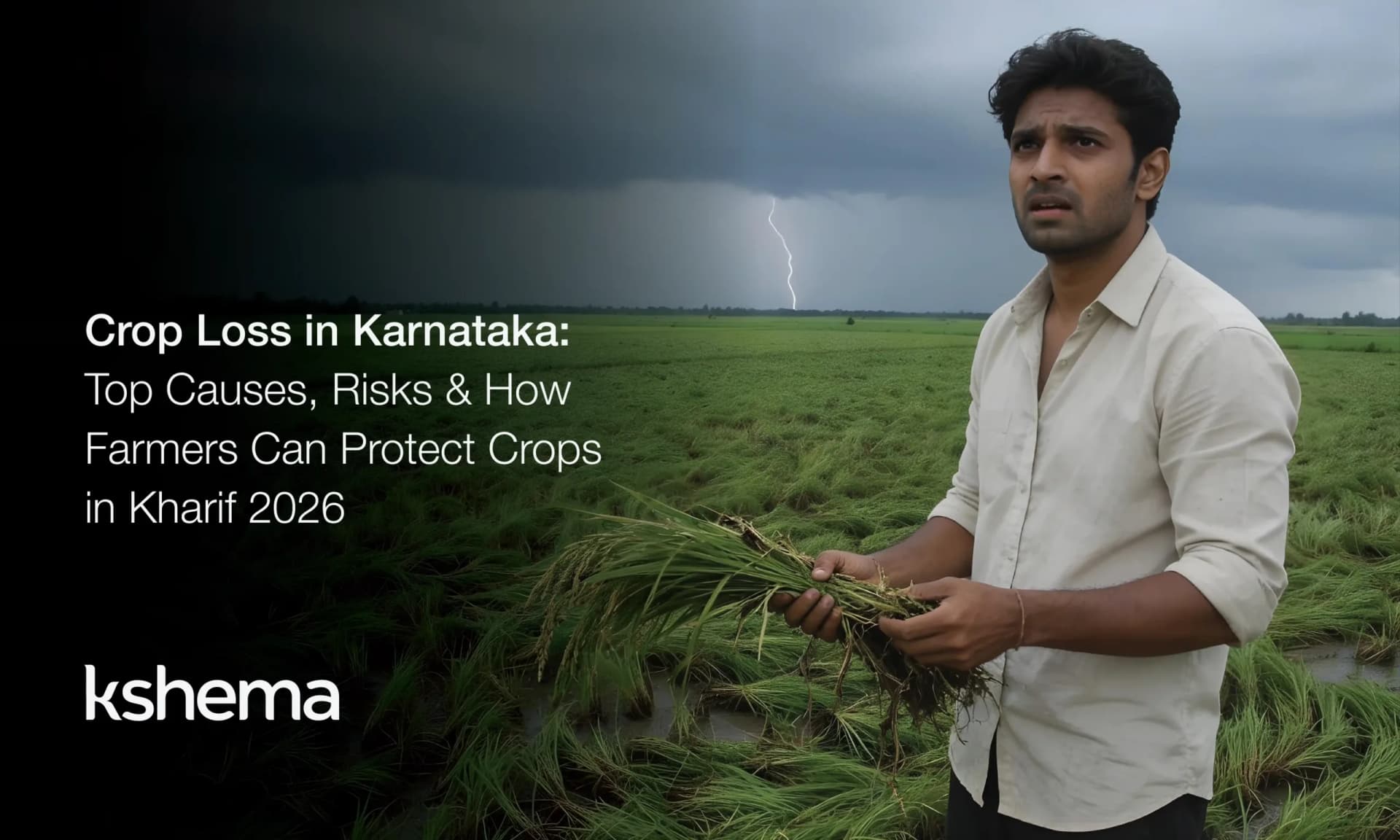
IntroductionCrop Loss in Karnataka remains a critical challenge for farmers, especially during the kharif season when weather uncertainties are at their peak. Understanding the causes and taking preventive measures can significantly reduce risks and improve yields by understanding proven ways to protect crops.In this blog, you’ll learn:Major causes behind crop damage in KarnatakaKey Karnataka kharif crop risks farmers should watch out forPractical strategies to minimise losses and protect cropsP

IntroductionThe Rythu Bharosa scheme in Telangana continues to play a crucial role in supporting farmers during Kharif 2026. This is the Telangana government’s flagship farmer investment support scheme for seeds, fertilisers, and labour. By providing timely financial assistance, it helps reduce input costs and stabilise agricultural income and improve financial security through benefits of insurance to farmers.What this blog coversKey advantages of the scheme in Kharif 2026How Rythu Bharosa supp

IntroductionThis is our Maharashtra Kharif crops guide that can help the farmers of Maharashtra plan the upcoming monsoon season effectively. With the right crop choices, sowing time, and risk protection strategies, farmers can maximise yield and reduce uncertainty with the help of https://kshema.co/plans/What this blog covers:Best crops suited for the Kharif season in MaharashtraIdeal sowing dates to ensure higher productivityRegion-wise considerations for crop planningPractical insurance tips

If your PM Kisan payment has not been credited in 2026, it can be both confusing and frustrating. Many farmers across India face delays due to technical or verification issues, but most problems can be resolved with the right steps.In this blog, you will learn:Why your instalment may be delayed or missingHow to complete a quick PM Kisan status checkWays to fix errors and receive future paymentsWhere to seek help if the issue persistsUnderstanding the PM-Kisan Samman Nidhi Scheme in 2026The PM-Ki